
Head Office
117, Grand Trunk Road, Salkia Howrah-700013, Kolkata, India
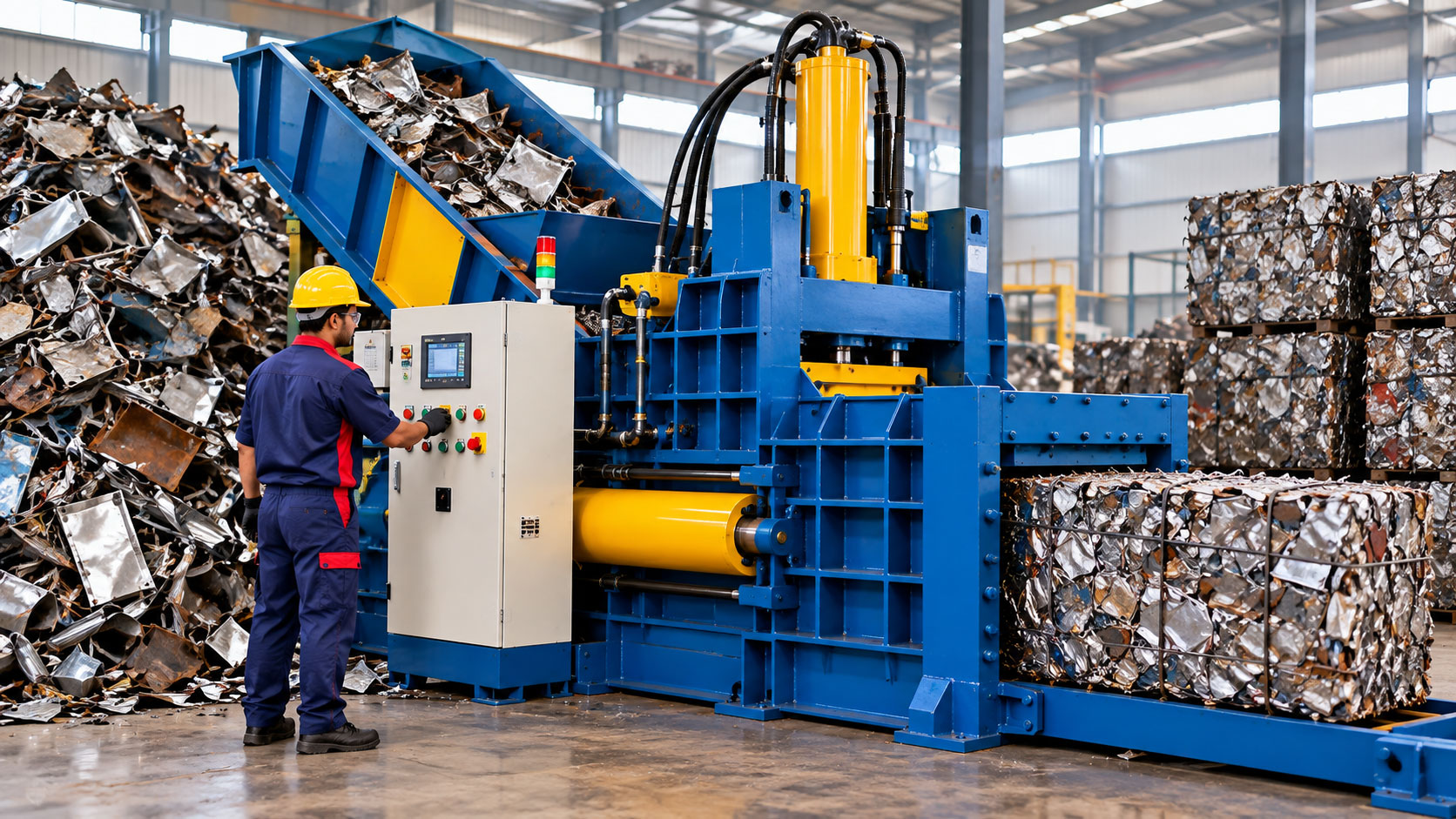
Industrial manufacturing, metal processing, fabrication, automotive production, demolition, and recycling operations can generate large quantities of loose and irregular scrap. Although this material may have recoverable value, its low bulk density can make storage, handling, transportation, sorting, and downstream processing inefficient.
Industrial manufacturing, metal processing, fabrication, automotive production, demolition, and recycling operations can generate large quantities of loose and irregular scrap. Although this material may have recoverable value, its low bulk density can make storage, handling, transportation, sorting, and downstream processing inefficient.
Industrial manufacturing, metal processing, fabrication, automotive production, demolition, and recycling operations can generate large quantities of loose and irregular scrap. Although this material may have recoverable value, its low bulk density can make storage, handling, transportation, sorting, and downstream processing inefficient.
A Scrap Baling Machine, also known as a Hydraulic Scrap Baler, Metal Scrap Baling Press, Scrap Compactor, or High-Density Baler, is designed to compress suitable loose scrap into dense, compact bales or blocks.
Instead of allowing sheet-metal offcuts, stamping scrap, wires, cans, profiles, light structural scrap, and other recyclable material to occupy excessive floor or yard space, a baling machine applies controlled compression force inside a reinforced chamber.
The result is a more compact material package that can be easier to store, stack, handle, transport, sell, and prepare for downstream recycling or melting.
For industries producing significant quantities of recyclable waste, scrap baling is therefore not simply a waste-disposal operation—it can become an important part of an organized material-recovery and recycling system.
A Scrap Baling Machine is industrial equipment designed to compress loose recyclable material into compact bales using high mechanical or, commonly, hydraulic force.
Industrial metal balers typically use one or more hydraulic cylinders to drive compression rams against material loaded into a reinforced chamber.
Depending on machine design, compression may take place from one or several directions.
The finished bale can have a much smaller volume than the original loose scrap, increasing its bulk density.
The basic relationship is straightforward:
Higher material density = more material mass occupying a given volume.
This can improve storage utilization and transportation efficiency, although the actual compaction ratio and final bale density depend on the scrap material, feed preparation, machine design, compression force, chamber dimensions, and operating parameters.
Loose industrial scrap is often bulky relative to its weight.
Consider a fabrication shop producing thin sheet-metal offcuts. The pieces may overlap irregularly, leaving large air gaps between them. Consequently, a container can appear full while containing relatively little metal by mass.
The same issue can occur with:
A baling machine compresses these irregular materials into a more consolidated form.
The objective is not to change the mass of the metal, but to reduce the volume occupied by that mass.
Although the exact cycle varies by machine design, industrial hydraulic scrap baling generally follows several stages.
Scrap should first be collected and classified according to the recycling process.
Depending on the facility, materials may be separated into categories such as:
Correct sorting can help maintain material quality and simplify subsequent recycling.
Before material enters the baler, operators should verify that it is compatible with the specific machine.
Potentially hazardous or prohibited items must not simply be compressed.
Containers, cylinders, tanks, automotive components, batteries, pressurized items, or scrap contaminated with fuel, chemicals, refrigerants, or other hazardous substances require appropriate identification and treatment before processing.
Scrap vehicles and appliances can contain fuels, refrigerants, ammonia, or other hazardous materials that must be identified and appropriately removed before compacting or shredding.
Approved scrap is placed into the baling chamber.
Depending on machine size and automation, loading may be carried out using:
Operators must remain outside hazardous zones and follow the manufacturer's approved loading method.
After the chamber is safely closed and the machine cycle begins, the hydraulic system drives the compression ram.
The ram applies substantial force to the loose material, collapsing voids and reducing its overall volume.
Some high-density balers use multiple compression stages or rams.
For example, material may be compressed:
Lengthwise → sideways → final compression
A multi-directional process can produce a dense, compact bale from irregular metal scrap.
Machine configuration varies, so the number and direction of compression stages should never be assumed solely from the term "scrap baler."
As the compression cycle continues, loose material is consolidated into a defined bale or block.
Final:
depend on the material and machine specifications.
After compression is completed, the machine releases or ejects the bale according to its design.
Discharge arrangements may include:
The finished bale can then be transferred to a designated storage, transportation, or recycling area.
Machine capability varies significantly, so material compatibility must always be confirmed with the equipment specification.
Suitable balers may process selected:
Heavy, oversized, hardened, or unusually shaped material requires a machine specifically engineered for it.
Appropriately designed balers may also compact:
Including sheet offcuts, profiles, selected cans, production waste, and fabrication scrap.
Certain copper offcuts, wire, sheet, and suitable production scrap can be baled where the machine and recycling process permit it.
Brass production waste and offcuts may also be consolidated.
Sheet-metal scrap, fabrication offcuts, and selected stainless-steel production waste can be compacted using suitable equipment.
Keeping valuable non-ferrous grades separated can be important for downstream material recovery.
Scrap yards and recycling centres are among the primary users of high-density balers.
Instead of dispatching loose material, recyclers can prepare more standardized, manageable bales for storage, transportation, sale, or further processing.
Automotive manufacturing generates substantial production scrap from:
A baling system can be integrated into an organized scrap-handling line for suitable materials.
Continuous or automated balers can be especially relevant where production scrap is generated at a steady rate.
Press shops can generate large quantities of:
Punching scrap • blanking skeletons • strips • trimmings • rejected sheet parts
Because much of this scrap has low bulk density, baling can significantly simplify material handling.
Fabrication shops routinely generate:
Rather than allowing material to accumulate randomly, compatible scrap can be segregated and prepared for baling.
Steel service centres and processing facilities may generate substantial volumes of production scrap.
Higher-capacity hydraulic balers can support organized scrap recovery and material movement.
For suitable scrap streams, compact bales can provide a more consistent physical form for storage and downstream handling.
Compacting suitable scrap into consistent bales can make storage, handling, transport, and furnace loading more efficient than working with loose assortments of sheet and other scrap.
Actual furnace-charge suitability depends on the furnace type, scrap chemistry, contamination, bale dimensions, density, operating practice, and the melting facility's specifications.
Metal recovered from selected appliances may be processed after appropriate dismantling, segregation, and removal of hazardous substances.
Refrigerants, oils, pressurized systems, electrical components, and hazardous materials require proper treatment before baling.
Suitable construction and demolition metal may be prepared for baling after sorting and, where necessary, cutting or shearing it to acceptable dimensions.
Aluminium fabrication, extrusion, sheet processing, and component manufacturing can generate high-value recyclable scrap.
Baling can consolidate compatible scrap while proper grade segregation helps protect material value.
Many manufacturing facilities can use balers as part of an internal waste-management system.
Instead of sending loose scrap directly from each production area, material can be collected, segregated, compacted, and dispatched systematically.
A single-action machine generally uses a primary compression movement to reduce material volume.
It can be appropriate for selected low-to-moderate-volume applications and materials that do not require complex multi-directional compaction.
Double-action machines use additional compression movement to improve bale formation.
They can provide more controlled compaction for suitable industrial scrap streams.
A Triple-Action Scrap Baling Machine uses multiple compression directions to produce compact, high-density bales.
This configuration can be particularly useful for irregular metal scrap because the material is consolidated progressively from different directions.
Applications can include:
A High-Density Baler is designed for applications where strong compaction and dense bale formation are priorities.
These machines may be used by:
High-density baling can be especially valuable when transportation distance is significant or storage space is expensive.
A continuous baling system is intended for operations where scrap is generated regularly and at relatively high volume.
It can potentially be integrated with:
Instead of accumulating large quantities of loose scrap before processing, the system can become part of a continuous scrap-management workflow.
Suitable for applications where production volume is limited and operators directly control more stages of the cycle.
Some operations are automated while loading, unloading, or other stages still require operator involvement.
Automation may control much of the compression cycle, including sequential ram movements and bale discharge, depending on machine configuration.
Automation can improve consistency and throughput, but it does not eliminate the need for guarding, safe operating procedures, inspection, and trained personnel.
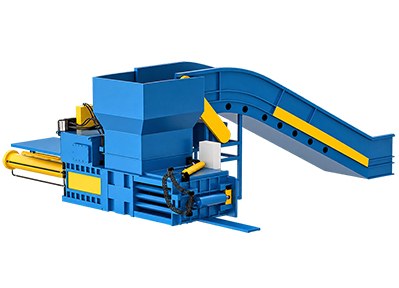
The Auto Tie Baling Machine is designed for compressing loose recyclable material into manageable bales. The operating method...
View Product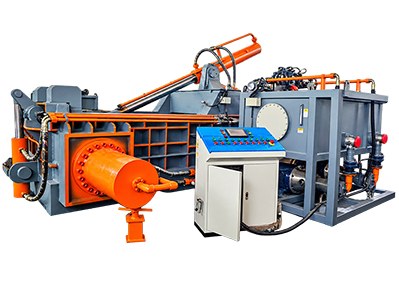
For work involving the recyclable material identified by the title, the Car Baler Machine offers a process-specific solution....
View Product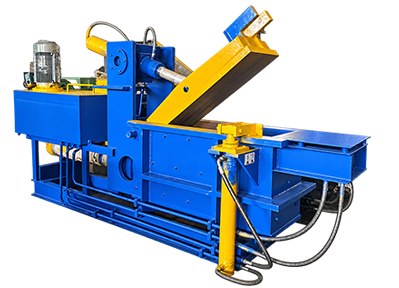
The Double Action Baling Press Machine is designed for compressing loose recyclable material into manageable bales. Typical u...
View Product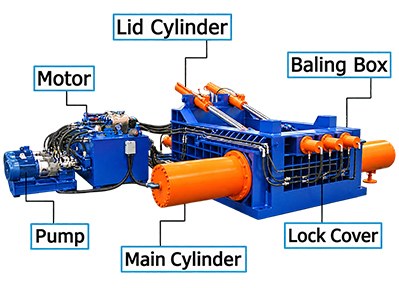
The Quad Scrap Baler is designed for reducing loose recyclable material into compact bales. Typical users include scrap yards...
View Product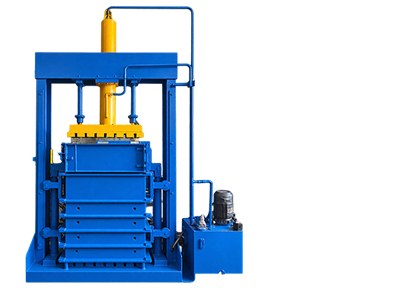
The Single Chamber Single Cylinder Baler handles the recyclable material identified by the title through a layout intended fo...
View Product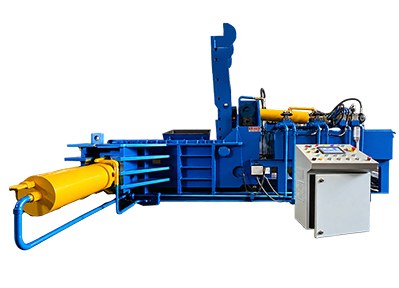
The primary role of the Triple Action Jumbo Baling Press Machine With Hydraulic Hopper is compressing loose recyclable materi...
View Product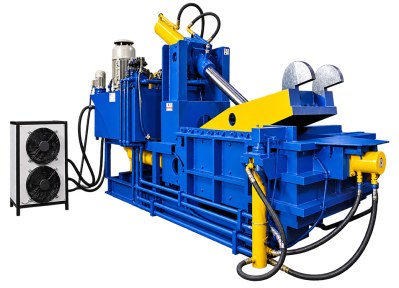
For work involving metal, cardboard, textile, plastic, or title-specific recyclable feed, the Triple Action Scrap Baling Pres...
View Product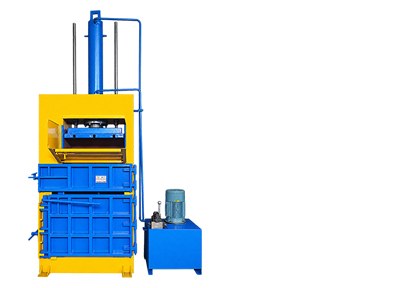
The Vertical Scrap Baling Press handles metal, cardboard, textile, plastic, or title-specific recyclable feed through a layou...
View ProductThe primary benefit is volume reduction.
Dense bales occupy less space than loose, irregular scrap.
A cleaner, organized scrap-storage area can free valuable factory or warehouse space for productive operations.
Increasing bulk density can allow more scrap mass to be transported within a given volumetric capacity, subject to vehicle payload and legal weight limits.
This can potentially reduce the number of trips required for a given quantity of scrap.
Uniform bales can often be easier to move using appropriate material-handling equipment than piles of loose, irregular scrap.
Separating and baling scrap by material category can create a more systematic recycling operation.
For example:
Mild Steel → Separate Bale
Stainless Steel → Separate Bale
Aluminium → Separate Bale
Copper → Separate Bale
This can simplify inventory and downstream processing.
Baling converts loose waste into a standardized physical form that can simplify movement between the generator, scrap processor, recycler, and downstream metal-processing facility.
Fewer loose pieces and more organized material flow can reduce repeated manual handling and material movement.
Actual savings depend on throughput, labor, equipment utilization, logistics, and the existing scrap-handling process.
Begin by determining exactly what will be processed.
Is it:
Material type has a major influence on machine selection.
Consider the largest incoming pieces.
Measure approximate:
Length × Width × Thickness
A machine capable of compacting thin sheet scrap may not be suitable for thick bars or heavy structural sections.
Oversized material may require cutting or shearing before baling.
Estimate how much scrap is generated:
A workshop producing a few tonnes periodically has different requirements from an automotive press shop generating scrap continuously.
Bale dimensions should be compatible with:
Do not assume that the densest possible bale is automatically the best solution.
Required compression force depends on material properties, scrap geometry, desired bale density, chamber size, and machine design.
Avoid selecting equipment solely by the advertised tonnage.
Two machines with similar nominal force may perform differently because of differences in chamber dimensions, ram arrangement, hydraulic design, structure, and cycle sequence.
Evaluate:
A reliable hydraulic system is central to baler performance.
For high-volume operations, cycle time directly affects throughput.
However, cycle time should be evaluated together with:
Chamber volume + bale weight + loading time + discharge time + material characteristics
A fast empty cycle does not necessarily mean high real-world production.
For intermittent workshop use, a simpler system may be sufficient.
For high-volume production, consider:
The correct automation level should match the plant's throughput and operating practices.
Before purchasing, check:
The machine itself is only one part of the complete baling workstation.
Safety should be a major machine-selection criterion.
Depending on machine configuration, consider appropriate:
Baling and compacting machines present serious crushing hazards, particularly during jam clearing or whenever personnel enter equipment that could become energized.
The operator should inspect the machine and work area.
Check the hydraulic system, visible hoses and connections, guards, doors, locking mechanisms, emergency stops, controls, and discharge area according to the manufacturer's inspection procedure.
Confirm that the incoming material is approved for the machine.
Load only compatible scrap and follow the manufacturer's limits.
Avoid uncontrolled accumulation around the loading chamber.
Personnel should remain clear of moving machinery and designated hazardous zones.
Do not enter, reach into, climb onto, or attempt to manually reposition material inside an operating baler.
Observe the cycle from the designated operating position.
The discharge area should be controlled because the bale, door, ram, and associated mechanisms can involve substantial stored forces and heavy loads.
Failure of a hydraulic baler discharge-door locking mechanism can create a severe or fatal hazard. Pathak recommends periodic inspection of high-load components and locking systems according to the machine maintenance schedule.
Clean the area using approved procedures, record abnormalities, and inspect the equipment according to the maintenance schedule.
Do not perform cleaning or maintenance inside hazardous areas until energy sources have been properly isolated.
Preventive maintenance is essential because a high-density baler operates under substantial repeated loads.
Maintain the correct oil level and use the hydraulic fluid specified by the manufacturer.
Monitor oil condition and temperature.
Inspect for:
Never use a hand to search for a suspected high-pressure hydraulic leak.
Monitor cylinders for abnormal leakage, scoring, movement, or loss of performance.
Inspect:
Repeated compression cycles impose cyclic stresses on the structure, so baling and compacting equipment should be inspected periodically for fatigue cracks.
Check sensors, switches, PLC functions, wiring, emergency stops, and interlocks according to the manufacturer's procedures.
Safety devices should never be bypassed simply to maintain production.
Lubricate specified bearings, pivots, guides, hinges, and other moving components at the recommended intervals.
Scrap balers are powerful industrial machines and must be treated accordingly.
Major hazards associated with baling and recycling equipment include crushing, moving machinery, unexpected startup, and material-handling hazards.
Only properly trained and authorized personnel should operate the equipment.
Machine guarding should prevent access to hazardous moving parts on balers and compactors used for scrap or refuse handling.
When clearing jams, servicing, repairing, inspecting hazardous internal areas, or performing maintenance, the machine must be properly isolated according to the applicable hazardous-energy-control procedure. Simply pressing the normal stop button should not be treated as a substitute for required lockout/tagout.
Operators must also understand which materials are prohibited. Closed pressure vessels, fuel-containing items, hazardous chemical containers, unsuitable batteries, or unidentified scrap should never be fed into the machine without appropriate processing and authorization.
High productivity does not simply mean operating the hydraulic system at maximum speed.
A better approach is to optimize the complete workflow:
Scrap Generation → Segregation → Collection → Loading → Compression → Bale Discharge → Storage → Transportation
Productivity can be improved through:
For continuously operating manufacturing plants, integrating the baler with conveyors or automated scrap-collection systems can further streamline material flow.
A Scrap Baling Machine for High-Density Waste Compaction can transform an inefficient pile of loose industrial scrap into compact, organized, transport-ready material.
For metal recycling yards, automotive plants, sheet-metal press shops, steel processing facilities, fabrication workshops, foundries, aluminium processors, demolition operations, and general manufacturing industries, hydraulic baling can improve the overall scrap-management workflow by reducing occupied volume and simplifying storage and material handling.
The correct baler, however, should never be selected only by compression tonnage.
A proper selection process should consider scrap type, material strength, maximum piece dimensions, chamber size, compression configuration, desired bale size and density, hourly throughput, cycle time, hydraulic system, loading method, automation level, downstream requirements, installation space, maintenance access, and safety systems.
For smaller or intermittent scrap volumes, a simpler hydraulic baler may be sufficient. High-volume recycling plants and industrial manufacturing operations may benefit from double-action, triple-action, high-density, continuous, or automated scrap baling systems.
When the machine is combined with effective scrap segregation, proper material preparation, trained operators, reliable hydraulic maintenance, structural inspection, machine guarding, hazardous-energy control, and an organized bale-handling system, scrap baling becomes more than waste compaction—it becomes an integral part of an efficient industrial recycling and material-recovery process.