
Head Office
117, Grand Trunk Road, Salkia Howrah-700013, Kolkata, India
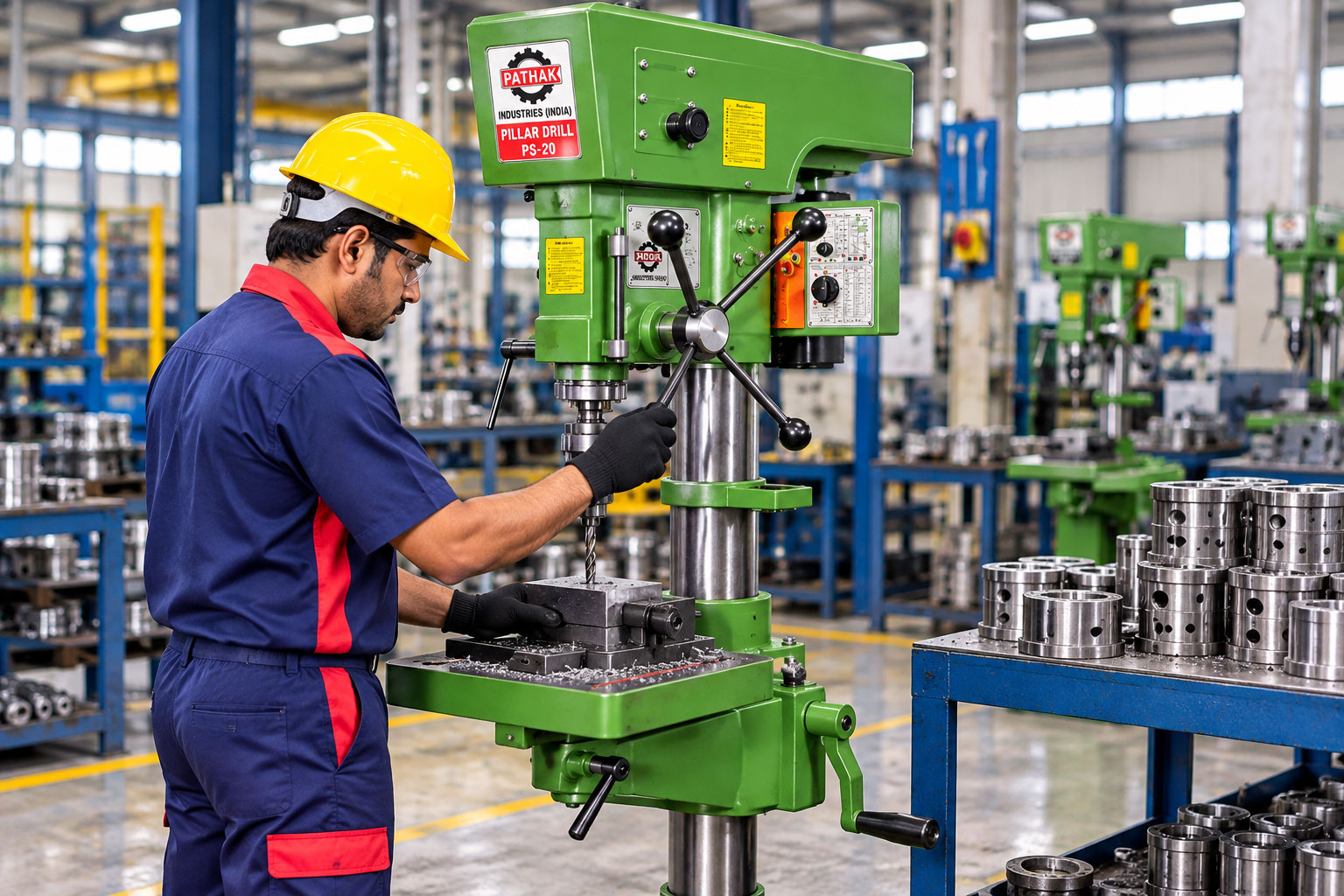
In metal fabrication and heavy engineering, a hole is rarely just a hole. Its diameter, depth, position, alignment, surface quality, and relationship to other features can determine whether two structural members assemble correctly, a bearing fits properly, a flange aligns with its mating component, or an entire fabricated structure meets its engineering drawing.
In metal fabrication and heavy engineering, a hole is rarely just a hole. Its diameter, depth, position, alignment, surface quality, and relationship to other features can determine whether two structural members assemble correctly, a bearing fits properly, a flange aligns with its mating component, or an entire fabricated structure meets its engineering drawing.
In metal fabrication and heavy engineering, a hole is rarely just a hole. Its diameter, depth, position, alignment, surface quality, and relationship to other features can determine whether two structural members assemble correctly, a bearing fits properly, a flange aligns with its mating component, or an entire fabricated structure meets its engineering drawing.
A Drilling Machine is a machine tool designed to create precise, clean, and repeatable holes in materials such as metal, wood, and plastic by using a rotating cutting tool. In industrial metalworking, drilling machines are primarily used for steel, stainless steel, cast iron, aluminium, alloy steels, non-ferrous metals, fabricated structures, castings, forgings, and engineering components.
Depending on machine design and tooling, drilling equipment can perform much more than basic hole-making. Operations can include drilling, reaming, counterboring, countersinking, spot facing, tapping and, on suitable machines, boring.
For general fabrication, a pillar or bench drilling machine may be sufficient. For large, heavy, or difficult-to-move workpieces, a Radial Drilling Machine is particularly valuable because the drilling head can be positioned over different locations on the stationary component rather than repeatedly moving the workpiece. Radial drilling machines are specifically used for large-diameter holes, multiple holes in one setup, and heavy workpieces.
An industrial drilling machine uses a rotating cutting tool—normally a drill—to remove material and create a cylindrical hole in a workpiece.
The basic drilling process involves:
Workpiece Positioning → Secure Clamping → Tool Selection → Speed & Feed Setting → Drilling → Chip Removal → Inspection
The workpiece must be properly restrained because the rotating drill can exert substantial torque during cutting.
Industrial drilling machines vary considerably in capacity and configuration. They range from compact bench drills for small components to large radial drilling machines designed to accommodate massive fabricated structures, castings, machine frames, and heavy engineering components.
Metal fabrication involves operations such as:
Drilling is frequently required before components can be bolted, pinned, tapped, mounted, or assembled.
Typical fabrication applications include holes for:
A properly selected drilling machine allows these holes to be produced more accurately and efficiently than uncontrolled hand drilling.
Heavy engineering components are often large, thick, and difficult to reposition.
Examples include:
The machine must therefore provide adequate rigidity, spindle power, torque, reach, workpiece capacity, feed control, and workholding capability.
Drilling creates a new hole in solid material using a rotating drill.
It is the fundamental operation performed on a drilling machine.
Typical applications include:
Reaming is a finishing operation performed on an existing hole.
A reamer removes a relatively small amount of material to improve hole size and finish.
It may be used where a drilled hole alone does not provide the dimensional control required by the engineering drawing.
Applications can include holes for:
Counterboring enlarges the upper portion of an existing hole to create a cylindrical recess.
This can provide space for components such as:
Countersinking creates a conical recess around the opening of a hole.
It is commonly used when a countersunk fastener needs to sit flush with or below the component surface.
Spot facing creates a localized flat surface around a hole.
This can provide a suitable seating surface for:
It can be particularly useful on rough castings or uneven fabricated surfaces.
A suitable drilling machine may also perform tapping to create internal threads in previously drilled holes.
Applications include threaded holes for:
The machine's spindle speed, torque, reversing capability, toolholding, and feed arrangement must be appropriate for tapping.
On suitable heavy drilling machines, an existing hole can sometimes be enlarged or corrected through a boring operation.
Boring can help improve hole alignment, diameter, or geometry depending on machine capability and tooling.
A bench drill is a relatively compact machine mounted on a bench or stand.
It is appropriate for:
Its capacity is generally more limited than larger industrial machines.
A Pillar Drilling Machine or column drill provides greater workpiece capacity and structural rigidity than a typical bench drill.
Applications include:
It can be a practical general-purpose drilling machine where workpieces can be conveniently positioned beneath the spindle.
For heavy metal fabrication and large engineering components, the Radial Drilling Machine is particularly important.
A radial drill consists principally of:
The radial arm can rotate around the column and move vertically, while the drilling head travels along the arm.
This allows the spindle to be positioned over different areas of a large workpiece. Instead of moving a heavy component repeatedly, the operator can move the drilling head to the required hole positions.
Consider a large fabricated machine frame weighing several tonnes.
Moving the entire structure every time another hole needs to be drilled would be difficult, slow, and potentially unsafe.
A radial drilling machine reverses the approach:
The workpiece remains securely positioned while the drilling head moves to the work.
This provides significant advantages for:
Radial drills are specifically designed for large or heavy workpieces that are inconvenient to reposition beneath a fixed spindle.
One major advantage of radial drilling is the ability to machine several hole locations while keeping a large component in the same basic setup.
For example, a fabricated machine base may require:
The drilling head can be repositioned to different locations rather than repeatedly moving the entire component.
Reducing unnecessary workpiece repositioning can improve workflow and help preserve the relationship between hole locations when the process is correctly planned and controlled.
One of the most common materials in structural fabrication and general engineering.
Applications include frames, brackets, plates, bases, beams, and welded assemblies.
Used extensively in machinery and structural components.
Correct cutting speed, feed, and tooling should be selected according to grade and hardness.
Heavy engineering frequently involves alloy steels with higher strength or hardness.
These materials can require lower cutting speeds, rigid setups, appropriate tooling, and effective coolant.
Stainless steel can be demanding to drill because inappropriate cutting conditions can contribute to heat generation and work hardening.
Correct cutting tools, speed, feed, rigidity, and coolant are important.
Drilling machines are extensively used for holes in cast components such as:
Aluminium can generally be drilled at higher cutting speeds than many steels, but suitable tool geometry and effective chip evacuation remain important.
Suitable machines and tooling can also drill brass, bronze, copper alloys, and other engineering materials.
Drilling machines can also create controlled holes in wood and plastic using suitable tooling and cutting parameters, although industrial heavy-engineering drilling machines are primarily selected for metalworking.
Drilling is used to produce holes in:
These holes may be required for bolted assemblies, equipment mounting, or site installation.
Industrial machinery requires accurately located mounting and assembly holes.
Radial drilling is particularly useful where the frame or base is too large to conveniently position on a conventional drill table.
Pipe, pump, valve, pressure equipment, and process-industry flanges require accurately positioned bolt-hole patterns.
Depending on manufacturing requirements, drilling equipment can produce these bolt holes before subsequent finishing and inspection.
Applications can include:
These components may require drilling, tapping, reaming, spot facing, and counterboring.
Gearbox housings can require numerous:
Correct hole location is important for successful assembly.
Manufacturers of:
may use industrial drilling equipment during the manufacture of large frames, brackets, supports, and other structural components.
Heavy drilling equipment can support the production and maintenance of:
Large plates, frames, brackets, machinery foundations, and other fabricated marine components can require substantial drilling operations.
Heavy drilling can be required for:
Drilling machines can support manufacturing of:
The applicable engineering and pressure-equipment requirements must always be followed.
Rigidity helps resist vibration and deflection during drilling.
This becomes increasingly important as drill diameter and workpiece hardness increase.
Large-diameter drilling requires sufficient torque.
A machine should not be selected solely on maximum spindle RPM.
For heavy engineering, evaluate:
Motor power + spindle torque + speed range + drilling capacity
Different materials and drill diameters require different spindle speeds.
Large drills generally require lower rotational speeds than small drills in the same material.
Power feed can provide more consistent drill advancement than purely manual feeding during demanding production work.
It is particularly useful for larger holes and repetitive operations.
Industrial machines commonly use standardized taper systems to hold drilling and related tooling.
The spindle taper should be suitable for the expected drill sizes and torque requirements.
Coolant can help:
The correct coolant and concentration depend on material, cutting tool, and process.
The workpiece should be securely restrained.
Depending on component size, this may involve:
Pathak recommends securing drill-press workpieces with suitable clamps or workholding equipment rather than holding them by hand, because an inadequately restrained component can rotate violently if caught by the drill.
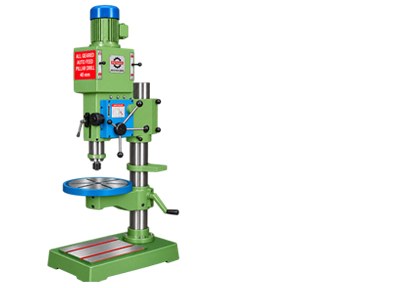
For work involving metal parts, plates, castings, and fabricated assemblies, the All Geared Auto Feed Pillar Drill 40mm offer...
View Product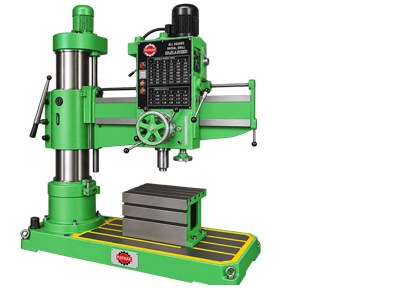
Built around drilling varied positions on large or awkward workpieces, the All Geared Radial Drill Machine RD-50 A provides a...
View Product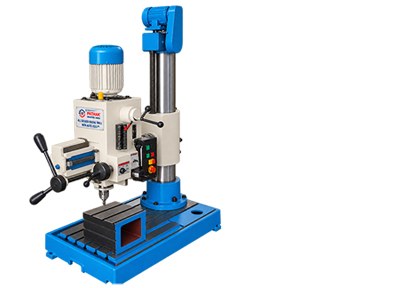
Built around drilling varied positions on large or awkward workpieces, the All Geared Radial Drill Machine With Auto Feed pro...
View Product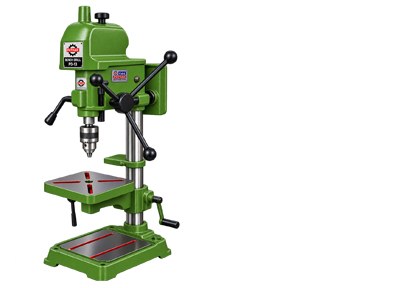
The Bench Drill Machine PM 13 handles metal parts, plates, castings, and fabricated assemblies through a layout intended for...
View Product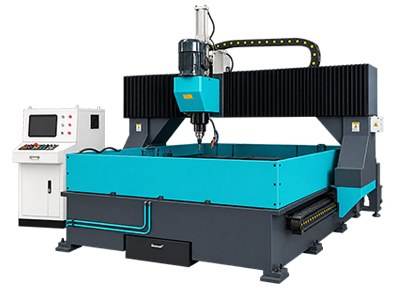
For work involving metal parts, plates, castings, and fabricated assemblies, the Gantry Type CNC Drilling Machine offers a pr...
View Product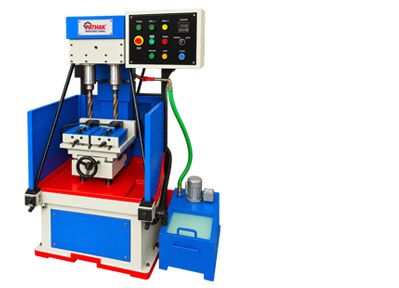
For work involving metal parts, plates, castings, and fabricated assemblies, the Heavy Duty Double Spindle Drill Machine offe...
View Product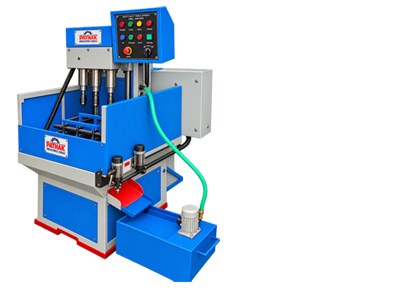
The Heavy Duty Triple Spindle Drill Machine is designed for creating positioned holes and related hole-finishing work. It fee...
View Product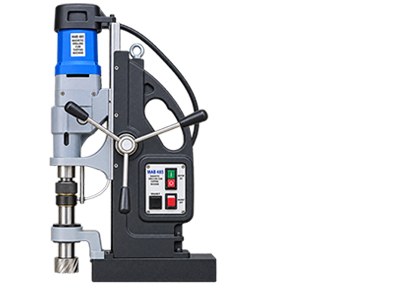
The primary role of the Magnetic Drilling Cum Tapping Machine MAB 485 is drilling or tapping installed steel structures. Its...
View Product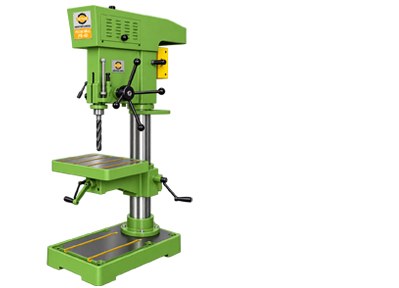
The Pillar Drill Machine PM 40 is designed for creating positioned holes and related hole-finishing work. Typical users inclu...
View Product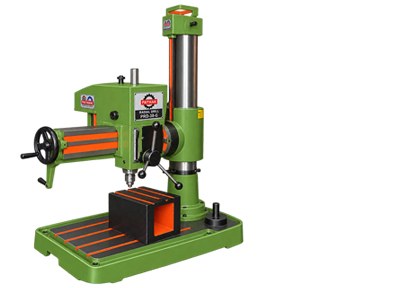
The primary role of the Radial Drill Machine PRD 38 G is drilling varied positions on large or awkward workpieces. Its extend...
View ProductDetermine whether you will drill:
If the workpiece is very large or difficult to move, a Radial Drilling Machine may be preferable.
Identify the largest hole you expect to produce in:
Machine drilling capacity should be evaluated for the actual material rather than assuming the same capacity applies to every metal.
For pillar drills, consider:
For radial drills, consider:
Large castings and fabrications may be too heavy for a conventional drill table.
A radial drilling machine allows large components to be supported on its base or an appropriate adjacent setup while the spindle head moves to the required position.
Do you require only drilling?
Or also:
Choose a machine with the spindle, speed, feed, torque, reversing capability, and tooling compatibility required for those operations.
Common cutting tools include:
Tool selection depends on hole diameter, depth, tolerance, workpiece material, production quantity, and machine capability.
Cutting speed depends on:
Material + drill material + drill diameter + coolant + machine rigidity
As drill diameter increases, spindle RPM normally needs to decrease for a given cutting speed.
Feed must allow the cutting edges to remove material effectively without overloading the drill or machine.
Too little feed can cause rubbing and excessive heat.
Too much feed can overload the cutting edges, spindle, or workpiece setup.
Deep holes require particular attention to chip removal.
Depending on the operation, appropriate techniques may include controlled peck drilling, suitable flute geometry, coolant delivery, or specialized tooling.
Never remove chips manually while the spindle is rotating.
Depending on requirements, inspect:
Suitable measuring equipment can include:
Calipers • micrometers • bore gauges • plug gauges • thread gauges • depth gauges • CMM equipment
Accurate starting helps prevent drill wandering.
Spotting or centre-drilling may be appropriate depending on the process.
The workpiece must not shift during drilling.
Excessive drill extension can reduce rigidity.
Worn cutting edges increase heat, cutting forces, and dimensional problems.
Cutting parameters should match the material and tooling.
Spindle, table, radial arm, head, and workholding systems should be maintained and checked as appropriate.
Where tolerances are important, verify the result rather than relying solely on machine settings.
Drilling productivity is determined by much more than spindle RPM.
Consider the complete cycle:
Positioning → Clamping → Tool Change → Drilling → Repositioning → Inspection
Productivity can be improved by:
For a large component containing many holes, reducing workpiece movement can provide substantial productivity benefits.
A preventive-maintenance program helps maintain drilling performance and machine reliability.
Regularly inspect:
On radial drills, particular attention should be given to the arm, column, drilling-head movement, locking/clamping mechanisms, and spindle-feed system.
Keep machine tables and T-slots clean so fixtures and workpieces can be positioned securely.
Industrial drilling machines contain rotating chucks, drills, spindles, power-transmission systems, and potentially sharp or hot metal chips.
Drill presses and industrial drilling equipment require safeguards for hazards created by rotating parts, points of operation, flying chips, and sparks.
Never rely on your hands to restrain a workpiece during drilling.
A drill can catch the material and cause it to rotate violently. Use suitable clamps, fixtures, or workholding equipment.
Hands, clothing, jewelry, and hair must remain clear of the rotating spindle, chuck, and drill.
Loose clothing or gloves can become entangled in rotating drilling equipment and must be kept away from the spindle, chuck, and tool.
Never leave a chuck key installed when starting the machine.
Metal chips can be sharp and hot.
Stop the machine and use an appropriate chip-removal tool according to approved procedures.
Drilling can produce flying chips and cutting-fluid splash.
Required chuck, spindle, belt, pulley, and point-of-operation guarding should remain correctly installed, while suitable shields help protect personnel from rotating parts and flying chips.
Before maintenance, repair, jam clearing, or work in hazardous areas, follow the applicable energy-isolation and lockout procedure.
Drilling Machines are fundamental machine tools for metal fabrication and heavy engineering, providing an efficient method for creating precise, clean, and repeatable holes required for structural connections, machine assembly, mounting systems, fasteners, pins, dowels, bushes, flanges, and numerous other engineering applications.
While Bench and Pillar Drilling Machines are highly useful for small and medium-sized components, the Radial Drilling Machine becomes particularly important when dealing with large fabricated structures, heavy castings, machine bases, gearbox housings, pump and valve bodies, large flanges, and other difficult-to-move workpieces.
The ability to move the radial arm and drilling head across a stationary workpiece allows multiple holes to be produced without repeatedly repositioning a heavy component, making radial drilling especially valuable in fabrication and heavy engineering.
Selecting the correct drilling machine requires consideration of workpiece size and weight, maximum hole diameter, material, spindle power and torque, speed and feed range, drilling reach, toolholding, required operations, production volume, workholding, coolant, accuracy, maintenance, and safety systems.
When combined with rigid clamping, appropriate cutting tools, optimized speeds and feeds, effective chip evacuation, dimensional inspection, preventive maintenance, trained operators, and proper machine guarding, an industrial drilling machine can provide the accuracy, repeatability, versatility, and productivity required by modern metal fabrication and heavy engineering workshops.