
Head Office
117, Grand Trunk Road, Salkia Howrah-700013, Kolkata, India
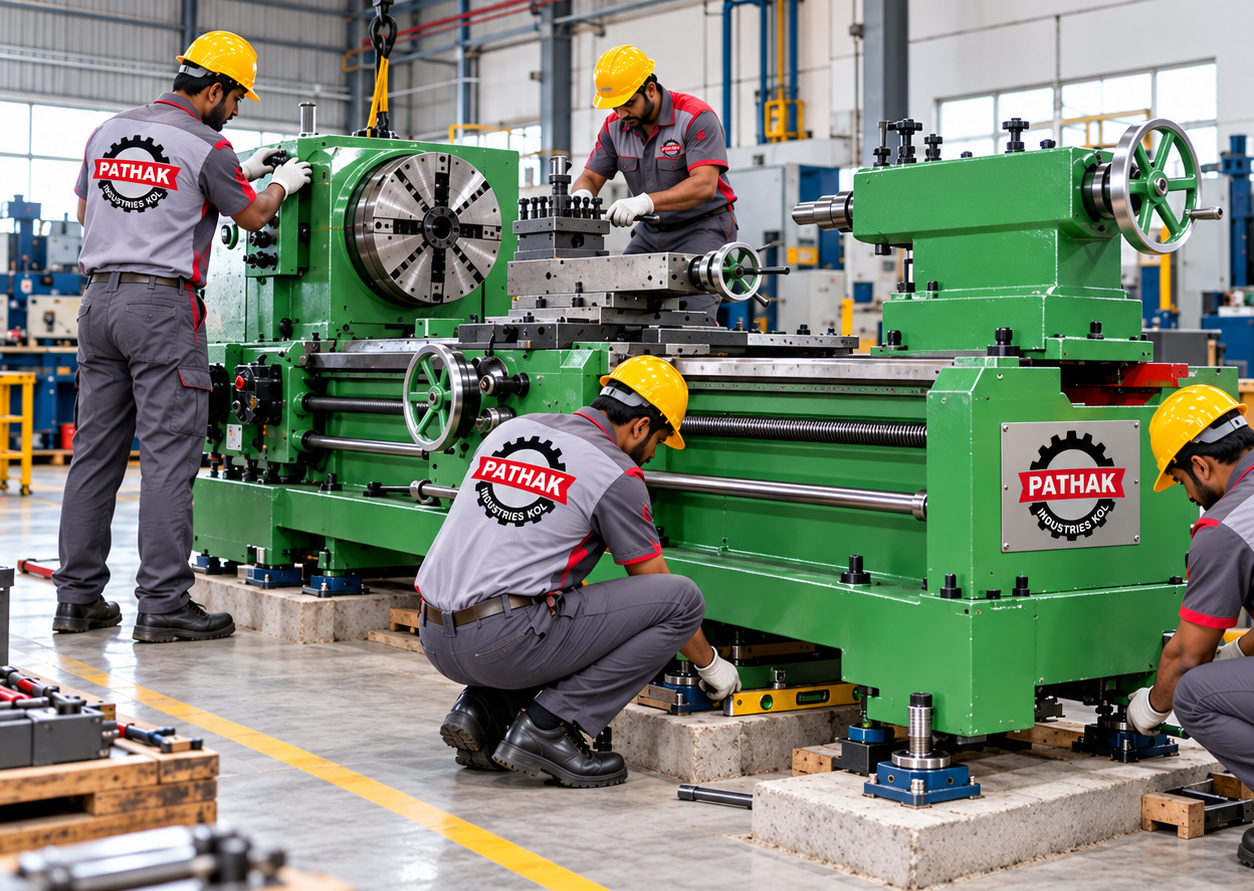
The automobile and auto components industry depends heavily on precision machining. From engine components and transmission shafts to wheel hubs, bushes, sleeves, axles, and threaded parts, manufacturers require components with controlled dimensions, reliable surface finish, concentricity, and repeatability.
The automobile and auto components industry depends heavily on precision machining. From engine components and transmission shafts to wheel hubs, bushes, sleeves, axles, and threaded parts, manufacturers require components with controlled dimensions, reliable surface finish, concentricity, and repeatability.
The automobile and auto components industry depends heavily on precision machining. From engine components and transmission shafts to wheel hubs, bushes, sleeves, axles, and threaded parts, manufacturers require components with controlled dimensions, reliable surface finish, concentricity, and repeatability.
Among the machine tools used for these operations, the lathe machine remains one of the most versatile. Conventional, heavy-duty, automatic, CNC, and specialized turning machines can perform operations such as turning, facing, boring, threading, grooving, taper turning, drilling, reaming, knurling, and parting.
Whether the requirement is a single replacement component, prototype development, batch production, or continuous manufacturing of automotive parts, selecting the right lathe can significantly influence productivity, dimensional consistency, operating cost, and finished-part quality.
A lathe operates primarily by rotating a workpiece while a cutting tool removes material in a controlled manner. This makes it particularly suitable for components that contain cylindrical, stepped, tapered, bored, threaded, or concentric features.
Automotive manufacturing contains a large number of such parts. A lathe may be used to turn the outside diameter of a shaft, bore the internal diameter of a hub, cut threads on a component, machine shoulders and grooves, or finish a component to its specified dimensions.
Lathe machining is therefore found throughout the automotive supply chain, including vehicle manufacturing plants, OEM component suppliers, transmission manufacturers, engine-component manufacturers, axle manufacturers, repair workshops, tool rooms, R&D facilities, and aftermarket component producers.
Shaft manufacturing is one of the most common automotive applications of turning equipment. Depending on component design and subsequent manufacturing processes, lathes can be used for machining:
Operations can include facing, straight turning, step turning, grooving, threading, drilling, boring, and finishing.
Automotive axles and associated components often require accurate cylindrical machining and controlled diameters. Heavy-duty lathes can be particularly useful when components are long, large in diameter, or relatively heavy.
Depending on the part and manufacturing route, operations may include end machining, diameter turning, shoulder machining, facing, thread cutting, and finishing of bearing or assembly locations.
Bushes are widely used in suspension assemblies, steering mechanisms, engines, gearboxes, linkages, and other mechanical assemblies.
A lathe can perform the external and internal machining necessary to produce a bush, including:
Facing → OD turning → drilling → boring/reaming → grooving or chamfering → parting
Where tight fits are required, the machining process and subsequent finishing must be selected according to the drawing tolerance and material.
Automotive assemblies use many cylindrical sleeves, distance pieces, collars, and spacers.
Lathes are well suited to these components because both outside diameter (OD) and inside diameter (ID) features can be machined while maintaining their required relationship.
Hubs can require operations such as:
For hub-related components, concentricity and correct workholding are particularly important because multiple cylindrical and face features may have functional relationships.
Depending on the specific component, material, machine configuration, and production process, turning equipment may be used during the manufacture or reconditioning of selected brake discs, drums, hubs, pistons, sleeves, and related rotational components.
Brake parts are safety-critical. Their dimensions, material requirements, surface condition, inspection criteria, and allowable tolerances should therefore always follow the applicable engineering drawing, OEM specification, and quality-control procedure.
A suitable lathe can produce or finish external and internal threads for many automotive and engineering parts, such as:
Thread pitch, form, diameter, and class of fit must be selected from the component specification rather than assumed.
Turning operations can also form part of the manufacturing process for selected engine components, including certain:
Not every engine component can or should be completely produced on a conventional lathe. Complex parts often require multiple processes such as milling, grinding, honing, heat treatment, balancing, or specialized CNC machining.
Gearboxes contain numerous rotational components that require turned features before or after other manufacturing operations.
Typical examples include shafts, sleeves, spacers, collars, hubs, gear blanks, bearing-seat areas, and threaded features.
For example, a gear blank may first be accurately turned to establish its bore, faces, and outside diameter before the teeth are generated using an appropriate gear-manufacturing process.
A broad range of smaller components can also be manufactured with turning processes, including:
Pins • rollers • collars • spacers • bushes • sleeves • couplings • adapters • plugs • connectors • bearing housings • pulleys • flanges • threaded inserts • cylindrical housings
This versatility is one reason turning equipment remains fundamental to auto-component manufacturing.
Automotive manufacturers can use lathe machines for several operations within the same machining setup.
Facing creates or finishes a flat surface at the end of a component.
Straight turning reduces and controls the outside diameter of cylindrical workpieces.
Step turning produces two or more controlled diameters along a component.
Taper turning creates conical surfaces where required by the component design.
Boring enlarges and finishes an existing internal hole.
Drilling and reaming can create and finish axial holes, depending on machine setup and accuracy requirements.
Thread cutting creates specified internal or external threads.
Grooving produces recesses for retaining rings, seals, clearances, or other functional requirements.
Chamfering removes sharp edges and creates specified angled edges.
Parting-off separates a completed part from bar stock.
Knurling produces a patterned surface where the component design requires grip or an interference-related feature.
Automotive components often need controlled diameters, lengths, shoulders, bores, and fits. A correctly selected and maintained lathe provides the mechanical platform required to machine these features accurately.
For high-accuracy production, measurement is just as important as machining. NIST's machining research highlights the importance of dimensional metrology and even in-machine measurement for monitoring and improving manufacturing quality.
One lathe can perform numerous machining operations. This makes it useful for manufacturers producing different components rather than a single dedicated part.
Different lathe configurations support different manufacturing volumes. A conventional machine may be suitable for repair work, development, or small batches, while CNC or automatic equipment can provide higher repeatability and productivity for larger production quantities.
For automotive production, making one correct component is not sufficient. The manufacturing process must consistently produce parts within specified limits.
CNC machines can be especially advantageous where the same geometry must be repeated over large quantities.
Subject to machine capacity, tooling, speeds, feeds, coolant, and cutting conditions, automotive turning operations can process many engineering materials, including various steels, alloy steels, stainless steels, cast iron, aluminium alloys, brass, bronze, and engineering plastics.
The most economical machine depends on production volume and part complexity. A conventional lathe can be economical for low-volume or highly variable work because programming requirements are limited. CNC and automatic machines can become more economical when repeatability, cycle time, reduced manual intervention, and higher production quantities justify the investment.
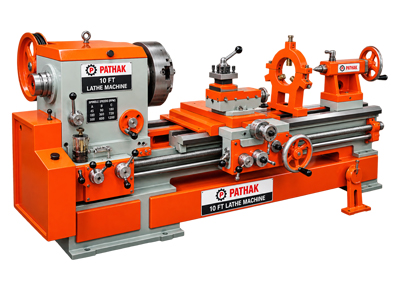
Built around turning rotational components and producing faces, diameters, bores, or threads, the 10 FT Lathe machine provide...
View Product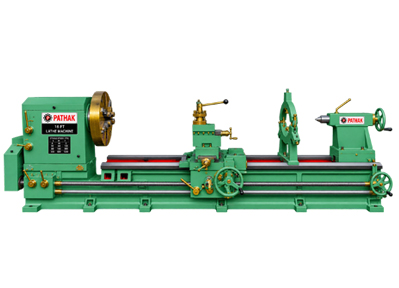
For work involving shafts, bushes, sleeves, discs, and other title-specific round parts, the 16 FT Lathe Machine offers a pro...
View Product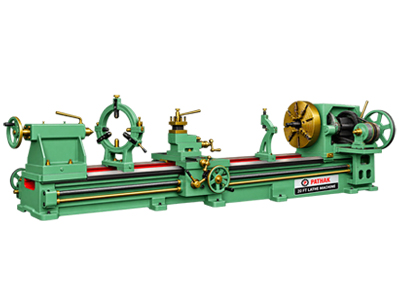
The primary role of the 20 FT Lathe Machine is turning rotational components and producing faces, diameters, bores, or thread...
View Product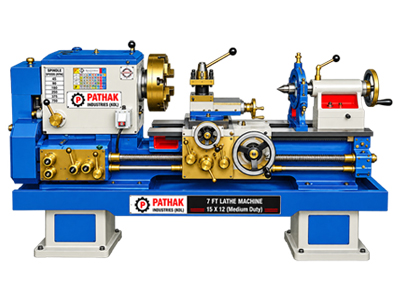
The primary role of the 7 FT 15 X 12 Medium Duty Lathe Machine is turning rotational components and producing faces, diameter...
View Product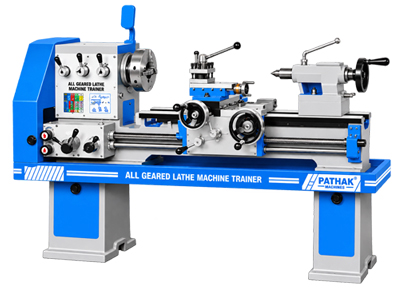
The All Geared Lathe Machine Trainer is designed for turning rotational components and producing faces, diameters, bores, or...
View Product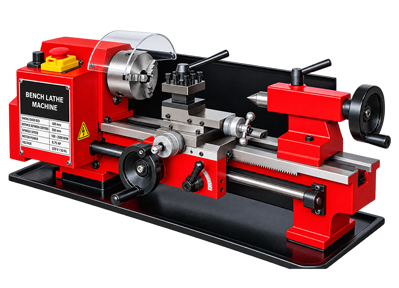
The Bench Lathe Machine handles shafts, bushes, sleeves, discs, and other title-specific round parts through a layout intende...
View Product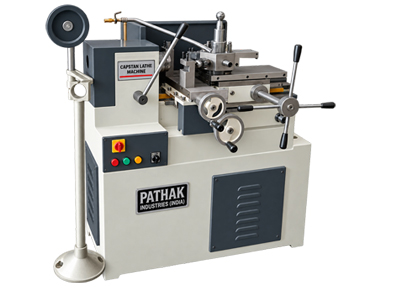
The Capstan Lathe Machine handles shafts, bushes, sleeves, discs, and other title-specific round parts through a layout inten...
View Product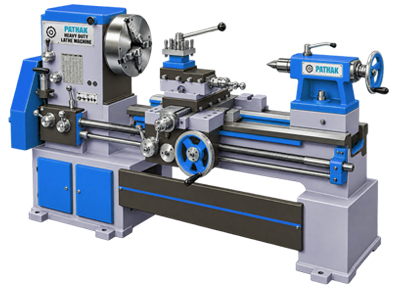
The Heavy Duty Cone Pulley Lathe Machine handles shafts, bushes, sleeves, discs, and other title-specific round parts through...
View Product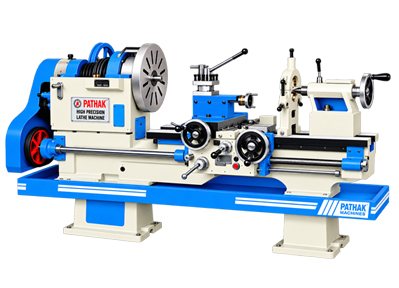
The High Precision Lathe Machine handles shafts, bushes, sleeves, discs, and other title-specific round parts through a layou...
View Product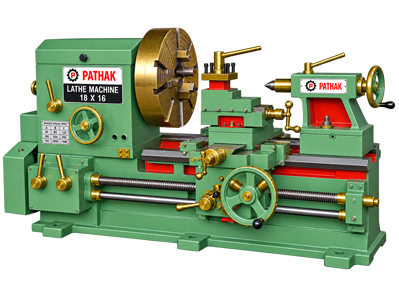
The Lathe Machine 18X16 is designed for turning rotational components and producing faces, diameters, bores, or threads. Typi...
View Product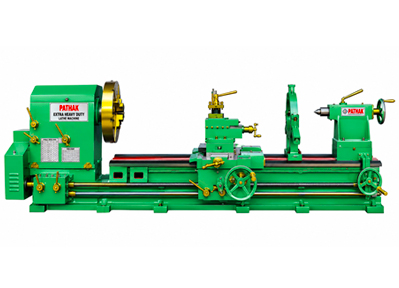
The Lathe Machine 20 FT 32X30 handles shafts, bushes, sleeves, discs, and other title-specific round parts through a layout i...
View Product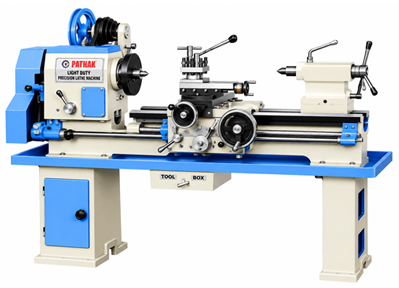
Built around turning rotational components and producing faces, diameters, bores, or threads, the Light Duty Precision Lathe...
View ProductThe lathe machine is a fundamental machine tool for the automobile and auto components industry because so many vehicle components require accurate cylindrical and rotational features. From shafts, axles, bushes and sleeves to hubs, brake-related components, threaded parts, engine components and precision-turned components, turning operations support both primary manufacturing and secondary finishing processes.
The key is not simply purchasing a larger or faster machine. Manufacturers should select equipment according to the component geometry, material, dimensions, tolerance, production quantity, workholding requirements, required operations, automation level, and inspection strategy.
When the correct machine is combined with appropriate tooling, secure workholding, trained operators, process control, preventive maintenance, dimensional inspection, and effective safety systems, lathe machining can provide the precision, flexibility, repeatability, and productivity required by modern automotive component manufacturing.