
Head Office
117, Grand Trunk Road, Salkia Howrah-700013, Kolkata, India
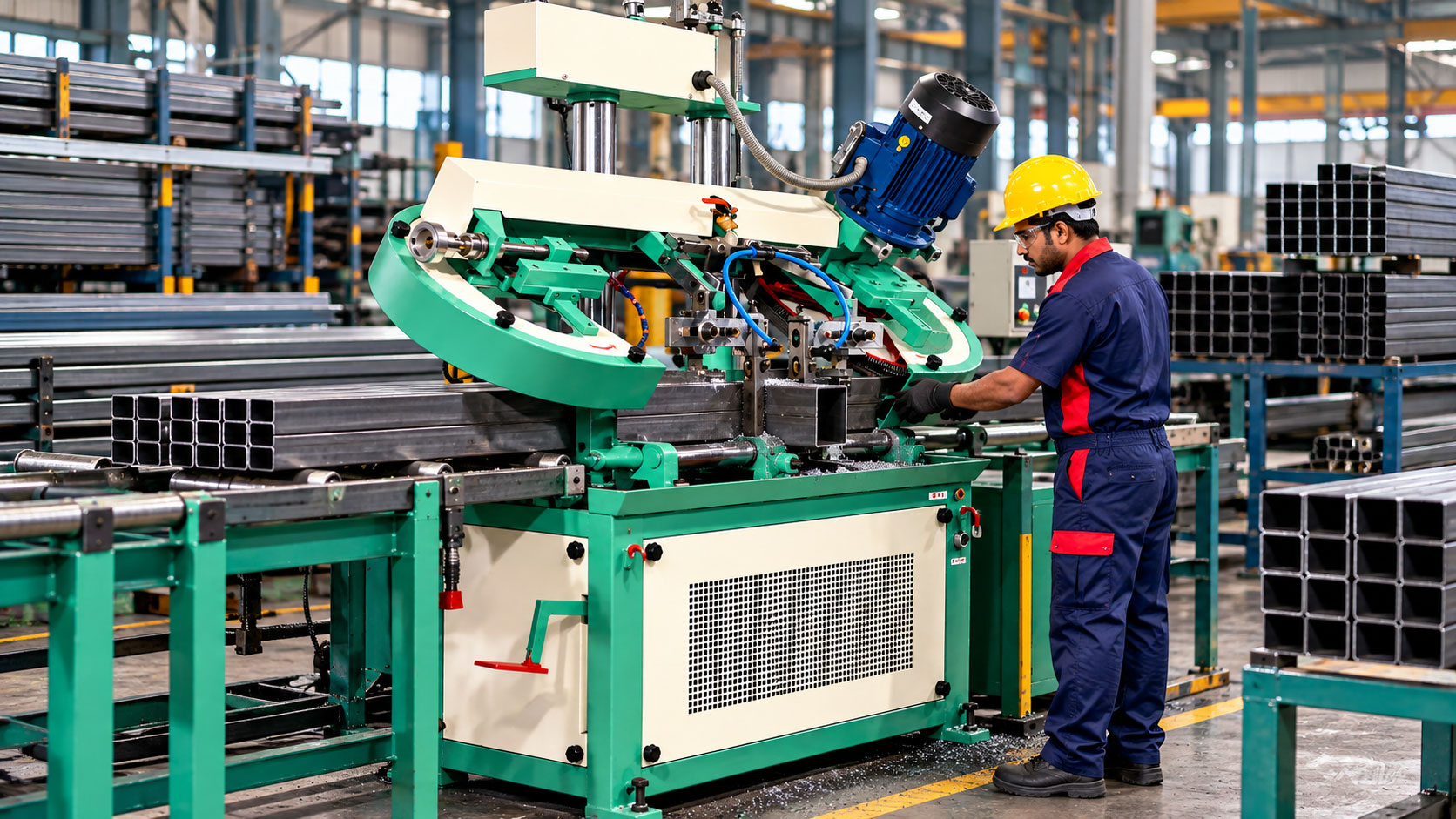
Heavy metal fabrication demands cutting equipment capable of processing large, heavy, and high-strength metal sections with accuracy, stability, and consistent productivity. Structural steel fabricators, machine builders, forging units, steel service centres, heavy engineering companies, and metal-processing plants routinely need to cut large bars, billets, blocks, pipes, tubes, profiles, and structural sections before subsequent machining, welding, forming, or assembly.
Heavy metal fabrication demands cutting equipment capable of processing large, heavy, and high-strength metal sections with accuracy, stability, and consistent productivity. Structural steel fabricators, machine builders, forging units, steel service centres, heavy engineering companies, and metal-processing plants routinely need to cut large bars, billets, blocks, pipes, tubes, profiles, and structural sections before subsequent machining, welding, forming, or assembly.
For these demanding applications, the Horizontal Double Column Bandsaw Machine is one of the primary heavy-duty tools used for high-precision, large-capacity industrial cutting.
Unlike lighter workshop saws, a double-column bandsaw uses a rigid two-column guide structure to support the saw head throughout the cutting stroke. This configuration provides the structural stability required for controlled blade movement when cutting large cross-sections and difficult engineering materials.
Modern machines may incorporate hydraulic work clamping, automatic blade guidance, controlled feed, blade-tensioning systems, coolant delivery, powered material feeding, PLC/CNC controls, and automatic cutting cycles.
This guide explains how Horizontal Double Column Bandsaw Machines work, their applications in heavy fabrication, suitable materials and workpieces, major machine features, benefits, selection criteria, operating practices, productivity considerations, maintenance, safety, and frequently asked questions.
A Horizontal Double Column Bandsaw Machine is an industrial metal-cutting machine in which a continuous bandsaw blade travels around drive and idler wheels while the saw head moves through the stationary workpiece.
The term horizontal refers to the general cutting orientation of the saw head and blade relative to the workpiece.
The term double column refers to the two rigid vertical columns that guide and support the saw head.
This design is particularly advantageous for demanding cutting because the columns help maintain saw-head alignment and structural stability throughout the cutting stroke.
The machine is therefore particularly suited to:
Depending on the model, machines may be configured for manual, semi-automatic, or fully automatic production.
The machine frame plays a critical role in bandsaw cutting accuracy.
When a blade cuts through a large solid steel section, substantial forces act on the blade, guides, saw head, workpiece, and machine structure.
A double-column configuration provides support on both sides of the cutting area.
This can improve:
Rigidity: A stable machine structure helps resist unwanted movement during heavy cutting.
Blade guidance: Correctly designed blade guides maintain the blade orientation close to the cutting zone.
Cutting consistency: Controlled saw-head movement helps maintain a stable cutting path.
Large-capacity machining: The configuration is well suited to large workpieces requiring substantial cutting height and width.
Production reliability: Robust construction can support repetitive industrial cutting when the machine is correctly selected and maintained.
For heavy fabrication, rigidity is particularly important because vibration and uncontrolled blade deflection can contribute to inaccurate cuts, rough surfaces, excessive blade wear, and reduced productivity.
Although individual machine designs vary, the typical cutting sequence follows several stages.
The workpiece is placed on the machine bed or material-support system.
Heavy stock may require:
The workpiece should be adequately supported so its weight does not create uncontrolled movement or instability.
The stock is positioned according to the required cut length.
On basic machines, this may be performed manually.
Automatic machines may use powered feeding systems and programmable length settings.
Before cutting, the material must be securely restrained.
Industrial bandsaws commonly use hydraulic vices or clamping systems to hold the workpiece during the cutting operation.
Correct clamping is essential because movement during cutting can damage the blade, affect cut accuracy, or create a safety hazard.
The bandsaw motor drives the continuous blade around the machine's wheels.
The blade travels in one direction through the cutting zone.
Blade speed should be selected according to factors such as:
The saw head moves downward through the workpiece under controlled feed.
On industrial machines, the feed may be hydraulically or electronically regulated.
Feed should be sufficient to maintain productive cutting without overloading the blade teeth.
Where appropriate, cutting fluid is delivered to the blade/workpiece interface.
Coolant can help:
Coolant selection should match the material, blade, machine, and manufacturer's recommendations.
After the blade passes completely through the workpiece, the cutting cycle ends.
The saw head returns to its programmed or preset position.
On automatic machines, the remaining stock may then advance automatically for the next cut.
Machine and blade selection should always be matched to the material.
Depending on machine capability and blade technology, industrial bandsaws can cut a wide variety of metals.
Typical applications include:
Heavy engineering manufacturers frequently cut alloy-steel stock before turning, milling, forging, or other processing.
Correct blade type, tooth geometry, blade speed, and feed are particularly important for tougher materials.
Stainless steels can present demanding cutting conditions because of their mechanical and thermal properties.
A rigid machine, appropriate blade, controlled feed, suitable cutting speed, and effective coolant application are important.
Tool rooms, die manufacturers, and steel service centres may use double-column bandsaws to cut:
Suitable bandsaws can also cut aluminium, copper alloys, and other non-ferrous materials.
Cutting parameters and blade tooth configuration should be selected for the particular material.
Forging plants may use heavy bandsaws for:
Selected cast components can also be cut, trimmed, or separated using appropriately configured bandsaw equipment.
One advantage of an industrial horizontal bandsaw is its ability to process different stock geometries.
Typical workpieces include:
Large solid rounds used for shafts, rollers, gears, forged components, and general machining.
Common in heavy machining and component manufacturing.
Tool steel, die blocks, mould steel, and general engineering stock.
Suitable machines can cut pipes and hollow cylindrical sections.
Structural and mechanical tubes can be processed with appropriate blade and clamping arrangements.
Large structural sections can be cut for fabrication projects where machine capacity permits.
Steel channels used in industrial structures and fabricated assemblies.
Angle sections can be cut individually or, on suitable machines, as part of production batches.
Some automatic bandsaws incorporate bundle-clamping arrangements for cutting multiple bars or tubes simultaneously.
Fabricators use bandsaws to prepare structural steel before:
Typical stock includes beams, channels, bars, tubes, and structural profiles.
Heavy engineering plants manufacture large industrial components and assemblies.
Bandsaws can prepare raw material for:
Cutting raw stock close to the required length can reduce unnecessary material removal during subsequent machining.
Steel service centres frequently receive long bars, billets, tubes, and other stock that must be cut to customer-specified lengths.
Automatic double-column bandsaws can be particularly valuable where many repeat cuts are required.
Forging operations often begin by cutting long bars or billets into individual blanks.
A bandsaw can prepare controlled-length pieces before heating and forging.
Machine-tool builders require raw stock for:
Bandsaw cutting is commonly an early stage before turning, milling, drilling, or grinding.
Heavy bandsaws may be used by automotive suppliers to prepare material for components such as:
The bandsaw normally performs the initial stock-separation operation rather than the final precision machining.
Railway component manufacturers may use heavy-duty bandsaws to prepare steel stock for:
Large-diameter pipes, bars, alloy-steel stock, and components used in oilfield equipment can require heavy cutting prior to machining or fabrication.
Manufacturers of cranes, excavators, loaders, earthmoving equipment, and other heavy machinery require large structural and machined components.
Double-column bandsaws can prepare raw material for these manufacturing processes.
Large rectangular tool-steel and mould-steel blocks are expensive materials.
Controlled bandsaw cutting can reduce unnecessary machining allowance and material waste when preparing blanks.
Marine fabrication involves large structural sections, pipes, bars, and engineering components that may require industrial cutting before fabrication or machining.
Manufacturers of turbines, pumps, valves, pressure-equipment components, and other heavy industrial systems may use bandsaws for cutting large engineering stock.
The machine structure should resist cutting forces without excessive vibration or deflection.
Two-column guidance supports stable vertical movement of the saw head.
Guides located close to the cutting zone help control blade orientation and reduce unwanted blade movement.
Hydraulic vices can provide consistent clamping for heavy stock.
Some machines may incorporate multiple clamps for automatic feeding.
Controlled saw-head feed allows cutting pressure/feed to be adjusted for different materials and cross-sections.
Adjustable blade speed allows cutting conditions to be matched more closely to different materials.
Automatic models can advance stock by a programmed distance after each cut.
This is useful for batch production.
Depending on machine design, programmable control can manage:
A correctly maintained coolant system supports heat control, lubrication, and chip removal.
Heavy cutting produces substantial chips.
Industrial machines may incorporate chip brushes, augers, conveyors, or collection systems to prevent chips from accumulating around the blade and cutting area.
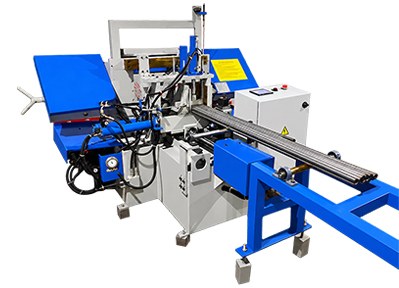
For work involving bars, tubes, profiles, timber, or title-specific stock, the Double Column Full Automatic Bandsaw offers a...
View Product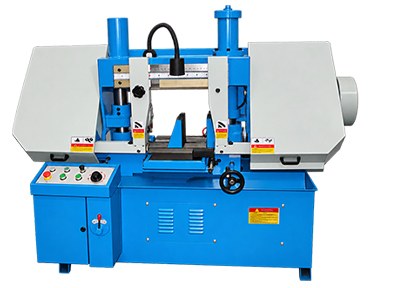
The Double Column Full Automatic Bandsaw Machine is designed for cutting stock with a continuous band blade. Its continuous c...
View Product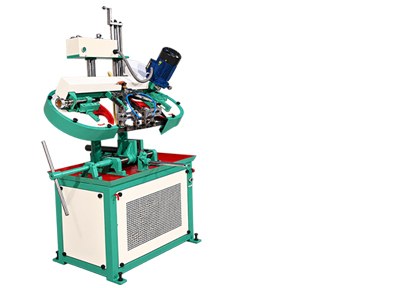
The Horizontal Double Column Bandsaw Machine Model - 250 S.A. handles bars, tubes, profiles, timber, or title-specific stock...
View Product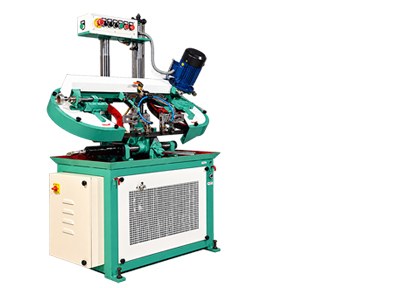
The Horizontal Double Column Bandsaw Machine Model-175 H.L.C. handles bars, tubes, profiles, timber, or title-specific stock...
View Product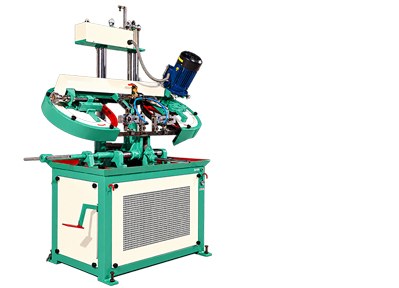
The primary role of the Horizontal Double Column Bandsaw Machine Model-175 S is cutting stock with a continuous band blade. I...
View Product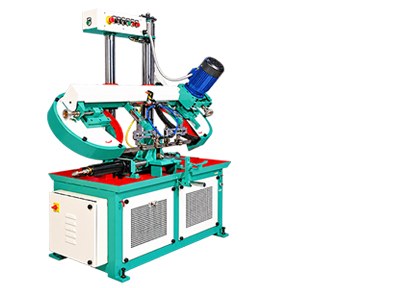
For work involving bars, tubes, profiles, timber, or title-specific stock, the Horizontal Double Column Bandsaw Machine Model...
View Product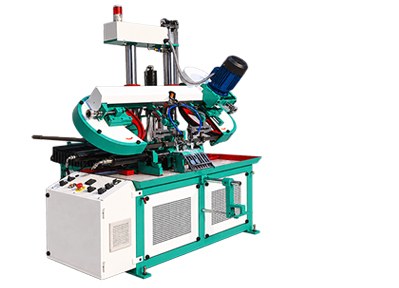
Built around cutting stock with a continuous band blade, the Horizontal Double Column Bandsaw Machine Model-200 F.A. provides...
View Product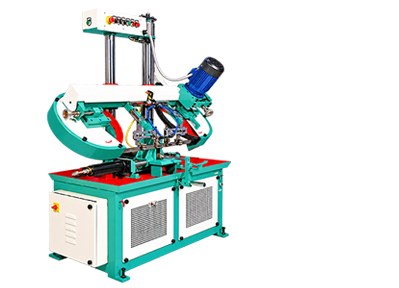
The Horizontal Double Column Bandsaw Machine Model-250 H.L.C. handles bars, tubes, profiles, timber, or title-specific stock...
View ProductThese machines can be engineered to process large round, square, and rectangular sections.
Double-column guidance provides a stable platform for demanding cuts.
Proper blade guidance, tension, clamping, and feed control can help produce straighter and more consistent cuts.
Bandsaw blades generally produce a relatively narrow kerf compared with some alternative cutting methods.
For expensive alloy or tool-steel stock, reduced kerf can translate into meaningful material savings over large production volumes.
With correct blade technology and cutting parameters, industrial bandsaws can process a wide range of engineering materials.
Automatic feeding and programmable cutting can reduce repetitive manual intervention during batch production.
The same machine may process round bars, square stock, rectangular blocks, pipes, tubes, and structural profiles within its rated capacity.
Determine what you normally cut:
Mild steel • alloy steel • stainless steel • tool steel • aluminium • forgings • castings
Material characteristics strongly influence machine and blade requirements.
Record the maximum:
Do not select a machine based only on today's average job if significantly larger stock is routinely expected.
A 400 mm solid steel bar and a 400 mm thin-wall pipe present very different cutting conditions.
The blade tooth pitch, feed, speed, chip formation, and required machine performance will differ.
Estimate:
For occasional cutting, semi-automatic operation may be sufficient.
For repetitive production, automatic material feeding and programmable controls can significantly improve workflow.
The blade is one of the most important elements of the cutting system.
Evaluate:
The correct blade should be selected according to the workpiece material and cross-section.
The number and spacing of teeth should suit the section being cut.
If too many teeth are simultaneously engaged in a thick solid section, chip space may become inadequate.
If too few teeth engage thin-wall material, cutting can become rough or unstable.
Variable-pitch blades can be useful for many general industrial applications because varying tooth spacing can help reduce repetitive vibration patterns.
Common industrial blade technologies include:
Bi-Metal Blades: Widely used for general steel and engineering applications.
Carbide-Tipped Blades: Can be appropriate for high-production cutting or difficult materials when machine rigidity and cutting conditions support them.
The blade manufacturer's recommendations should be followed for specific materials.
Different materials require different cutting speeds.
A useful industrial machine should provide a speed range appropriate to the materials being processed.
Look beyond maximum cutting dimensions.
Consider:
A large nominal cutting capacity has limited value if the structure cannot maintain stability under the required cutting load.
For production cutting, investigate:
Large solid sections generate considerable heat and chips.
The machine should provide effective coolant delivery and chip removal.
A large bandsaw cannot operate efficiently if heavy stock cannot be loaded and unloaded safely.
Plan for:
Infeed roller conveyor → Bandsaw → Outfeed conveyor → Crane/forklift/material handler
Material handling should be considered when designing the complete cutting station.
Verify:
Support long or heavy stock correctly.
Do not allow unsupported material weight to destabilize the workpiece or interfere with clamping.
The workpiece should not move during cutting.
Round material requires particular attention because inadequate clamping can allow rotation.
Select blade speed according to material and blade recommendations.
Avoid using one speed setting for every metal.
Feed should allow the blade teeth to cut efficiently.
Excessive feed can overload or deflect the blade.
Insufficient feed can cause inefficient rubbing, heat generation, and premature tooth wear.
Monitor:
Abnormal noise or vibration should be investigated rather than ignored.
Check:
Repeated deviation may indicate problems with blade condition, tension, guides, feed, or machine alignment.
The fastest cutting speed is not always the most productive setting.
The objective should be the lowest total cutting cost per acceptable component.
Productivity can be improved by:
A slightly slower cutting rate that substantially increases blade life may sometimes be more economical than an aggressive setting that causes frequent blade failures.
Incorrect blade tension can contribute to blade deviation and poor cut quality.
Guides should be correctly adjusted and maintained.
Movement during cutting directly affects accuracy.
Excessive feed can cause blade deflection.
Worn or damaged teeth can produce poor surface finish and inaccurate cutting.
Saw wheels, guides, columns, vice, and cutting geometry should remain correctly aligned.
Long stock should be supported so that its weight does not distort or shift the cutting setup.
Heavy-duty bandsaws require systematic preventive maintenance.
Inspect:
Regularly inspect:
Check:
Hydraulic leakage should be investigated promptly.
Maintain the recommended coolant concentration and cleanliness.
Remove accumulated chips from the coolant tank where required.
Inspect rollers, clamps, measuring devices, guide rails, and servo/hydraulic feeding mechanisms.
Periodically verify saw-head, guide, vice, and feed-system alignment according to the manufacturer's maintenance procedure.
A horizontal bandsaw contains a continuously moving toothed blade, heavy workpieces, powered clamps, moving saw heads, conveyors, and hydraulic systems.
Only trained and authorized personnel should operate the equipment.
Blade-wheel covers and other required guards should remain in position during operation.
Only the necessary portion of the blade around the cutting zone should be exposed as permitted by the machine design.
Never attempt to manually remove chips or reposition material while the blade is moving.
Large bars and billets can weigh hundreds or thousands of kilograms. Material handling should therefore be treated as a major part of machine safety.
Use appropriately rated cranes, slings, forklifts, conveyors, or other material-handling equipment.
Hands should remain away from powered vice and clamping zones.
Unusual vibration, noise, blade tracking, hydraulic leakage, or workpiece movement should be investigated using the manufacturer's safe shutdown procedure.
Before blade changes, servicing, jam clearing, or work inside hazardous machine areas, follow the applicable energy-isolation/lockout procedure.
A Horizontal Double Column Bandsaw Machine is a key heavy-duty cutting solution for modern metal fabrication and engineering industries, particularly where large-capacity stock must be cut accurately and repeatedly before further manufacturing.
Its rigid double-column construction makes it particularly suitable for processing large solid bars, billets, rectangular blocks, pipes, tubes, structural profiles, forgings, castings, tool steel, and other heavy engineering materials.
These machines can support production in structural steel fabrication, heavy engineering, steel service centres, forging plants, automotive component manufacturing, railway engineering, oil and gas equipment, machine-tool manufacturing, construction machinery, die and mould production, shipbuilding, and power-generation equipment manufacturing.
Machine selection should not be based on cutting capacity alone. Buyers should carefully evaluate workpiece material and dimensions, solid versus hollow sections, blade size, tooth pitch, blade speed, cutting feed, machine rigidity, double-column construction, clamping, coolant, chip management, automation, material feeding, production volume, and material-handling requirements.
For lower-volume operations, a semi-automatic double-column bandsaw may provide the required combination of capacity and flexibility. For repetitive production and steel service-centre applications, an automatic or CNC-controlled Horizontal Double Column Bandsaw Machine can reduce material-handling time and provide more consistent batch cutting.
When combined with the correct bandsaw blade, rigid clamping, optimized speed and feed, effective coolant and chip removal, proper material handling, trained operators, and preventive maintenance, a Horizontal Double Column Bandsaw Machine can provide the cutting capacity, precision, stability, productivity, and reliability required for demanding heavy metal fabrication.