
Head Office
117, Grand Trunk Road, Salkia Howrah-700013, Kolkata, India
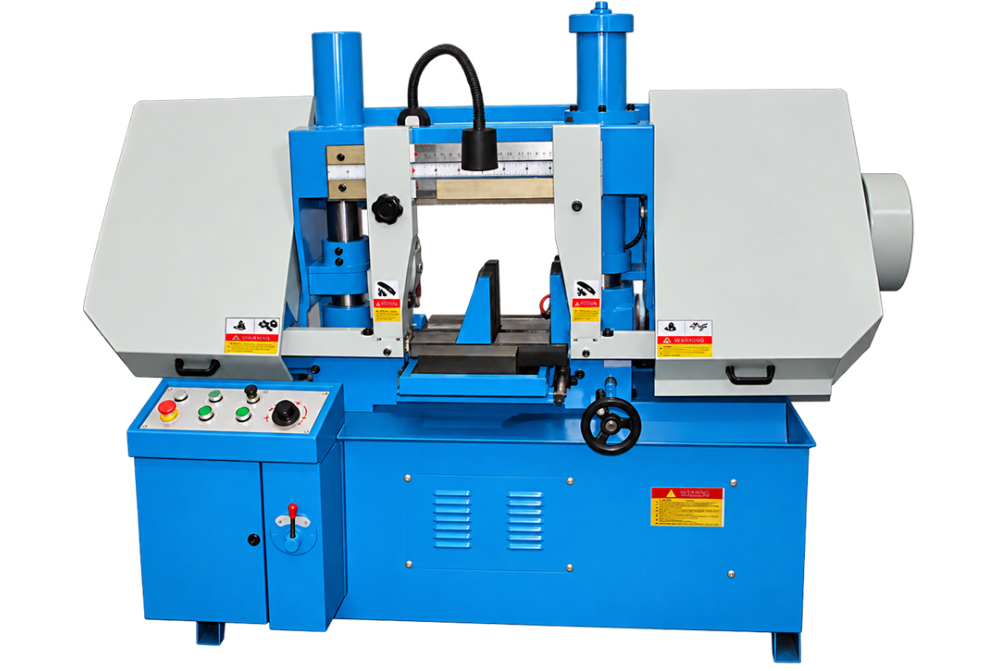
The Double Column Full Automatic Bandsaw Machine is designed for cutting stock with a continuous band blade. Its continuous cutting with stable blade guidance suits material stores, fabrication shops, sawmills, and workshops. Automatic functions reduce repeated manual intervention during the cycle.
Shipping Information Usually dispatched With In business days
Used for cutting stock with a continuous band blade, the Double Column Full Automatic Bandsaw Machine addresses a distinct stage of industrial work. It accommodates bars, tubes, profiles, timber, or title-specific stock and keeps setup, tool engagement, and job handling centred on that task.
Likely users are found in material stores, fabrication shops, sawmills, and workshops. They may use it to organise the named operation, reduce repeated handling, and establish a consistent workstation for suitable jobs.
In operation, it guides a tensioned loop blade through supported material. The practical focus is continuous cutting with stable blade guidance. Correct workholding, tooling, supervision, and routine inspection remain important because results depend on the material and setup. Automatic functions reduce repeated manual intervention during the cycle.
Machines within cutting machines can differ in arrangement and capability. The required Double Column Full Automatic Bandsaw Machine should therefore be matched to actual samples or process details, with tooling, controls, guarding, and utilities verified before ordering.
Pathak is a Manufacturer, Supplier and Exporter offering this machine with application-based product guidance.
| MODEL | AC-250 | AC-300 | AC-350 | AC-425 | AC-530 | |
| Cutting Capacity Round (mm) | 250 | 300 | 350 | 425 | 530 | |
| Cutting Capacity Square (mm) | 250 x 250 | 300 x 300 | 300 x 350 | 425 x 425 | 530 x 530 | |
| Blade Dimension | 3760 x 27 x 0.90 | 4100 x 34 x 1.10 | 300 x 350 | 4860 x 41 x 1.30 | 5800 x 54 x 1.30 | |
| Blade Speed | 20-40-60 | 20-40-60 | 20-40-60 | 20-40-60 | 20-40-60 | |
| Power Required Kw/ HP 440 V AC 50 Hz 3 Phase |
Saw Drive | 1.50 / 2.00 | 2.20 / 3.00 | 3.70 / 5.00 | 5.50 / 7.50 | 7.50 / 10.00 |
| Hyd. Drive | 0.75 / 1.00 | 0.75 / 1.00 | 0.75 / 1.00 | 0.75 / 1.00 | 0.75 / 1.00 | |
| Coolant Pump | 0.12 / 0.16 | 0.12 / 0.16 | 0.12 / 0.16 | 0.12 / 0.16 | 0.12 / 0.16 | |
| Hyd. Tank | Litre | 40 | 50 | 60 | 60 | 60 |
| Coolant Tank | Litre | 60 | 60 | 60 | 60 | 60 |
| MODEL | AC-650 | AC-800 | AC-1000 | AC-1250 | AC-1500 | |
| Cutting Capacity Round (mm) | 650 | 800 | 1000 | 1250 | 1500 | |
| Cutting Capacity Square (mm) | 650 x 650 | 800 x 800 | 1000 x 1000 | 1250 x 1250 | 1500 x 1500 | |
| Blade Dimension | 6900 x 54 x 1.60 | 8000 x 67 x 1.60 | 8800 x 67 x 1.60 | 12300 x 80 x 1.60 | 13100 x 80 x 1.60 | |
| Blade Speed | 20-40-60 | 20-40-60 | 20-40-60 | 20-40-60 | 20-40-60 | |
| Power Required Kw / HP 440 V AC 50 Hz 3 Phase |
Saw Drive | 9.30 / 12.50 | 15.00 / 20.00 | 15.00 / 20.00 | 15.00 / 20.00 | 15.00 / 20.00 |
| Hyd. Drive | 1.50 / 2.00 | 1.50 / 2. 00 | 2.25 / 3.00 | 2.25 / 3.00 | 2.25 / 3.00 | |
| Coolant Pump | 0.12 / 0.16 | 0.12 / 0.16 | 0.12 / 0.16 | 0.12 / 0.16 | 0.12 / 0.16 | |
| Hyd. Tank | Litre | 80 | 80 | 130 | 130 | 130 |
| Coolant Tank | Litre | 80 | 80 | 130 | 130 | 130 |