
Head Office
117, Grand Trunk Road, Salkia Howrah-700013, Kolkata, India
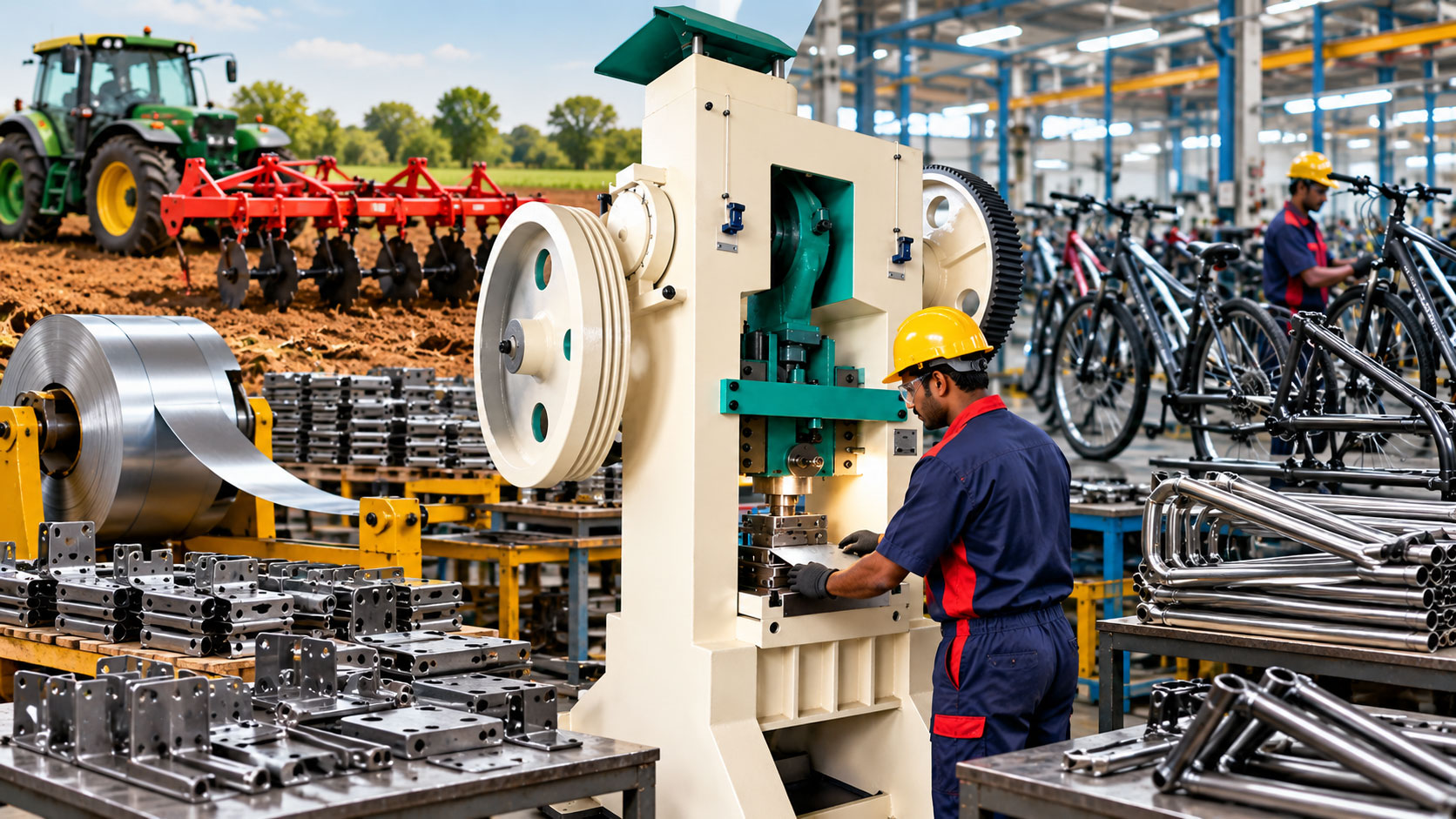
The agricultural machinery and bicycle industries depend on metal components that combine strength, dimensional consistency, economical production and repeatability. From brackets and clamps used in farm implements to bicycle frame fittings, chain guards and mounting plates, many components begin as sheet, strip, plate or tube and require operations such as blanking, punching, piercing, bending, forming, trimming and stamping.
The agricultural machinery and bicycle industries depend on metal components that combine strength, dimensional consistency, economical production and repeatability. From brackets and clamps used in farm implements to bicycle frame fittings, chain guards and mounting plates, many components begin as sheet, strip, plate or tube and require operations such as blanking, punching, piercing, bending, forming, trimming and stamping.
The agricultural machinery and bicycle industries depend on metal components that combine strength, dimensional consistency, economical production and repeatability. From brackets and clamps used in farm implements to bicycle frame fittings, chain guards and mounting plates, many components begin as sheet, strip, plate or tube and require operations such as blanking, punching, piercing, bending, forming, trimming and stamping.
An Industrial Power Press provides the controlled mechanical force needed to perform these operations with appropriate dies and tooling. C-frame presses are especially useful where easy die access and general-purpose stamping are priorities, while H-frame or pillar-type presses provide greater structural rigidity for heavier forming, larger dies and demanding production work.
An Industrial Power Press is a production machine designed to apply force through a reciprocating ram or slide onto a die and workpiece.
Depending on the tooling installed, a power press can perform operations including blanking, punching, piercing, bending, forming, trimming and stamping. These operations make power presses highly relevant to agricultural equipment, bicycle components, automotive parts, electrical products and general sheet-metal manufacturing.
A basic production sequence can be understood as:
Raw Material → Feeding → Positioning → Press Operation → Formed/Stamped Component → Finishing → Inspection
The die is therefore just as important as the press itself. Changing the tooling enables the same press platform to manufacture many different components, provided the required force and working dimensions remain within the machine's specifications.
Agricultural machinery operates in challenging environments involving soil, vibration, repetitive loading, dust and weather exposure. Consequently, many farm-equipment components need robust construction and repeatable dimensions.
Power presses can support production of parts for:
The exact press operation depends on component geometry and material.
Brackets are extensively used to mount, connect and reinforce parts of agricultural machinery.
A typical manufacturing route may involve:
Blanking → Piercing mounting holes → Bending/Forming → Deburring → Surface finishing
Power presses are well suited to repetitive bracket production when the correct die set is installed.
Steel mounting plates may require external blanking, hole punching and sometimes secondary forming.
Smaller components can potentially be produced on lower-capacity machines, while thicker and larger plates require substantially greater force.
Metal strips can be cut, pierced and formed into clamps used in agricultural assemblies.
For volume production, dedicated dies can combine or sequence several operations.
Agricultural machines often require metal guards around moving assemblies.
Presses can blank and form sheet-metal guards, although large or deep components may require specialized forming equipment and appropriately sized tooling.
Smaller presses can be highly productive for repetitive items such as washers, small plates, tabs and light brackets.
Suitable power presses can also participate in manufacturing various agricultural hand-tool and implement components. The exact machine depends on whether the job involves cold sheet-metal stamping, forming, cutting or another manufacturing process.
Bicycle manufacturing requires a large variety of relatively small metal components with consistent dimensions.
A C-frame power press is particularly useful for many such jobs because its open construction provides convenient die access. C-frame presses are commonly associated with bicycle components as well as blanking, piercing, bending and stamping operations.
A bicycle frame is primarily produced from tubes, but the manufacturing process can also involve pressed or formed fittings, brackets and reinforcing components.
Power presses can be used to manufacture suitable frame-related stampings, mounting tabs and fittings.
The press does not necessarily manufacture an entire bicycle frame in one operation. Tube cutting, bending, joining, brazing or welding and alignment processes may also be required.
Sheet metal can be blanked and formed into bicycle chain guards.
Depending on the design, multiple stages may be required for cutting, embossing, forming, piercing and trimming.
Bicycles contain numerous small mounting points for accessories and mechanical systems.
A properly tooled power press can manufacture these parts efficiently from sheet or strip material.
Certain metal mudguard brackets, stays and attachment components can be punched and formed on suitable presses.
Individual stamped or formed components used in bicycle stands can also be produced with press tooling before assembly.
High-volume bicycle production requires numerous small metal stampings.
These are ideal examples of parts where automated or semi-automated power-press production can provide high repeatability.
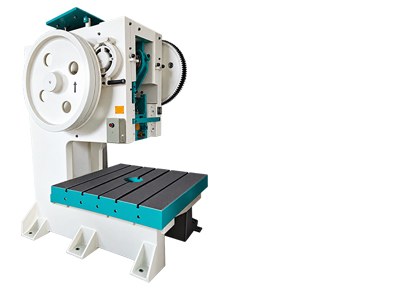
For work involving components and materials named by the product title, the C Type Power Press Machine 100 Ton offers a proce...
View Product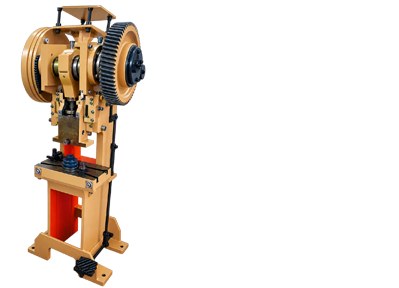
The C Type Power Press Machine 5 Ton is designed for applying controlled force for forming, fitting, punching, or compaction....
View Product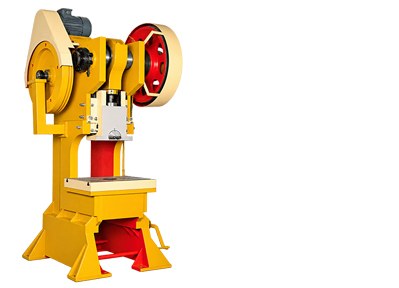
The C Type Power Press Machine 50 Ton handles components and materials named by the product title through a layout intended f...
View Product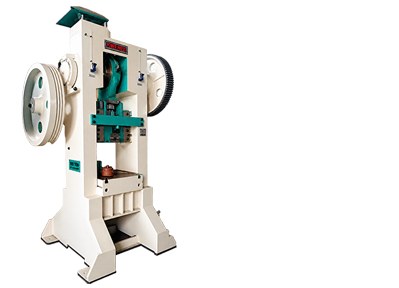
The Pillar Type H Type Power Press handles components and materials named by the product title through a layout intended for...
View Product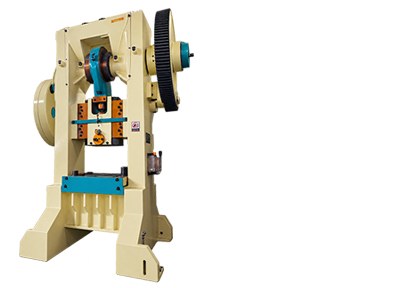
For work involving components and materials named by the product title, the Pillar Type H Type Power Press 100 Ton offers a p...
View ProductA 5 Ton C Type Power Press is best considered a compact machine for relatively light-duty press operations.
Its C-shaped or gap-frame design provides convenient access to the working area.
For agriculture and bicycle-component production, a 5-ton press may be considered for appropriately sized:
small washers, clips, tabs, thin-sheet brackets, small mounting plates, light punching, marking and simple forming operations.
A lower-capacity press can be particularly useful where components are small and production does not justify operating a larger press.
It generally offers a smaller footprint, easier tooling access and lower power demand than much larger production presses.
However, 5 tons must not automatically be assumed sufficient for a particular component. Actual force should be calculated from the material, thickness, geometry and operation.
The 50 Ton C Type Power Press represents a substantial increase in production capability and can address medium-duty sheet-metal operations when correctly configured.
Industry machine specifications commonly associate 30–50 ton C-frame presses with punching and forming operations, while C-frame machines generally support blanking, piercing, stamping, bending and trimming.
Potential jobs include suitable:
Potential applications include:
The 50-ton configuration can provide a practical middle ground for manufacturers handling a broad range of components.
A 100 Ton C Type Power Press is intended for considerably heavier pressing requirements than compact machines.
Higher tonnage can support thicker materials, larger cut perimeters and more demanding forming operations—but only when the press's bed, stroke, energy, frame and tooling specifications are also appropriate.
Industry equipment references associate 75–100 ton C-frame machines with jobs such as heavy bracket forming and plate blanking.
Suitable applications can include heavier:
implement brackets, mounting structures, reinforcement components, plates, machinery supports and formed steel components.
A 100-ton machine may be relevant where larger dies, multi-operation tooling or relatively demanding forming processes are involved.
For ordinary small bicycle stampings, however, 100 tons may be unnecessary. Selecting excessive capacity can increase capital expenditure and operating requirements without improving the part.
The Pillar Type H Type Power Press uses a substantially more enclosed and structurally rigid frame arrangement than an open C-frame design.
This becomes particularly important as component dimensions, tooling size, load distribution and production demands increase.
H-frame presses are used for operations including blanking, cutting, piercing, trimming, drawing, stamping, punching and bending. Their closed structure provides improved rigidity and resistance to deflection, making them particularly appropriate for heavier blanking and forming applications.
The primary advantage is not simply greater tonnage.
It is frame rigidity.
Under demanding loads, maintaining ram-to-die alignment is important for:
Research comparing press-frame designs similarly notes that H-frame construction offers low deflection and good slide guidance.
H-type machines are particularly relevant to heavier agricultural component production involving larger dies, thicker stock or demanding forming.
Examples may include:
heavy brackets, implement plates, structural stampings, machinery supports, reinforced components and larger formed parts.
A 100 Ton Pillar Type H Type Power Press combines substantial pressing capacity with the structural advantages of a closed-frame configuration.
For manufacturers working with relatively demanding agricultural components, larger dies or operations where frame rigidity is important, this configuration can offer advantages over an equivalent open C-frame machine.
H-frame designs resist deflection more effectively under demanding loading and are therefore commonly selected for heavier blanking, forming and progressive-die applications.
In agricultural manufacturing:
heavy brackets • reinforcement plates • implement components • equipment mounting parts • thicker sheet-metal stampings
In bicycle and related component manufacturing:
multi-station stampings • larger fittings • formed assemblies • higher-load brackets • suitable progressive-die components
Again, a 100-ton rating alone is not enough to approve a job. The actual tooling and component must be evaluated.
| Requirement | C Type Power Press | Pillar / H Type Power Press |
|---|---|---|
| Die accessibility | Excellent | More restricted |
| Open working area | Excellent | Moderate |
| Frequent die changes | Convenient | Depends on configuration |
| Small/medium stampings | Excellent | Suitable |
| Heavy-duty pressing | Capacity-dependent | Excellent |
| Frame rigidity | Moderate | Higher |
| Resistance to deflection | Lower than H-frame | Higher |
| Large dies | Limited by model | Generally better suited |
| Progressive tooling | Application-dependent | Often preferred |
| General bicycle components | Excellent | For demanding operations |
| Heavy agricultural components | Application-dependent | Excellent |
C-frame presses provide open access from three sides, making strip feeding and frequent tooling changes convenient. H-frame construction provides a more rigid load path and is better suited to heavier or less centrally distributed loading.
Begin with the actual component drawing.
Do not start by deciding, “I need a 50-ton press.”
Instead determine:
material → thickness → dimensions → required operation → production quantity → tolerance
Only then should machine capacity be calculated.
Identify whether the component requires:
Different operations impose different force, stroke and tooling requirements.
For blanking and piercing, required force depends primarily on the material's shear strength, stock thickness and total cutting perimeter.
For forming and drawing, the calculation is different.
Therefore, never select a machine simply because another component of approximately the same physical size was produced on that tonnage.
Confirm:
A press may have enough tonnage but still be unsuitable because the die does not fit the working envelope.
A C-frame machine is attractive for easy access, particularly for properly centered general-purpose work.
If the tooling produces significant eccentric or off-center loading, an H-frame machine may provide a better structural solution.
For occasional or batch production, manual feeding may sometimes be practical where permitted by the machine's engineered safeguarding system and applicable regulations.
For repetitive production, consider engineered automation such as:
coil feeding, straightening, automatic feeders, progressive tooling, part ejection and appropriate control/safety systems.
A power press is high-energy industrial equipment. Machine safeguarding should be engineered for the specific press, die, feed method and jurisdiction.
Depending on the machine and application, systems can include fixed/interlocked guards, presence-sensing devices such as light curtains where appropriate, two-hand controls, clutch/brake safety systems, emergency stops and anti-repeat controls.
Never bypass a safeguard to increase production speed.
For small clips, washers, tabs and light stampings:
C Type Power Press – 5 Ton, provided calculated force and machine specifications are adequate.
For brackets, mounting plates and general agricultural/bicycle stampings:
C Type Power Press – 50 Ton may provide a practical solution.
For heavier blanking, punching and forming where open access remains beneficial:
C Type Power Press – 100 Ton can be considered.
For larger tooling, demanding forming, progressive operations or applications where minimizing frame deflection is particularly important:
Pillar Type H Type Power Press should be considered.
For demanding components requiring both substantial force and greater frame rigidity:
Pillar Type H Type Power Press – 100 Ton can be a strong candidate, subject to engineering verification.
A power press delivers its best productivity when the entire production system is optimized rather than concentrating only on press speed.
Use accurately manufactured dies and maintain correct die alignment. Keep material thickness and mechanical properties within the specified production range. Establish preventive maintenance schedules for lubrication, bearings, clutch/brake systems, guides and drive components.
For repetitive production, appropriate feeding and automation can reduce handling time and improve consistency. Finished parts should also undergo dimensional inspection so that die wear can be identified before it begins producing unacceptable components.
Most importantly, never sacrifice guarding or safe operating procedures for additional strokes per minute.
Regular maintenance directly affects accuracy, uptime and equipment life.
Before operation, inspect guards and safety systems and check for visible damage, abnormal looseness or lubrication issues.
At scheduled intervals, inspect the ram/slide guides, clutch and brake system, crankshaft and bearings, flywheel and drive system, lubrication points, fasteners, electrical controls and die mounting surfaces according to the manufacturer's maintenance instructions.
H-frame presses should additionally be maintained according to the manufacturer's requirements for structural fasteners or tie rods where fitted.
Maintenance work requiring access to hazardous areas must follow the applicable machine isolation and lockout procedures.
Industrial Power Press machines provide an important manufacturing platform for both the Agriculture and Bicycle Industries. With properly engineered dies, they can transform sheet, strip and plate into repeatable components through blanking, punching, piercing, bending, forming, trimming and stamping.
For smaller and easily accessible jobs, the 5 Ton C Type Power Press can handle appropriate light-duty components. A 50 Ton C Type Power Press expands capability for medium-duty brackets, plates and general stampings, while the 100 Ton C Type Power Press addresses substantially heavier requirements where open die access remains desirable.
For demanding applications, the Pillar Type H Type Power Press offers an important structural advantage: greater frame rigidity. A 100 Ton H Type Power Press can therefore be particularly useful for heavier agricultural components, larger tooling and operations where controlling press-frame deflection is critical.
For manufacturers, the key principle is simple: select the power press according to the component and process—not tonnage alone. Correctly matching the press, die, material, safeguarding and production method can deliver reliable productivity, consistent components and long-term manufacturing performance.