
Head Office
117, Grand Trunk Road, Salkia Howrah-700013, Kolkata, India
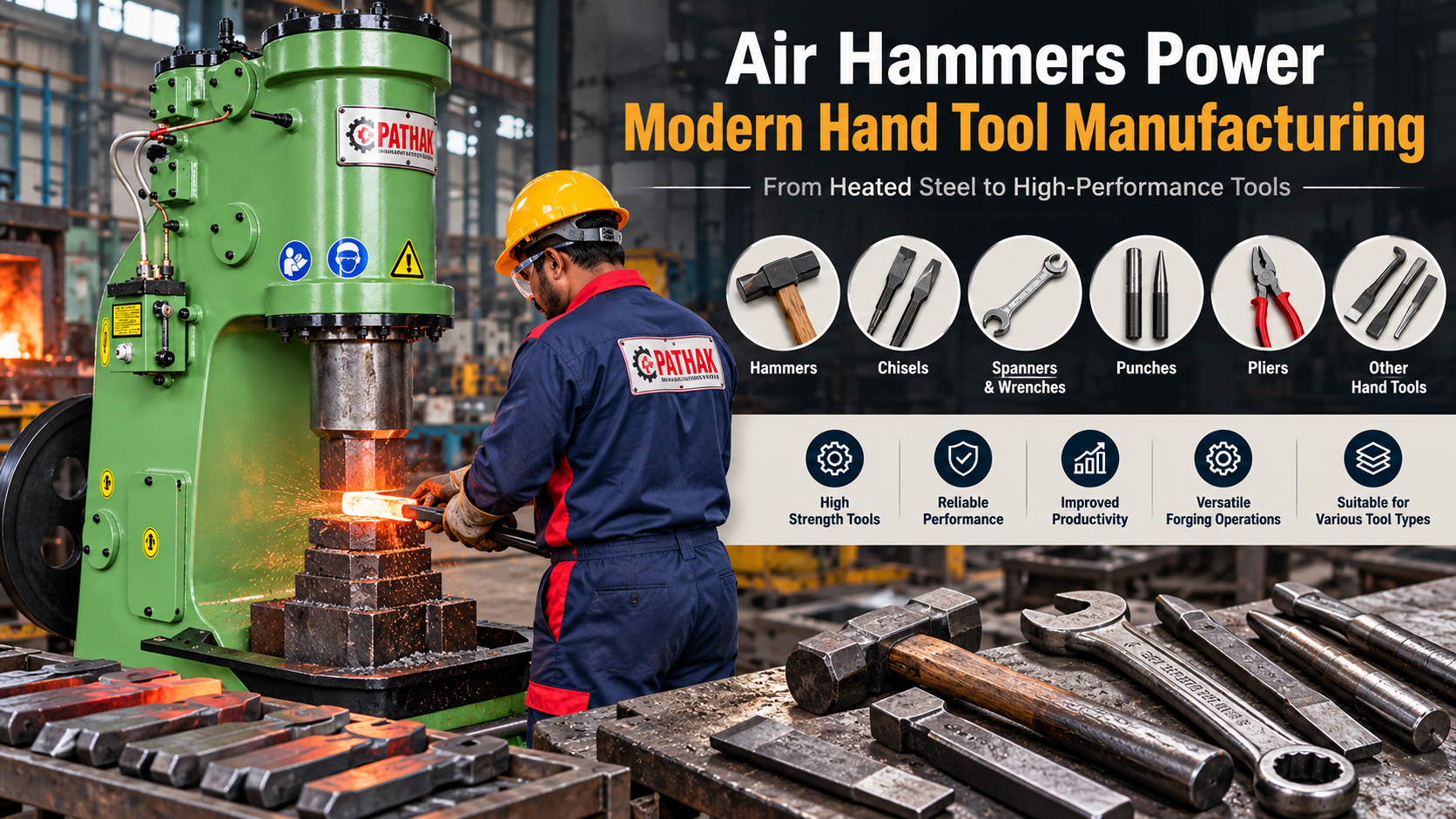
Hand tools may appear simple, but products such as hammers, chisels, spanners, punches, wrenches and other industrial tools must withstand repeated impact, high torque and demanding working conditions. Their performance depends heavily on the material selected, forging method, heat treatment and final manufacturing quality.
Hand tools may appear simple, but products such as hammers, chisels, spanners, punches, wrenches and other industrial tools must withstand repeated impact, high torque and demanding working conditions. Their performance depends heavily on the material selected, forging method, heat treatment and final manufacturing quality.
Hand tools may appear simple, but products such as hammers, chisels, spanners, punches, wrenches and other industrial tools must withstand repeated impact, high torque and demanding working conditions. Their performance depends heavily on the material selected, forging method, heat treatment and final manufacturing quality.
An Industrial Air Hammer, also known as a Pneumatic Forging Hammer, can play an important role in the tool-making process. It uses controlled, repeated hammer blows to plastically deform heated metal, enabling operators to draw, upset, bend, flatten and progressively shape a workpiece. Pneumatic forging hammers are widely associated with open-die forging and tool manufacturing.
For hand-tool manufacturers, this makes the machine particularly useful for producing and preforming tool blanks that will subsequently undergo trimming, machining, grinding, heat treatment and finishing operations.
A hand tool is expected to transfer force reliably. A spanner must tolerate substantial torque, a hammer head repeatedly receives impact loads, and a chisel must withstand striking while maintaining a functional cutting or working edge.
Forging shapes solid metal through compressive force rather than simply removing material to obtain the desired geometry. The process can improve the internal structure and orient grain flow around the component geometry, which is one reason forging is widely used for mechanically demanding parts.
This manufacturing principle has long made forging suitable for products such as wrenches, hammers, pliers, cutting tools and other industrial hand tools.
An Industrial Air Hammer or Pneumatic Forging Hammer is a power forging machine in which pneumatic action controls the reciprocating movement of the hammer ram.
The heated workpiece is positioned between the hammer tooling and anvil or lower die. Repeated impacts progressively deform the metal. Depending on the tooling and workpiece, the operator can reposition and rotate the material between blows to develop the required shape.
Typical forging operations include:
These operations make pneumatic forging hammers versatile equipment for tool-making and general forging workshops.
The fundamental process is straightforward.
The workpiece is first heated to an appropriate forging temperature for its specific material grade. Once sufficiently heated, it is transferred to the hammer.
Pneumatic action then moves the hammer ram vertically. During the downward stroke, the hammer delivers impact energy through the upper tooling to the workpiece resting on the lower tooling or anvil.
Instead of attempting to create the complete geometry with one impact, a sequence of controlled blows gradually redistributes the material.
The operator can rotate, move or reposition the workpiece between blows. This provides considerable flexibility for open-die forging and preforming operations.
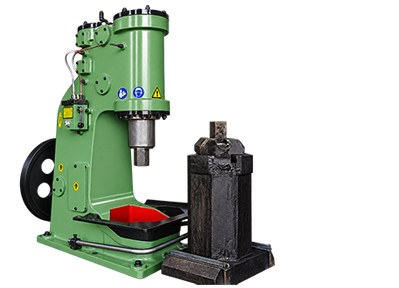
The 25 Kg Air Hammer Machine is designed for forging and shaping heated metal. Typical users include forge shops, tool produc...
View Product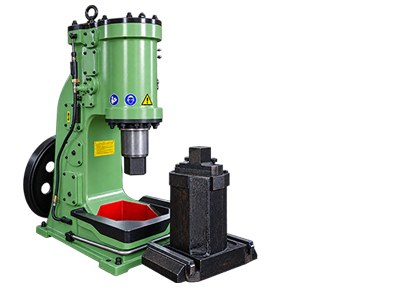
Built around forging and shaping heated metal, the 40 kg Air Hammer Machine provides a dedicated working arrangement. The ope...
View Product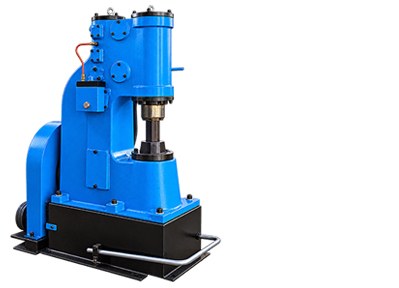
The Blacksmith Power Hammer 25 KG is designed for forging and shaping heated metal. It delivers repeated powered blows betwee...
View ProductHammer heads can begin with appropriately sized steel stock that is heated and progressively forged to develop the required blank.
Depending on the hammer design and manufacturing process, operations can include upsetting, drawing, flattening and punching/preforming the eye. Subsequent trimming, machining, grinding and heat treatment establish the final dimensions and performance characteristics.
A heated steel bar can be drawn and tapered under the pneumatic hammer to create the basic chisel profile.
The forged blank subsequently undergoes operations such as straightening, grinding, heat treatment and sharpening according to the intended chisel type.
Spanners and wrenches are classic examples of forged hand tools because their bodies need to withstand substantial mechanical loading. Engineering teaching material specifically identifies box-end wrenches among common forged products.
An air hammer may be used for blank preparation, drawing, upsetting and preforming, depending on the production process. For high-volume precision spanners, however, dedicated impression/drop-forging equipment and shaped dies may be more appropriate for final near-net shaping.
Punch blanks can be drawn and shaped from heated tool steel or other specified grades. Final machining, grinding and heat treatment are then used to obtain the required working geometry and hardness.
Forging is also commonly used in plier manufacturing. The forging stage creates the basic component geometry before machining of joint areas, cutting surfaces and other precision features. Industry sources identify pliers alongside hammers and wrenches as common forged hand-tool products.
Depending on hammer capacity, material, tooling and component dimensions, pneumatic forging can also be considered for tool blanks such as:
crowbars, levers, wedges, punches, clamps, hooks, striking tools, blacksmith tools, agricultural hand tools and custom workshop tools.
A typical production sequence illustrates how the air hammer fits into a broader manufacturing line.
1. Raw Material Selection
The manufacturer selects the steel grade and bar dimensions according to the required mechanical properties of the finished chisel.
2. Cutting the Stock
Bar stock is cut into suitable billet lengths, allowing sufficient material for forging and subsequent finishing.
3. Heating
The billet is heated uniformly to the forging temperature specified for that particular steel grade. Temperature control is important; there is no single correct forging temperature for every steel.
4. Drawing
The heated billet is placed under the air hammer. Repeated controlled blows reduce its cross-section and elongate the required portion.
5. Forming the Working End
The material is progressively manipulated to establish the approximate chisel profile.
6. Straightening and Sizing
The forged blank is checked and corrected while appropriate for the process so that it approaches the required dimensions and alignment.
7. Cooling / Controlled Post-Forging Handling
The blank is handled according to the material and intended downstream heat-treatment route.
8. Grinding and Machining
Excess material, scale and dimensional irregularities are removed, and critical geometry is produced.
9. Heat Treatment
The component is heat treated according to its steel grade and performance requirements. This is critical because the striking end, body and cutting edge can have different functional requirements.
10. Finishing and Inspection
Final grinding, sharpening, surface treatment, marking and quality inspection complete the manufacturing process.
A real-world chisel manufacturing process similarly combines hot forming with subsequent heat treatment, grinding and sharpening, demonstrating that forging is only one stage of producing a finished tool.
The workpiece can be progressively shaped instead of relying on a single deformation step. This is useful when drawing, tapering and manipulating tool blanks.
One pneumatic hammer can support different forging operations by changing tooling and process setup. This can make it valuable for workshops producing several types of hand tools.
Air hammers are particularly relevant for appropriately sized forgings, repair work, tool production and general engineering applications. The actual workable section depends on the hammer's capacity and the material being forged.
Powered repeated impacts substantially reduce the manual effort required to deform heated steel compared with traditional hand hammering.
Even when the finished product will ultimately be produced in dedicated dies or another forging machine, an air hammer can be useful for billet preparation and intermediate forming operations.
Appropriate dies and tooling allow operations such as drawing, upsetting, flattening, bending, punching and cutting to be performed on suitable workpieces.
The operator should inspect the machine before each production cycle.
Check the hammer tooling, anvil, guards, controls, lubrication system, fasteners, pneumatic components and surrounding work area according to the manufacturer's operating manual.
Make sure the selected tooling is suitable for both the operation and workpiece.
The forging area should be kept clear of unnecessary personnel and obstacles.
Operators should use the PPE specified by the machine manufacturer and workplace risk assessment, typically including suitable eye/face protection, hearing protection, protective footwear, appropriate clothing and task-appropriate hand protection.
Select the correct material and billet size.
Heat the workpiece according to the established forging procedure for the specific alloy. Avoid guessing temperatures based only on color, particularly where metallurgical properties and repeatability are important.
Use correctly sized forging tongs or approved handling equipment so that the hot workpiece can be securely controlled. Forging safety guidance emphasizes using tongs that properly fit and securely hold the workpiece during repeated blows.
Place the heated material securely on the lower tooling.
Confirm that hands, tongs and other equipment are clear of the hammer's impact zone before initiating blows.
Use the appropriate machine controls and forging sequence specified for the job.
Where the process permits, progressive blows can be used while the workpiece is repositioned to distribute deformation appropriately.
For open-die operations, repositioning is fundamental.
The operator may rotate or move the heated workpiece between impacts to control material flow and develop the required geometry.
Do not continue forging simply because the workpiece remains visibly hot.
If it drops below the approved working range for the material and process, return it to the heating equipment and restore the required forging temperature before continuing.
After forging, inspect the component for geometry and visible defects according to the manufacturing quality plan.
Parts intended for safety-critical applications may require additional dimensional, hardness, metallurgical or nondestructive testing.
The largest machine is not automatically the best choice.
A hand-tool manufacturer should evaluate:
Workpiece material: Carbon steel, alloy steel, tool steel and other forgeable materials can have significantly different deformation characteristics.
Starting billet size: Larger cross-sections generally demand greater forging capability.
Finished forging dimensions: Consider both the initial billet and maximum intermediate geometry.
Required operations: Drawing, upsetting, bending, punching and die work impose different requirements.
Production volume: A flexible air hammer can be attractive for varied or moderate-volume production, while dedicated high-volume tooling and equipment may be more economical for mass production.
Tooling: Appropriate upper/lower tooling is fundamental to achieving the desired operation.
Machine capacity: Select capacity from the actual workpiece and process requirement rather than product name alone.
Machine-selection guidance for pneumatic forging hammers similarly emphasizes material, billet dimensions, required deformation, forging dimensions and production requirements.
Traditional hand forging relies heavily on the smith's physical effort and skill. A workpiece is manipulated on an anvil while repeated manual hammer blows create the desired geometry.
A pneumatic forging hammer mechanizes the repeated impact stage.
For commercial tool manufacturers, this can provide greater productivity, higher available impact energy and more practical processing of larger workpieces than manual hammering, while still allowing substantial operator control during open-die operations.
The air hammer does not eliminate craftsmanship or process engineering. Material temperature, workpiece positioning, tooling selection, blow control and heat treatment remain crucial to the finished tool.
Forging should not be considered the final operation.
Depending on the tool and applicable standard, manufacturers may need to verify:
Dimensions and geometry to ensure that sufficient machining allowance remains and that the blank is correctly formed.
Surface condition for folds, laps, excessive scale or other visible abnormalities.
Heat-treatment results to confirm that the required properties have been achieved.
Hardness at specified locations after heat treatment.
Functional performance appropriate to the tool, such as torque testing for certain wrenches or impact-related testing for striking tools.
Final finish including grinding, polishing, coating, plating or other specified surface treatment.
Industrial forging involves hot metal, repeated high-energy impacts, scale and potentially hazardous moving machinery.
Only trained personnel should operate forging equipment. Operators should follow the specific machine manufacturer's manual, workplace risk assessment, applicable guarding requirements, established forging procedure and local occupational-safety rules.
Particular attention should be paid to secure workpiece handling, correct tooling, machine guarding, hot-scale projection, noise exposure and keeping personnel clear of moving components and the impact zone.
The Industrial Air Hammer (Pneumatic Forging Hammer) provides hand-tool manufacturers with a flexible method of transforming heated metal stock into forged blanks for hammers, chisels, spanners, wrenches, punches, pliers and many other industrial tools.
Its value lies in the combination of repeated controlled impact and the ability to manipulate the workpiece between blows. Drawing, upsetting, bending, flattening and preforming can therefore be carried out on one machine with suitable tooling.
For a hand-tool production facility, however, the pneumatic hammer should be viewed as part of a complete manufacturing process. Material selection, billet preparation, heating, forging, trimming, machining, heat treatment, grinding, finishing and inspection collectively determine the quality of the finished tool.
When the hammer capacity, tooling and forging process are correctly matched to the component, an Industrial Air Hammer can become a highly versatile piece of equipment for modern hand-tool manufacturing.