
Head Office
117, Grand Trunk Road, Salkia Howrah-700013, Kolkata, India
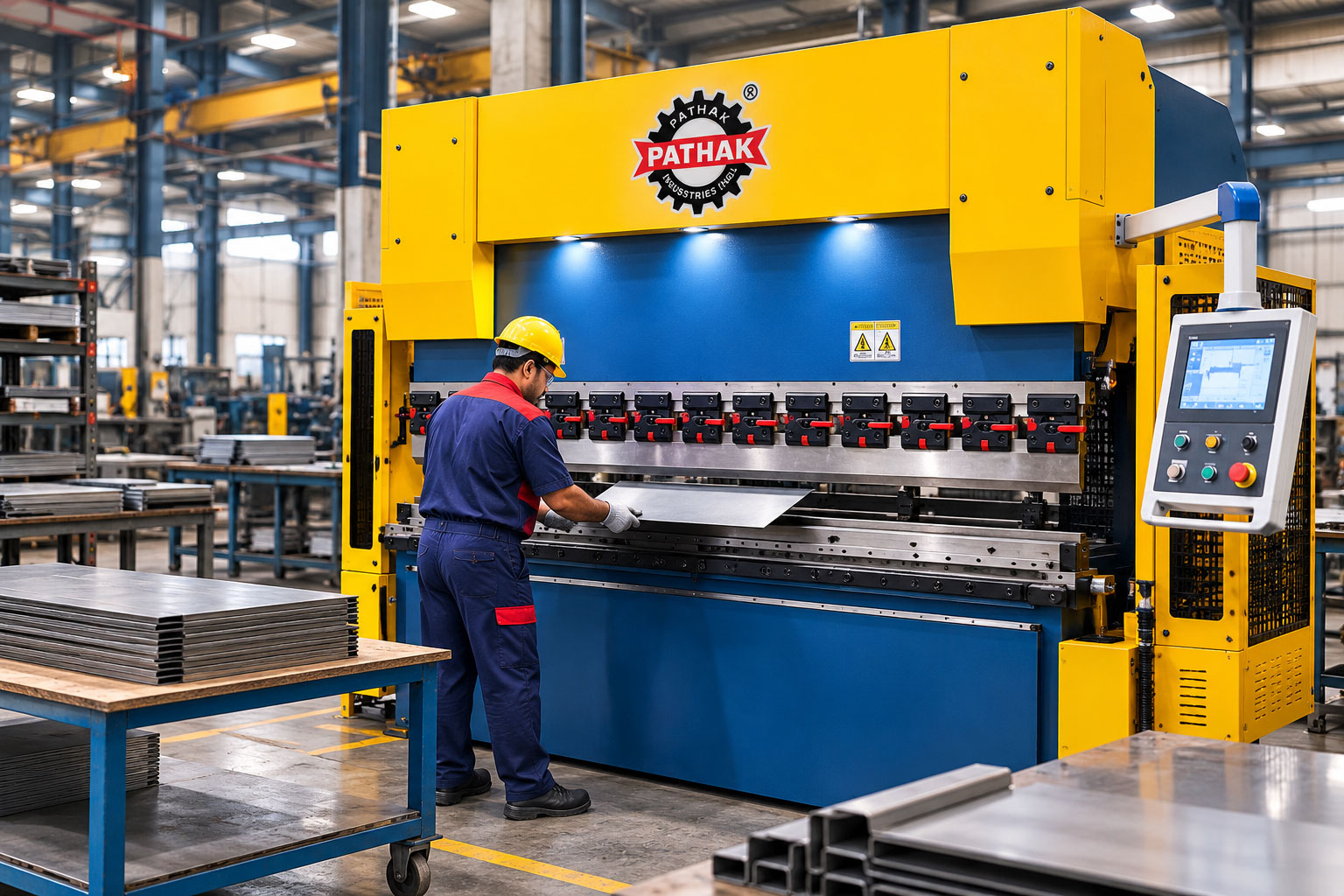
Modern sheet metal fabrication demands much more than simply bending a metal sheet to a required angle. Manufacturers increasingly need high dimensional accuracy, repeatable bend angles, faster setup, complex multi-bend profiles, reduced material waste, and consistent production quality. CNC press brake machines are designed to meet these requirements by combining controlled bending force with computer-programmed positioning and bending sequences.
Modern sheet metal fabrication demands much more than simply bending a metal sheet to a required angle. Manufacturers increasingly need high dimensional accuracy, repeatable bend angles, faster setup, complex multi-bend profiles, reduced material waste, and consistent production quality. CNC press brake machines are designed to meet these requirements by combining controlled bending force with computer-programmed positioning and bending sequences.
Modern sheet metal fabrication demands much more than simply bending a metal sheet to a required angle. Manufacturers increasingly need high dimensional accuracy, repeatable bend angles, faster setup, complex multi-bend profiles, reduced material waste, and consistent production quality. CNC press brake machines are designed to meet these requirements by combining controlled bending force with computer-programmed positioning and bending sequences.
A CNC Press Brake Machine is an automated industrial machine used to bend, shape, and form sheet metal and plate materials between a punch and die. The CNC system can control functions such as ram positioning, backgauge movement, bend sequence, and other machine axes depending on the configuration. Modern CNC controllers can also store part programs and manage parameters for repeated production.
For fabrication shops, sheet metal industries, machinery manufacturers, electrical enclosure manufacturers, automotive component suppliers, HVAC manufacturers, construction equipment producers, and general engineering companies, CNC press brakes provide a flexible solution for producing everything from simple brackets to complex multi-bend components.
This article covers three important machine categories:
A CNC press brake bends sheet metal by positioning the workpiece between an upper punch and lower die and applying controlled force through the ram.
Unlike a basic manually controlled bending machine, a CNC press brake uses programmable controls to manage important elements of the bending cycle. Depending on machine configuration, this may include the ram position, bend depth or angle, backgauge position, bending sequence, opening height, and additional axes.
The backgauge is particularly important because it positions the sheet relative to the tooling and therefore helps determine the required flange dimension. CNC systems can automatically reposition the gauge between successive bends.
This combination of programmable positioning and controlled bending makes CNC press brakes particularly useful where manufacturers need to produce multiple parts with consistent dimensions.
The basic bending process can be understood in several stages.
The operator begins with a prepared sheet or plate according to the component drawing. Important information includes:
Suitable upper and lower tooling is selected according to the material, thickness, bend geometry, desired radius, and bending method.
Tooling selection is critical. An unsuitable punch or die can lead to poor bend quality, excessive force requirements, tooling damage, or unsafe operation.
The required bending parameters are entered into or selected from the CNC controller.
Depending on the controller and machine configuration, programmable parameters can include material information, thickness, bend angle, ram/Y-axis position, backgauge X-axis position, bend sequence, backgauge retraction, opening height, and auxiliary axes.
Stored programs can then be recalled for repeat jobs, reducing repetitive setup work.
The sheet is placed against the backgauge fingers.
The CNC-controlled backgauge positions the workpiece according to the programmed flange dimension.
The ram moves the punch toward the lower die and applies the required controlled motion and force.
The sheet deforms around the tooling to produce the required bend.
For a multi-bend component, the backgauge can move automatically to the next programmed position.
The operator repositions the workpiece as required, and the next bending step is performed.
The finished component should be checked against the drawing for relevant characteristics such as:
CNC press brakes can manufacture an enormous variety of formed sheet metal components.
Typical applications include:
Electrical panels and enclosures: Cabinets, control panels, electrical boxes, switchgear housings and mounting components.
Automotive components: Brackets, covers, supports, reinforcement components, chassis-related sheet metal parts and fabricated assemblies.
HVAC equipment: Duct components, housings, panels, brackets and ventilation-system parts.
Industrial machinery: Machine covers, guards, cabinets, trays, frames, supports and structural components.
Construction equipment: Panels, brackets, supports, covers and fabricated steel components.
Furniture manufacturing: Metal cabinets, shelving, lockers, frames and office furniture components.
Agricultural machinery: Guards, brackets, covers, panels and structural sheet metal parts.
Elevator manufacturing: Doors, panels, cabins, brackets, covers and related formed components.
General fabrication: Channels, angles, boxes, trays, U-sections, Z-sections, brackets and custom fabricated profiles.
Depending on machine capacity, tooling and bending requirements, CNC press brakes may process materials such as:
Different materials have different yield strengths, springback behavior and forming characteristics. Therefore, the same thickness does not necessarily require the same bending force or tooling setup across different materials.
In air bending, the punch pushes the workpiece into the die without forcing it completely against the die surfaces.
It is highly versatile because different bend angles can often be produced using the same tooling by controlling punch penetration.
The workpiece is formed more closely against the punch and die geometry.
The process can provide controlled bending but requires suitable tooling and setup.
Hemming folds the sheet edge over itself or toward a nearly closed condition.
It is often used for edge reinforcement, appearance, or removal of sharp exposed edges.
CNC control is particularly valuable for components requiring several different bends.
A programmed sequence can manage changing backgauge positions and other parameters between bending steps, helping improve repeatability and reduce manual adjustment.
A standard CNC Press Brake Machine is suitable for manufacturers that require programmable bending with improved repeatability and productivity compared with more manually controlled bending processes.
Depending on its configuration, the machine can automate key positioning operations and store bending programs for future use.
It can be suitable for:
The primary advantages are programmability, repeatability, reduced setup effort, quicker changeovers, and better control of repetitive bending operations.
A CNC Press Brake Pro Model can be positioned as a higher-level solution for manufacturers requiring more sophisticated bending capability, productivity, automation, or control than a standard configuration.
The exact difference between a standard model and Pro model should always be defined by the actual manufacturer's specifications. Features should not be assumed merely from the word "Pro."
Depending on the machine specification, advanced configurations may provide enhanced CNC controls, additional controlled axes, sophisticated backgauge systems, tooling options, improved operator interfaces, or other productivity features.
A Pro configuration can be particularly relevant for:
Manufacturers should consider the advanced model when the additional features directly improve their actual production requirements.
The decision should be based on part complexity, number of bends, tolerance, batch size, setup frequency, required axes, operator requirements, and production targets rather than choosing a machine simply because it has more features.
A CNC Synchro Press Brake Machine uses synchronized control of the ram, commonly through independently controlled left and right axes identified as Y1 and Y2.
In typical electro-hydraulic synchro configurations, linear measuring systems provide position feedback while proportional/servo hydraulic control helps maintain synchronization between the two sides of the ram.
This closed-loop approach is valuable for precision bending, particularly when consistency across the working length is important.
CNC Synchro Press Brakes are particularly useful for:
Accurate synchronization can help maintain controlled ram positioning across the machine width.
This becomes increasingly important when manufacturers need consistent bending performance across longer workpieces or demanding production jobs.
| Requirement | CNC Press Brake | CNC Press Brake Pro | CNC Synchro Press Brake |
|---|---|---|---|
| General sheet bending | Excellent | Excellent | Excellent |
| Programmable bending | Yes | Yes | Yes |
| Repetitive production | Excellent | Excellent | Excellent |
| Complex components | Good | Very Good | Excellent |
| Advanced automation | Configuration dependent | Typically higher | Configuration dependent |
| Precision production | Good | Very Good | Excellent |
| Long workpieces | Capacity dependent | Capacity dependent | Particularly suitable when correctly specified |
| High-volume fabrication | Good | Excellent | Excellent |
| Advanced ram synchronization | Configuration dependent | Configuration dependent | Core characteristic |
Actual features depend on the specific machine configuration, controller, axes, tooling and options.
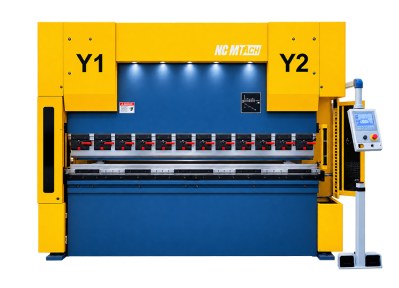
Built around forming straight bends in sheet and plate, the CNC Press Brake Machine provides a dedicated working arrangement....
View Product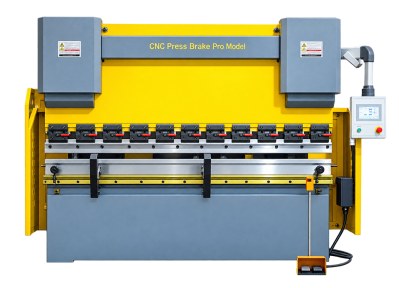
The CNC Press Brake Pro Model handles sheet blanks, panels, brackets, and profiles through a layout intended for forming stra...
View Product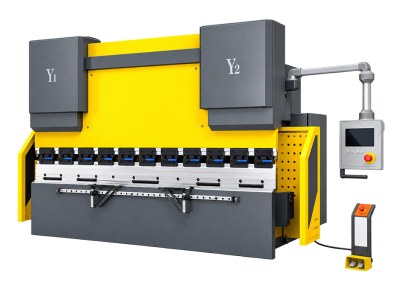
The primary role of the CNC Synchro Press Brake Machine is forming straight bends in sheet and plate. Typical users include e...
View ProductOnce a suitable bending program and setup have been validated, the same job can be repeated with reduced dependence on repeated manual adjustment.
Programmable ram and backgauge positioning can improve control over bend geometry and flange dimensions.
Stored programs can significantly simplify repeat jobs.
Instead of recreating all machine settings, an operator can recall the validated program and prepare the corresponding tooling and material.
Modern CNC controllers can manage sequences containing multiple bends and changing gauge positions. Some systems also provide graphical visualization of bend sequences.
Better process control can reduce incorrect bends and dimensional variation, provided material properties, tooling, setup and programming are also properly controlled.
Automatic positioning reduces manual adjustment between bending operations.
This is particularly valuable in batch production.
A CNC press brake can produce many different component geometries using appropriate tooling and programs, making it useful for both dedicated manufacturing and job-shop environments.
CNC press brakes are used across:
Determine which materials you intend to bend.
Consider both the type and mechanical properties of the material—not just thickness.
Identify the maximum sheet or plate thickness that will regularly be processed.
Do not select machine capacity based solely on the most common thin material if thicker components are an important production requirement.
Measure the longest component that must be bent.
The machine's working length should accommodate the required jobs while allowing appropriate tooling and safe handling.
Press brake capacity must be matched to:
Use the machine/tooling manufacturer's approved bending charts or engineering calculations when determining tonnage.
Never exceed the rated capacity of the machine or tooling.
A simple bracket with one or two bends has very different requirements from a component containing ten bends, short flanges and multiple orientations.
Complex components may justify more sophisticated CNC controls and additional backgauge axes.
Depending on configuration, CNC press brakes can control axes such as:
Y / Y1-Y2: Ram movement and synchronized positioning.
X: Primary backgauge depth.
R: Vertical backgauge positioning.
Z1/Z2: Independent lateral positioning of backgauge fingers.
Additional axes can increase flexibility for complex components.
Check the required:
A capable machine with inappropriate tooling will still produce poor results.
For occasional simple bending, a highly advanced machine may not provide sufficient economic benefit.
For frequent changeovers, complex components or continuous production, advanced CNC automation can substantially improve workflow.
Large sheets can be difficult and hazardous to manipulate manually.
Depending on component size and weight, consider suitable sheet supports, lifting equipment, front supports or automated material-handling solutions.
Safety should be part of the purchasing specification—not an afterthought.
Depending on applicable regulations and machine design, safeguarding can include presence-sensing devices, physical guards, two-hand controls, restraint systems, interlocked guarding and other engineered safety measures. These safeguards help control point-of-operation and workpiece-movement hazards associated with press brakes.
Before production begins, verify the engineering drawing, material, thickness, tooling, program and machine capacity.
Install the correct punch and die according to the manufacturer's approved procedure.
Program or load the required job and verify the bend sequence.
Confirm backgauge positions and ensure there are no collisions between the workpiece, tooling, gauge or machine.
Perform a controlled first bend or first-off component.
Measure the bend angle and critical dimensions.
Apply permitted corrections through the CNC system where necessary.
Once the first component has passed inspection, begin production with the appropriate inspection frequency.
Even a sophisticated CNC press brake does not guarantee a perfect component automatically.
Accuracy can be affected by:
Material thickness variation: Nominally identical sheets can have thickness differences.
Material properties: Yield strength and springback vary between materials and batches.
Tooling condition: Worn or damaged punches and dies affect finished geometry.
Machine deflection: Long bending operations can require suitable compensation/crowning depending on machine design.
Backgauge positioning: Incorrect gauge positioning directly affects flange dimensions.
Programming: Incorrect material, thickness, tooling or bend data can produce incorrect results.
Operator technique: Sheet positioning and handling remain important, particularly in manually loaded operations.
Temperature and hydraulic condition: On hydraulic machines, system condition and oil characteristics can influence consistent machine operation.
Create and maintain validated bending programs for repeat jobs.
Standardize commonly used tooling where practical.
Organize punches and dies close to the machine to reduce changeover time.
Use quick-change tooling systems where justified by production volume.
Plan the bend sequence carefully to avoid unnecessary handling.
Keep the backgauge and tooling clean.
Perform first-part inspection before committing an entire batch.
Monitor tool wear and material variation.
Analyze recurring setup problems and update validated programs when process improvements are approved.
For high-volume production, evaluate automation and material-handling options rather than focusing only on increasing bending speed.
Preventive maintenance is essential for preserving machine reliability and bending consistency.
Maintenance should follow the manufacturer's schedule and can include inspection of:
Never perform servicing inside hazardous areas without following the required energy-isolation procedure.
Press brakes create significant crushing, pinching and point-of-operation hazards between the punch, workpiece and die. Large sheets can also move during the bending stroke and create additional hazards for operators and helpers.
Operators must be properly trained and use the safeguarding specified for the machine and operation. Safety devices must never be bypassed simply to speed up production.
Particular attention should be given to:
Press brake safeguarding can involve presence-sensing devices, two-hand controls, pullback devices, restraint devices, or other engineered measures selected for the operation and equipment.
Local regulations, applicable machine-safety standards and the manufacturer's instructions must always take precedence.
CNC Press Brake Machines have transformed sheet metal bending from a largely manual operation into a programmable, repeatable and highly productive manufacturing process. By controlling important machine positions and bending sequences through CNC technology, manufacturers can produce simple and complex sheet metal components with greater consistency while reducing repetitive setup work.
A CNC Press Brake Machine provides a versatile foundation for general industrial bending. A CNC Press Brake Pro Model can address manufacturers seeking enhanced control, flexibility or productivity, depending on its actual configuration. A CNC Synchro Press Brake Machine adds sophisticated synchronized ram control for applications where precision and consistent bending performance are particularly important.
The correct machine should ultimately be selected according to material type, thickness, bending length, required tonnage, component complexity, tooling, number of CNC axes, production volume, accuracy requirements, safety systems and future production needs.
When combined with suitable tooling, correct programming, trained operators, preventive maintenance, effective inspection and appropriate safeguarding, CNC press brake technology can provide an efficient and scalable solution for modern sheet metal fabrication.