
Head Office
117, Grand Trunk Road, Salkia Howrah-700013, Kolkata, India
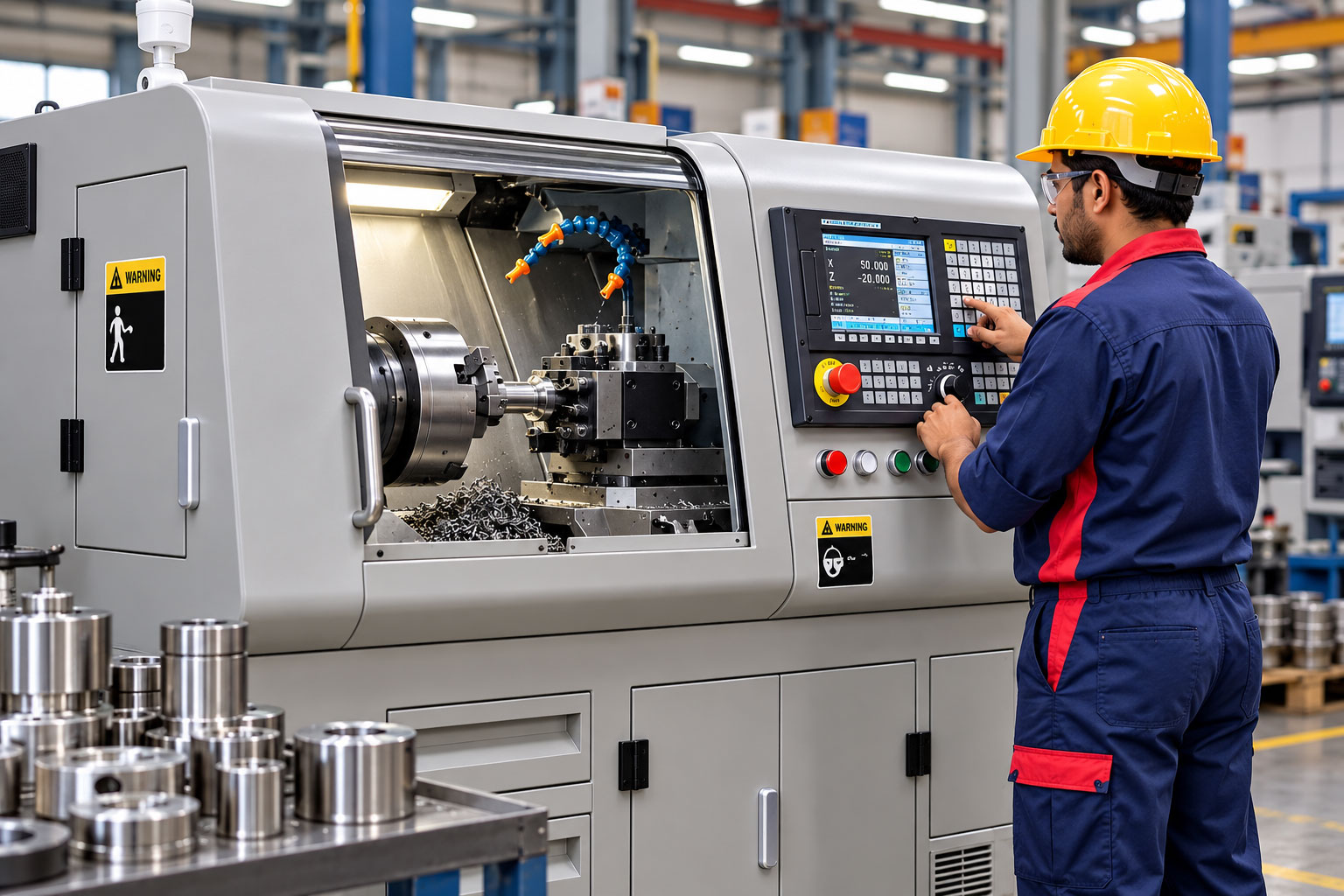
Modern fabrication and engineering workshops increasingly need machining equipment that combines precision, flexibility, repeatability, and efficient use of workshop space. While conventional lathes and milling machines remain important, CNC technology allows workshops to manufacture complex components with greater process consistency and reduced dependence on manual tool movement.
Modern fabrication and engineering workshops increasingly need machining equipment that combines precision, flexibility, repeatability, and efficient use of workshop space. While conventional lathes and milling machines remain important, CNC technology allows workshops to manufacture complex components with greater process consistency and reduced dependence on manual tool movement.
Modern fabrication and engineering workshops increasingly need machining equipment that combines precision, flexibility, repeatability, and efficient use of workshop space. While conventional lathes and milling machines remain important, CNC technology allows workshops to manufacture complex components with greater process consistency and reduced dependence on manual tool movement.
For workshops handling small precision components, prototype development, technical training, repair jobs, product development, and light industrial production, compact CNC equipment can provide a practical entry into computer-controlled machining.
Three particularly useful machine categories are:
Although all three use CNC technology, their applications are different. A Mini CNC Lathe is primarily designed for turning operations, a CNC Lathe Machine Trainer focuses on CNC education and skill development, while a Mini CNC Milling Machine is designed for machining flat surfaces, slots, pockets, holes, and profiles.
This guide explains how these machines can be used in fabrication shops, engineering workshops, tool rooms, maintenance facilities, training centres, R&D departments, and small manufacturing units.
A fabrication workshop does much more than cutting and welding metal. Many fabricated assemblies also require accurately machined components such as shafts, bushes, pins, spacers, threaded parts, brackets, plates, fixtures, and mounting components.
An engineering workshop may need to manufacture a single replacement component today and a completely different prototype tomorrow.
CNC equipment is particularly useful in this environment because machining movements can be controlled through programmed coordinates.
Depending on machine configuration, CNC equipment can help workshops perform:
This versatility can help bridge the gap between manual workshop machining and larger industrial CNC production.
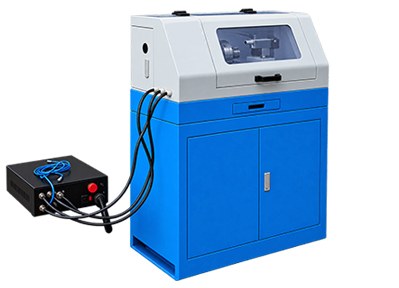
The Cnc Lathe Machine Trainer is designed for turning rotational components and producing faces, diameters, bores, or threads...
View Product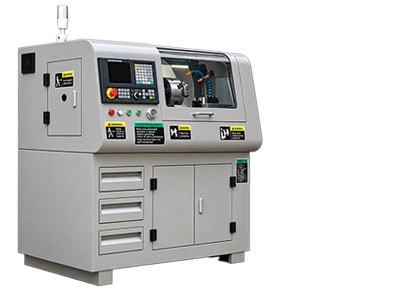
The primary role of the Mini CNC Lathe Machine is turning rotational components and producing faces, diameters, bores, or thr...
View Product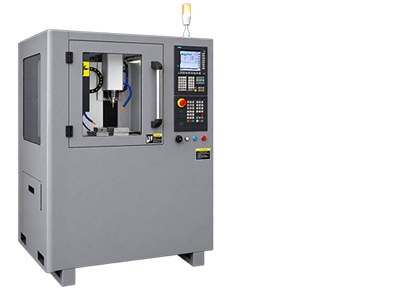
Built around machining faces, slots, keyways, and contoured features, the Mini Cnc Milling Machine provides a dedicated worki...
View ProductA Mini CNC Lathe Machine is a compact computer-controlled turning machine designed primarily for machining smaller rotational components.
Instead of manually controlling the cutting tool throughout the machining cycle, programmed movements control the tool relative to the rotating workpiece.
Mini CNC lathes can be useful for manufacturing smaller components such as:
They can be particularly useful when a workshop repeatedly manufactures small components with similar geometries.
Depending on machine specifications and tooling, a Mini CNC Lathe may perform:
Facing machines the end of a workpiece to establish a flat reference surface or required overall length.
The cutting tool moves parallel to the workpiece axis to reduce or finish its outside diameter.
Different diameters can be produced along the same component.
This is useful for shafts, pins, bushes, and similar engineering parts.
Programmed movement of the CNC axes can generate tapered profiles.
Internal diameters can be enlarged or finished using suitable boring tools.
Grooves can be produced for retaining rings, seals, clearances, or other design requirements.
A CNC lathe can produce specified external or internal threads when the machine, tooling, and control support the required operation.
Axial holes can be produced using suitable toolholding arrangements.
Finished components can be separated from bar stock using a parting tool.
Mini CNC lathes can find applications in:
Small engineering workshops: For custom and low-volume turned components.
Fabrication workshops: For producing pins, bushes, spacers, shafts, and connectors required for fabricated assemblies.
Tool rooms: For prototype and tooling-related components.
Maintenance departments: For replacement parts and repair components.
R&D facilities: For developing and testing new component designs.
Educational institutions: For introducing practical CNC turning concepts where the machine is appropriately configured for training.
Small manufacturing units: For repetitive production of relatively small turned components.
A major advantage is its relatively small footprint compared with full-size industrial CNC turning centres.
This can make compact equipment suitable for workshops where floor space is limited.
Once a machining program and setup have been validated, the same programmed movements can be repeated for subsequent components.
Actual dimensional consistency still depends on factors including tooling, machine condition, workholding, material, temperature, and process control.
Using a very large CNC machine for every small component may be unnecessary. Compact CNC equipment can provide a practical alternative when component dimensions and machining loads fall within its rated capacity.
Design changes can often be accommodated by modifying the CNC program, tooling, or setup rather than creating a completely new manual machining process.
CNC controls automate axis movements, allowing the operator to focus more on setup, programming, tooling, measurement, and process supervision.
A CNC Lathe Machine Trainer is designed primarily for teaching CNC turning principles, programming, machine operation, tooling, setup, and basic manufacturing processes.
It can provide a controlled environment in which students, trainees, new operators, and technical personnel learn how CNC turning works before progressing to more demanding production equipment.
These machines can be useful for:
Training can introduce concepts such as:
The exact commands depend on the controller used.
Trainees can learn how a CNC turning operation is prepared before machining starts.
This includes workpiece loading, workholding, tool installation, reference setting, offset entry, and program verification.
Practical exercises may include:
Facing • straight turning • step turning • taper turning • grooving • drilling • boring • threading • parting
Actual capabilities depend on the trainer configuration.
Students can learn how cutting-tool geometry and insert selection affect machining.
This helps connect classroom knowledge with practical manufacturing.
Training can demonstrate the relationship between:
Spindle speed • cutting speed • feed rate • depth of cut • material • tooling • surface finish • tool life
Students should also learn that CNC programming alone does not guarantee a correct component.
Finished parts need to be measured using appropriate instruments such as calipers, micrometers, bore gauges, thread gauges, and dial indicators.
Industrial workshops can also use training machines to build internal CNC skills.
Before an inexperienced employee operates larger production machinery, a trainer can help develop familiarity with:
Training should always be conducted under qualified supervision and according to the machine manufacturer's operating and safety instructions.
A Mini CNC Milling Machine differs fundamentally from a CNC lathe.
In conventional CNC turning, the workpiece normally rotates while the cutting tool is controlled along the machine axes. In CNC milling, the cutting tool rotates, while controlled movement between the cutter and workpiece produces the required geometry.
This makes Mini CNC Milling Machines particularly useful for components containing flat surfaces, slots, pockets, holes, and profiles.
Depending on machine capacity, a Mini CNC Milling Machine can be used for:
Used to produce flat surfaces on a component.
Suitable for machining edges, shoulders, pockets, slots, and profiles.
Used to manufacture straight or shaped slots.
Material can be removed from a defined internal region to produce recesses and pockets.
The cutter follows a programmed contour to produce the required external or internal profile.
Programmed hole locations can be drilled accurately relative to the established datum.
If supported by the machine and controller, threaded holes can be produced using suitable tapping processes.
Certain compact CNC milling machines can also perform light engraving operations with suitable tooling.
| Feature | Mini CNC Lathe | CNC Lathe Trainer | Mini CNC Milling Machine |
|---|---|---|---|
| Primary purpose | Small-part production | CNC training | Small-part milling |
| Main process | Turning | Turning/training | Milling |
| Typical parts | Shafts, bushes, pins | Training components | Plates, brackets, profiles |
| CNC programming | Yes | Yes | Yes |
| Suitable for training | Possible | Primary application | Possible |
| Prototype work | Very suitable | Limited/educational | Very suitable |
| Repetitive production | Suitable within capacity | Usually secondary | Suitable within capacity |
| Cylindrical components | Excellent | Training-oriented | Limited |
| Flat components | Limited | Limited | Excellent |
| Slots & pockets | Limited on basic models | Limited | Excellent |
| Engineering workshops | Yes | Training applications | Yes |
Together, compact CNC turning and milling machines can support a broad range of workshop activities.
Fabricated structures often require machined:
A Mini CNC Lathe can handle many cylindrical components, while a Mini CNC Milling Machine can manufacture the corresponding plates, brackets, slots, and mounting features.
When a machine breaks down because of a damaged small component, obtaining a replacement may take considerable time.
Where appropriate drawings, materials, specifications, and technical expertise are available, an engineering workshop may manufacture certain replacement components internally.
CNC machines are valuable during product development because component dimensions and geometries can be modified through changes to CAD/CAM data, programs, tooling, or setup.
Engineering workshops frequently require custom jigs and fixtures.
Mini CNC milling machines can manufacture fixture plates, clamps, pockets, slots, and locating features, while a CNC lathe can produce locating pins, bushes, spacers, and other rotational components.
When a customer requires multiple identical components, a validated CNC program can reduce reliance on repeated manual positioning.
Programmed tool paths help reduce variation associated with manually reproducing the same tool movement.
A CNC machine can be reprogrammed for different components, making it useful in job shops handling changing requirements.
Mini CNC machines are attractive where available workshop floor space is limited.
CNC Trainer machines allow organizations to develop practical CNC programming and machining knowledge.
Digital programming makes design iterations more manageable.
Once a proven setup, tooling arrangement, and program have been established, repeat batches can often be prepared more systematically.
Depending on the machine and controller, CNC programs may be generated manually or through suitable CAD/CAM workflows.
Begin with your actual workpieces.
If most components are cylindrical—such as shafts, pins, bushes, and sleeves—a Mini CNC Lathe is the logical starting point.
If the primary objective is education, a CNC Lathe Machine Trainer may be more appropriate.
If most components require flat surfaces, pockets, slots, and hole patterns, consider a Mini CNC Milling Machine.
For a CNC lathe, evaluate specifications such as:
For a CNC milling machine, check:
Always allow additional room for workholding and tool access.
Determine which materials will normally be machined.
Examples can include:
Mild steel • carbon steel • alloy steel • stainless steel • aluminium • brass • bronze • engineering plastics
Do not assume every compact machine can effectively machine every material simply because the workpiece fits inside its working envelope.
Machine rigidity, spindle power, torque, tooling, and intended cutting parameters must also be appropriate.
Study the engineering drawing and identify:
The required part accuracy should drive machine and process selection.
For training or occasional prototypes, productivity may not be the primary factor.
For commercial production, evaluate:
Cycle time • loading time • tool-change time • setup time • inspection time • expected batch size • machine utilization
A small machine may be economical for small parts but inefficient if production requirements exceed its intended duty cycle.
For a trainer, the controller is especially important.
Check:
For CNC turning, this may include:
Chucks • collets • tool holders • boring bars • turning tools • threading tools • grooving tools
For CNC milling:
Machine vice • clamps • fixture plates • collets • end mills • face mills • drills • taps • cutters
The workpiece must always be securely and correctly restrained.
Never assume that a newly written CNC program is automatically safe or dimensionally correct.
Before full production, operators should verify:
Where the controller provides simulation, single-block, dry-run, feed override, or similar verification features, operators should use them according to the manufacturer's recommended procedure.
After machining the first component, inspect critical dimensions before starting batch production.
Compact size should not be confused with unlimited capability. The machine must have sufficient rigidity for the material, cutter, and cutting forces involved.
Poor workholding can create dimensional errors, vibration, surface-finish problems, or safety hazards.
A CNC program may repeat exactly while a worn cutting tool gradually changes the finished dimensions.
Tool condition should therefore be monitored.
Mechanical condition directly affects positioning performance. Scheduled inspection and maintenance are important.
For precision components, temperature changes in the machine, workpiece, and environment can affect dimensional results.
Use suitable calibrated measuring equipment to confirm critical dimensions rather than relying only on programmed coordinates.
Productivity is not simply a matter of increasing spindle speed or feed rate.
Workshops should focus on reducing the total time required to produce an acceptable component.
This can include:
For frequently repeated jobs, maintaining documented setup sheets can save considerable preparation time.
Compact CNC machines still require systematic maintenance.
Operators should routinely inspect:
Follow the manufacturer's recommended maintenance schedule.
Machine accuracy should also be periodically verified, particularly if the equipment is used for precision production.
CNC machines contain rotating spindles, cutting tools, workpieces, moving axes, sharp chips, electrical systems, and other hazards.
Operators should receive appropriate training before operating the equipment.
Always use the guards, doors, interlocks, and safety systems provided by the machine manufacturer.
Before starting a machining cycle, confirm that:
Never reach toward a rotating workpiece, spindle, or cutter.
For servicing or maintenance requiring access to hazardous areas, follow appropriate machine isolation and lockout procedures.
Industrial CNC machines are becoming increasingly valuable for fabrication and engineering workshops that need to combine traditional manufacturing skills with programmable precision machining.
A Mini CNC Lathe Machine is particularly suitable for smaller rotational components such as shafts, pins, bushes, sleeves, spacers, collars, connectors, and threaded parts.
A CNC Lathe Machine Trainer provides a practical platform for developing skills in CNC programming, tool setting, work coordinates, machining operations, inspection, troubleshooting, and safe machine operation.
A Mini CNC Milling Machine complements turning equipment by machining brackets, plates, slots, pockets, fixtures, profiles, housings, and other prismatic components.
For fabrication and engineering workshops, the best machine is not necessarily the largest or most expensive. The correct choice should be based on component geometry, maximum workpiece size, material, tolerances, production volume, machine rigidity, spindle capability, CNC controller, tooling requirements, available floor space, and operator skill level.
When these machines are supported by correct programming, rigid workholding, appropriate tooling, first-part inspection, preventive maintenance, trained operators, and disciplined safety practices, compact CNC technology can become a highly effective solution for precision manufacturing, workshop production, prototyping, repair work, technical training, and engineering development.