
Head Office
117, Grand Trunk Road, Salkia Howrah-700013, Kolkata, India
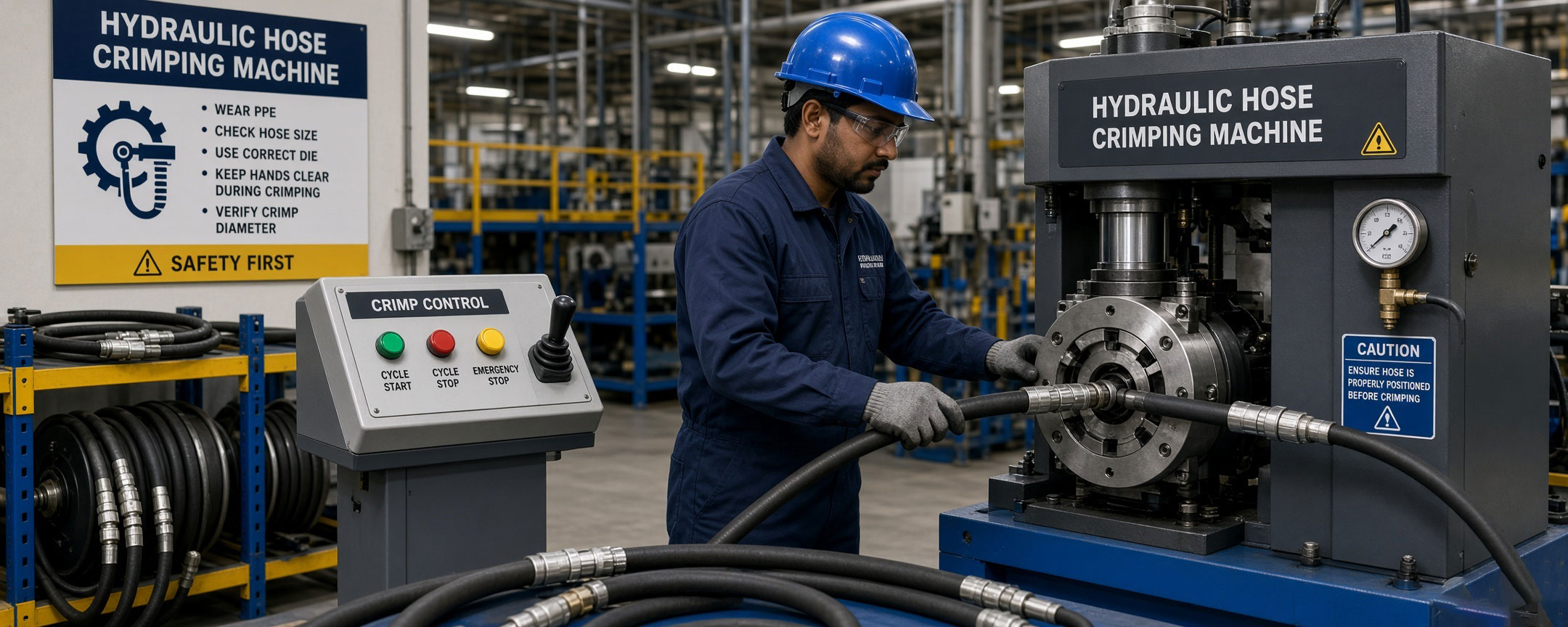
Modern hydraulic systems, agricultural machinery, automobiles, air-conditioning systems, plumbing installations, construction equipment, and industrial machines depend on properly assembled hoses to transfer fluids reliably between components. At the heart of many hose-assembly operations is the hose crimping machine—specialized equipment designed to permanently secure compatible metal fittings or couplings to flexible hoses by controlled radial compression.
Modern hydraulic systems, agricultural machinery, automobiles, air-conditioning systems, plumbing installations, construction equipment, and industrial machines depend on properly assembled hoses to transfer fluids reliably between components. At the heart of many hose-assembly operations is the hose crimping machine—specialized equipment designed to permanently secure compatible metal fittings or couplings to flexible hoses by controlled radial compression.
Modern hydraulic systems, agricultural machinery, automobiles, air-conditioning systems, plumbing installations, construction equipment, and industrial machines depend on properly assembled hoses to transfer fluids reliably between components. At the heart of many hose-assembly operations is the hose crimping machine—specialized equipment designed to permanently secure compatible metal fittings or couplings to flexible hoses by controlled radial compression.
A hose crimping machine compresses a fitting or ferrule around the prepared hose using a set of dies. The objective is not simply to make the fitting "tight." The finished assembly must achieve the specified crimp diameter and assembly requirements for the exact hose-and-fitting combination. Major hose-system manufacturers publish specific crimp data because incorrect hose, coupling, die, crimp diameter, or assembly procedures can result in leakage or coupling separation under pressure.
Depending on the application and production requirement, manufacturers and workshops can choose from manual, hand-operated hydraulic, motorized hydraulic, automotive/AC, plumbing, agricultural, rebar-coupler, cutting, skiving, and specialized crimping machines.
This guide covers:
A hose crimping machine, also called a hose crimper or hydraulic hose crimping machine in hydraulic applications, is used to compress a compatible ferrule or fitting around the end of a hose.
The crimper uses dies arranged around the fitting. During operation, these dies move inward and apply controlled radial compression. This permanently deforms the ferrule to the specified diameter so that the fitting, ferrule, and hose function as an engineered assembly.
The correct crimp specification depends on the particular hose, fitting/coupling, size, machine, die set, and manufacturer's assembly requirements. For example, professional crimp-data systems specify details such as crimp diameter, tooling and assembly instructions for approved hose/fitting combinations.
Although the exact procedure depends on the hose system and machine, a typical hydraulic hose assembly follows several stages.
The hose must be selected for the intended application, considering factors such as:
The hose manufacturer's specifications should always be followed.
The hose is cut cleanly to the required length using suitable cutting equipment.
A clean, controlled cut helps achieve correct fitting insertion and minimizes contamination.
Cutting can generate particles and debris. The hose should be cleaned according to the required assembly procedure before the system is placed into service.
Cleanliness is especially important in hydraulic systems because contamination can damage pumps, valves, cylinders, and other components.
Some hose-and-fitting combinations require removal of a specified amount of the outer cover before fitting installation.
This process is known as skiving.
However, skiving should not automatically be performed on every hose. Gates' hose assembly guidance, for example, specifies that skiving or buffing should only be carried out when required by the applicable crimp specification.
The coupling components must be compatible with the hose and the approved assembly system.
Mixing unverified hoses, fittings, or crimp specifications can create an unsafe assembly.
The fitting is inserted to the specified insertion depth.
Correct insertion is critical because insufficient or incorrect insertion can compromise the finished assembly.
The appropriate die set is installed in the crimping machine according to the manufacturer's crimp chart or data.
The crimper is adjusted or programmed according to the approved crimp specification.
The hose assembly is positioned correctly in the dies and the machine is activated.
The dies close radially around the ferrule, permanently compressing it.
This is a critical quality-control step.
The final crimp diameter should be measured at the specified location and compared with the applicable manufacturer's tolerance. Crimper operating guidance specifically requires checking the finished crimp diameter and correcting calibration/setup when it is outside the specified tolerance.
Hose crimping equipment serves many industries because flexible hose assemblies are used wherever fluids, gases, refrigerants, water, lubricants, or hydraulic power must be transferred.
Hydraulic hose crimpers are extensively used for hoses fitted to:
Agricultural machines contain numerous hydraulic hose assemblies.
Applications include:
Vehicle hose crimping equipment can be used for appropriate automotive hose assemblies, depending on hose and fitting system.
Applications can include:
Excavators, loaders, cranes, backhoe loaders, concrete equipment, and other heavy machines depend heavily on hydraulic hoses.
For service workshops, the ability to manufacture replacement hose assemblies can reduce equipment downtime.
Specialized crimping machines can be used in production of suitable plumbing and flexible connector assemblies.
Single-head and double-head configurations can address different production requirements.
Specialized AC hose crimpers are used to attach compatible fittings to refrigerant hose assemblies.
Factories can use hose crimping equipment for in-house assembly, maintenance, OEM production, and replacement hose preparation.
An Agri Hose Crimping Machine is intended for hose assembly requirements associated with agricultural machinery and related service operations.
Agricultural equipment frequently operates in demanding environments involving dust, vibration, changing temperatures, and continuous hydraulic loads.
An agricultural workshop should select its machine according to the hose sizes, fitting systems, pressure classes, and equipment it regularly services.
The Indie Crimp Slim can serve applications where a compact hydraulic hose crimping solution is required.
A compact machine can be particularly useful for:
Machine selection should be based on actual crimping range, opening, force, die availability, and compatible hose/fitting requirements rather than physical size alone.
The Indie Crimp Veer represents another hydraulic hose crimping option within the range.
It can be considered for professional hose assembly environments where repeatable crimping and workshop productivity are important.
Suitable users can include:
Actual capacities and compatible hose sizes should always be taken from the specific machine's technical data.
The Indie Crimp Vishal can be positioned for users requiring a more substantial hose-crimping solution within the product family.
Potential applications include:
When comparing Slim, Veer, and Vishal models, customers should compare actual crimping force, maximum hose capacity, maximum opening, die sets, cycle time, motor/power requirements, machine dimensions, and intended duty cycle.
A manual hose crimper provides a practical solution where electrical power is unavailable, production volume is relatively low, or portability is important.
The Hand Hydra 1 Inch configuration can be relevant for appropriately sized hose assembly work within its rated capacity.
Manual operation is generally slower than powered production equipment, so expected daily output should be considered before selection.
A manual hydraulic crimper uses manually generated hydraulic pressure to operate the crimping mechanism.
It combines the mechanical advantage of hydraulics with independence from an electric motor.
For high-volume manufacturing, a powered machine will generally offer better cycle-time productivity.
A Rebar Coupler Crimping Machine belongs to a different application category from flexible hose crimping.
Instead of assembling hose fittings, it is intended for suitable rebar/coupler connection processes in construction-related applications.
Because the materials, forces, dies, and connection requirements differ significantly from hose assemblies, a rebar coupler machine should be selected according to the particular reinforcement-bar and coupler system.
It should not be treated as interchangeable with a hydraulic hose crimper.
A Vehicle Hose Crimping Machine is intended for suitable hose assembly work associated with automotive and commercial vehicle applications.
Potential users include:
Different vehicle hose systems require different fittings and specifications, so compatibility must be verified before crimping.
The PHC 2 Hydraulic Hose Crimping Machine can be used as a workshop or production solution for compatible hydraulic hose assemblies.
Typical applications can include:
For the PHC 2 product page, technical specifications such as capacity, dies, force, motor rating, opening and dimensions should be listed separately from the general category information.
A hand-operated hose crimper is especially useful where portability and simplicity are more important than high production speed.
It can be useful for:
The key consideration is whether its rated hose and fitting range covers the user's actual requirements.
An AC Hose Pipe Crimping Machine is designed for compatible air-conditioning and refrigerant hose assemblies.
Typical applications include:
AC hose and fitting combinations should be assembled according to their system specifications to maintain sealing integrity and refrigerant compatibility.
A Motorised Hose Crimping Cum Skiving Machine combines two important hose-preparation operations into one equipment solution.
The machine compresses the fitting/ferrule to the required specification.
Where required by the particular hose/fitting system, skiving removes a specified portion of the hose cover before fitting installation.
Combining these capabilities can reduce equipment footprint and streamline workshop workflow.
However, skiving must only be performed when specified for the particular assembly. Removing excessive cover material can damage reinforcement and compromise hose integrity.
A Single Head Plumbing Hose Crimping Machine can be used for production of compatible flexible plumbing hose assemblies.
It is suitable where one hose end is processed at a time.
Potential applications include:
It can be suitable for small and medium production environments depending on machine cycle time and capacity.
A Double Head Plumbing Hose Crimping Machine is designed to improve productivity in suitable repetitive hose-production applications.
Where the production process allows both ends to be processed efficiently, a double-head arrangement can reduce handling and improve output compared with sequential single-head processing.
It can be particularly useful for standardized, high-volume plumbing hose production.
A Braided Hose Automatic Cutting Machine is not a crimper itself but forms an important part of an integrated hose-production line.
It automatically cuts braided hose to predetermined lengths.
A production workflow can therefore become:
Hose feeding → automatic cutting → cleaning/preparation → skiving if required → fitting insertion → crimping → measurement → inspection
A Nut Crimping Machine is designed for specialized crimping or forming operations involving compatible nuts, fittings, ferrules, or related components.
It can be used in appropriate production environments where repetitive and controlled attachment or deformation is required.
The exact application should be determined by the specific nut/fitting design and machine tooling.
| Requirement | Manual/Hand Operated | Hydraulic/Powered | Motorised/Production |
|---|---|---|---|
| Occasional crimping | Excellent | Good | Possible |
| Field service | Excellent | Model dependent | Less suitable |
| Small workshop | Excellent | Excellent | Good |
| Medium production | Limited | Excellent | Excellent |
| High-volume production | Less suitable | Good/Excellent | Excellent |
| Portability | High | Model dependent | Usually lower |
| Operator effort | Higher | Lower | Lower |
| Production speed | Lower | Higher | Higher |
| Repeat production | Good with proper procedure | Very Good | Excellent |
Actual performance depends on machine design and specification.
A correctly specified crimp creates a permanent mechanical connection between compatible hose and fitting components.
Using specified dies and controlled crimp dimensions helps manufacturers reproduce assemblies consistently.
Powered machines can substantially reduce assembly time compared with labor-intensive manual processes.
Workshops with in-house hose-making capability can produce appropriate replacement assemblies without always waiting for an externally supplied hose.
This can be particularly useful for construction, agriculture, mining, manufacturing, and fleet maintenance.
Different crimper configurations can support hydraulic, automotive, agricultural, AC, plumbing, and other specialized applications.
In-house assembly allows manufacturers to control hose length, fitting orientation, crimp verification, cleanliness, and inspection as part of their own quality process.
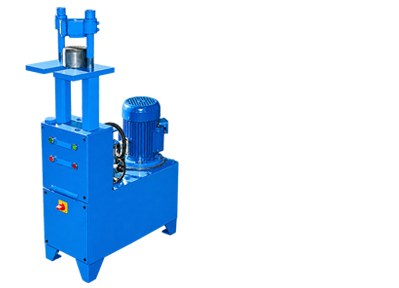
Built around securing fittings onto hose or title-specific assemblies, the Ac Hose Pipe Crimping Machine provides a dedicated...
View Product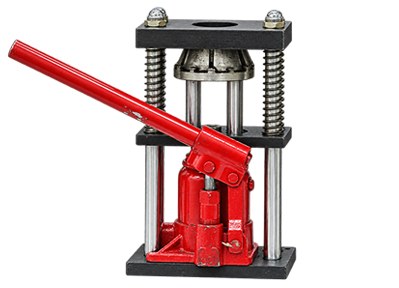
The primary role of the Agri Hose Crimping Machine is securing fittings onto hose or title-specific assemblies. The operating...
View Product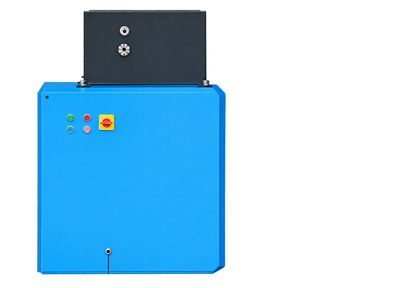
The primary role of the Automatic Low Pressure Crimping Machine is securing fittings onto hose or title-specific assemblies....
View Product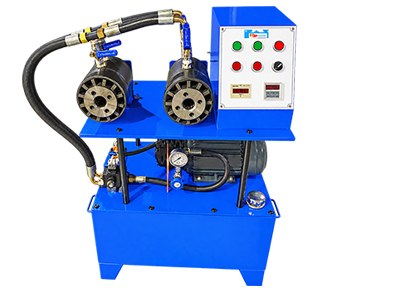
For work involving hoses, ferrules, fittings, or couplers identified by the title, the Double Head Plumbing Hose Crimping Mac...
View Product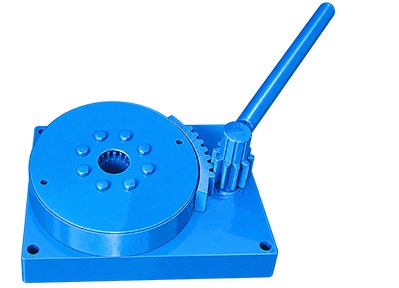
The Hand Operated Hose Crimping handles hoses, ferrules, fittings, or couplers identified by the title through a layout inten...
View Product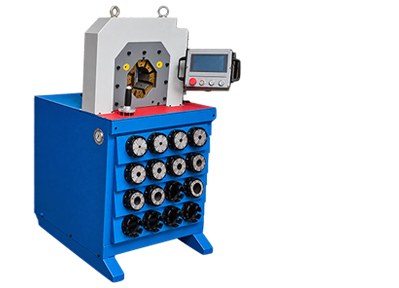
For work involving hoses, ferrules, fittings, or couplers identified by the title, the Hydraulic Hose Crimping Machine - Indi...
View Product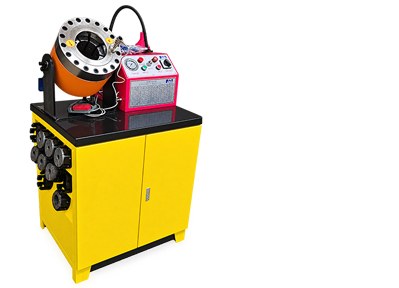
The Hydraulic Hose Crimping Machine - Indie Crimp Veer handles hoses, ferrules, fittings, or couplers identified by the title...
View Product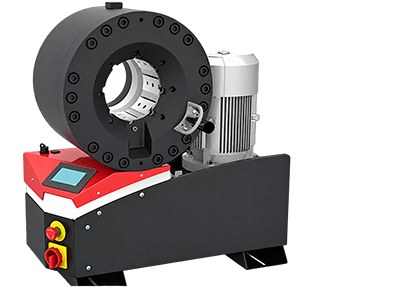
The primary role of the Hydraulic Hose Crimping Machine - Indie Crimp Vishal is securing fittings onto hose or title-specific...
View Product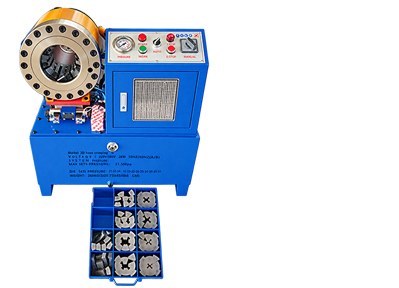
The primary role of the Hydraulic Hose Crimping Machine PHC 2 is securing fittings onto hose or title-specific assemblies. It...
View Product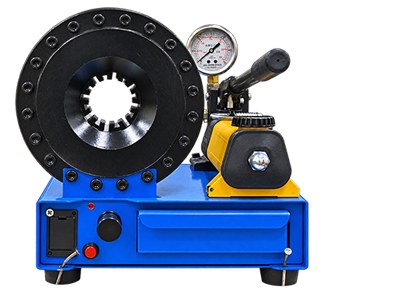
The Manual Hose Crimper Machine (Hand Hydra-1 inch) is designed for performing the specialised operation identified by its ti...
View Product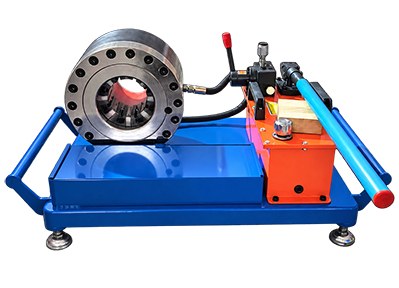
The Manual Hydraulic Hose Crimping Machine handles hoses, ferrules, fittings, or couplers identified by the title through a l...
View Product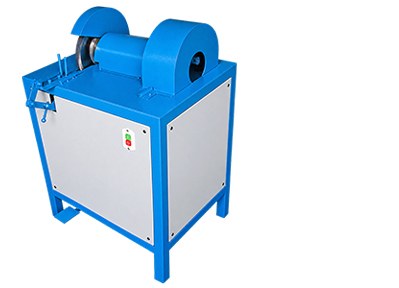
The Mororised Hose Crimping Cum Skiving Machine is designed for securing fittings onto hose or title-specific assemblies. Typ...
View Product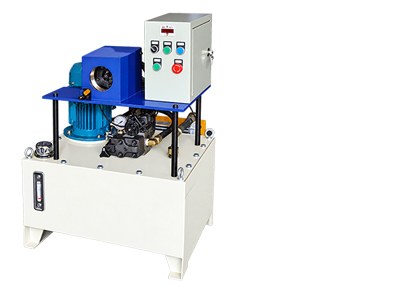
The Single Head Plumbing Hose Crimping Machine handles hoses, ferrules, fittings, or couplers identified by the title through...
View Product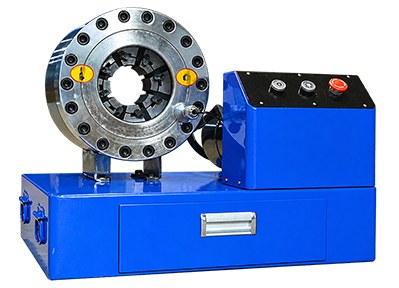
The Vehicle Hose Crimping Machine handles hoses, ferrules, fittings, or couplers identified by the title through a layout int...
View ProductStart by determining exactly what you need to crimp.
Is the machine required for:
This immediately narrows the appropriate machine category.
List both the smallest and largest hose sizes you expect to process.
Do not select a machine solely around today's most common hose if larger assemblies are likely to become part of future work.
Determine whether you will work with:
Machine capability and crimp data differ between hose types.
The hose, fitting, ferrule and crimp specification must form an approved combination.
A crimper's physical ability to close around a fitting does not prove that the resulting assembly is safe.
Gates specifically warns that hose/coupling combinations require system testing and that compatibility cannot be established merely through a simple pressure test.
Larger and more heavily reinforced hoses generally require more capable equipment.
Select the machine based on the manufacturer's rated capacity for the intended hose/fitting system.
The machine must open sufficiently to allow the uncrimped fitting to be inserted and removed.
This becomes particularly important with large fittings, elbows, flanges, or unusual fitting geometries.
A versatile crimper should have the appropriate die sets for the intended crimp range.
Check:
Choose a manual machine for low-volume, field, or portable requirements.
Choose a powered hydraulic/motorized machine when cycle time, operator effort, and production volume are more important.
If a significant proportion of your hose assemblies requires skiving, a separate skiving machine or crimping-cum-skiving machine may improve workflow.
Do not assume all hydraulic hoses require skiving; follow the approved hose/fitting crimp specification.
A workshop currently producing ten assemblies per day may eventually need substantially more.
Consider:
A good workshop procedure can follow this sequence:
1. Identify the exact hose and fitting.Confirm part numbers and compatibility.
2. Check the current crimp specification.Use the hose/fitting manufacturer's approved crimp data.
3. Cut the hose correctly.Produce a clean, controlled cut at the specified length.
4. Clean the hose.Remove cutting contamination.
5. Skive only if required.Follow the specified skive length and diameter.
6. Install the fitting correctly.Confirm full insertion and fitting orientation.
7. Install the specified die set.
8. Set the machine according to the approved crimp data.
9. Position the assembly correctly in the dies.
10. Perform the crimp while keeping hands and clothing clear of moving parts.
11. Remove and inspect the assembly.
12. Measure the finished crimp diameter.
13. Compare the measurement with the approved tolerance.
14. Reject assemblies that do not satisfy the applicable specification rather than guessing or visually accepting them.
Professional crimper guidance emphasizes measuring the crimp at the specified location and verifying it against the published crimp tolerance.
Crimping quality should never be judged only by appearance.
Important quality checks can include:
Verify hose type, size and specification.
Confirm that the fitting and ferrule match the approved hose system.
Check that the fitting has been inserted to the specified position.
Measure the crimp with appropriate measuring equipment at the specified location.
Assemblies containing angled fittings require correct orientation. This can be especially important when both ends contain elbows.
Finished assembly length should meet the drawing or job specification.
Hydraulic hose assemblies should be adequately cleaned to prevent contamination entering sensitive hydraulic components.
Inspect for damaged reinforcement, incorrect fitting position, cracked components, abnormal deformation, or other defects.
A crimper must itself remain accurate if it is expected to produce accurate assemblies.
Regular maintenance can include:
Crimp-machine calibration is particularly important because an incorrect machine setting can produce a crimp diameter outside the approved tolerance.
Hydraulic hose assembly involves potentially serious hazards.
Operators should be trained on the particular crimping machine, hose system, tooling, and approved assembly procedure.
Keep hands, fingers, loose clothing, jewelry, and other items away from moving dies.
Wear the PPE required for cutting, skiving, crimping, cleaning, and testing operations.
Never exceed the machine's rated capacity.
Never substitute unapproved dies, hoses, fittings, or crimp specifications.
Pressurized hydraulic systems require additional caution. A pinhole leak can release a high-pressure fluid jet capable of penetrating skin. Gates specifically warns operators not to use any body part to locate a pressurized hydraulic leak and treats fluid-injection injuries as medical emergencies.
Pressure testing should therefore be performed using appropriate equipment, procedures, guarding, and safe separation from hazardous areas.
A hose crimping machine compresses a compatible metal fitting or ferrule around a hose to create a permanent hose assembly.
It is a crimper designed for assembling compatible fittings onto hydraulic hoses according to specified crimp data.
They are used in hydraulic engineering, agriculture, automotive service, construction equipment, industrial machinery, mining, material handling, AC/refrigeration, plumbing, OEM manufacturing, and maintenance workshops.
The correct diameter comes from the approved crimp specification for the particular hose, fitting/ferrule and assembly system. It should not be estimated visually.
The measurement confirms whether the fitting has been compressed within the specified tolerance. Professional crimping instructions require final diameter verification.
An insufficient crimp can prevent the fitting from achieving the intended retention/sealing performance and may contribute to leakage or fitting separation.
Excessive compression can damage hose reinforcement, fitting components, or the internal hose structure. Always follow the approved crimp specification.
No. Skiving is required only for hose/fitting combinations whose assembly specifications call for it. Many systems use no-skive fittings.
It removes a specified amount of hose cover in preparation for fitting installation when required by the assembly specification.
It combines hose crimping and skiving capabilities in one machine, helping reduce equipment requirements and streamline workshop operations.
Yes, provided the machine is rated for the particular hose/fitting combination and the assembly is produced according to the applicable crimp specification.
Manual machines are useful for portability and low-volume work. Powered machines are generally better for regular workshop and production requirements where faster cycles and lower operator effort are important.
It is specialized equipment for attaching compatible fittings to air-conditioning or refrigerant hose assemblies.
It is a crimping machine intended for appropriate automotive hose and fitting applications, depending on its tooling and rated capacity.
It is equipment designed for repetitive crimping of compatible fittings or sleeves used in flexible plumbing hose assemblies.
For suitable standardized production, it can improve productivity by reducing handling and processing time associated with crimping hose ends sequentially.
Automatic cutting helps maintain consistent hose lengths while increasing throughput in repetitive production.
No. Machine capacity, dies, fittings, hose construction and approved crimp data determine compatibility.
Consider application, hose construction, minimum and maximum hose size, fitting dimensions, required force, maximum opening, die availability, production volume, power source, portability and future requirements.
Do not assume that components are interchangeable. Use combinations validated and specified by the hose/fitting system manufacturer. Hose assemblies are engineered systems, and compatibility requires more than simply achieving a visually acceptable crimp.
Follow the machine manufacturer's prescribed inspection and calibration schedule. Calibration should also be investigated whenever measured crimp dimensions consistently differ from the approved specification.
Cutting and preparation can introduce particles into a hose. In hydraulic systems, these contaminants can circulate into pumps, valves, cylinders, and other precision components.
Compact and manual models can be suitable for mobile service applications when their installation, power requirements, rated capacity, and safe operating conditions permit.
Suitable calipers or other specified measuring equipment are commonly used. The measurement location and method should follow the crimper/hose-system manufacturer's instructions.
There is no single factor. Reliable assembly depends on using a compatible hose and fitting system, correct preparation, correct insertion, specified dies and crimp settings, verified final crimp dimensions, cleanliness, inspection, and proper installation.
Hose crimping machines are essential equipment for manufacturing reliable hose assemblies across hydraulic, agricultural, automotive, AC, plumbing, construction, industrial, and maintenance applications. From compact hand-operated crimpers to powered hydraulic machines and integrated cutting/skiving systems, different configurations allow businesses to select equipment according to their production volume and application.
The range—including Agri Hose Crimping Machine, Indie Crimp Slim, Indie Crimp Veer, Indie Crimp Vishal, Manual Hose Crimpers, PHC 2, Vehicle and AC Hose Crimpers, Plumbing Hose Crimpers, Motorised Crimping Cum Skiving Machines, Braided Hose Automatic Cutting Machines and Nut Crimping Machines—can address very different production requirements.
However, machine force alone does not determine hose-assembly quality. The most important principle is to treat the hose, fitting, ferrule, dies, crimp specification, crimper and assembly procedure as a complete engineered system.
Correct machine selection, trained operation, proper hose preparation, approved component combinations, accurate crimp-diameter verification, regular maintenance, and disciplined quality control are fundamental to producing consistent and reliable hose assemblies.