
Head Office
117, Grand Trunk Road, Salkia Howrah-700013, Kolkata, India
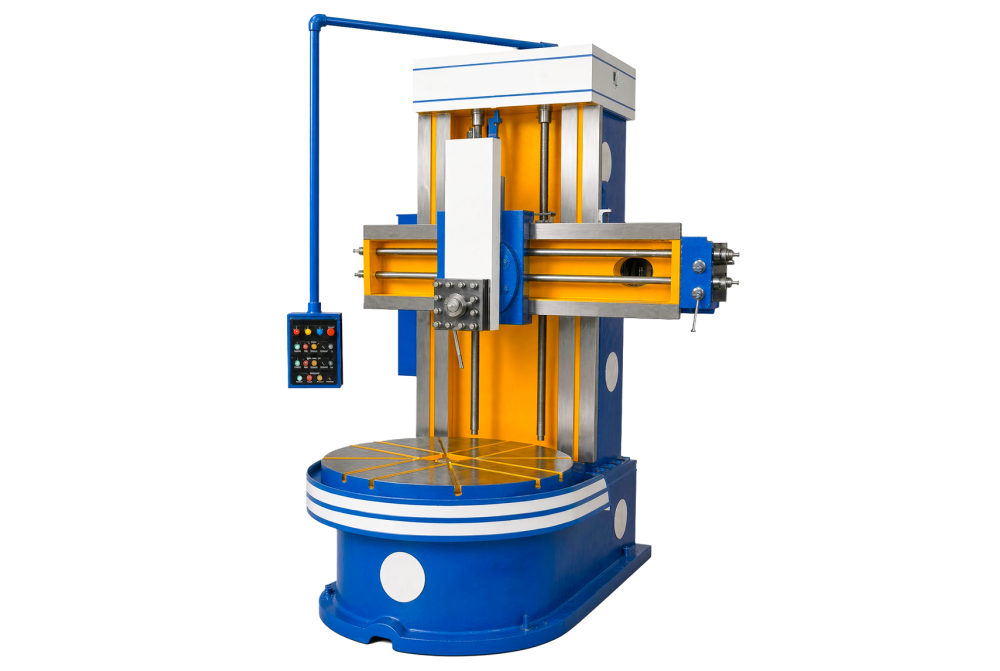
The primary role of the Vertical Turning Lathe Machine is turning rotational components and producing faces, diameters, bores, or threads. It rotates a securely held workpiece while a guided tool removes material, with rigid workholding with controlled tool travel. The vertical arrangement affects loading, support, and access to the work.
Shipping Information Usually dispatched With In business days
The Vertical Turning Lathe Machine provides a dedicated method of turning rotational components and producing faces, diameters, bores, or threads. Rather than acting as unrelated general equipment, it brings the working elements together around shafts, bushes, sleeves, discs, and other title-specific round parts.
In operation, it rotates a securely held workpiece while a guided tool removes material. The practical focus is rigid workholding with controlled tool travel. Correct workholding, tooling, supervision, and routine inspection remain important because results depend on the material and setup. The vertical arrangement affects loading, support, and access to the work.
Natural settings include machine shops, repair workshops, tool rooms, and component plants. There the machine may serve production, repair, preparation, assembly, finishing, or testing according to its title and the surrounding workflow.
Selection should follow the real workpiece, material, operation, production frequency, handling method, and available space. Exact performance data must come from the technical specification for the chosen Vertical Turning Lathe Machine.
Pathak is a Manufacturer, Supplier and Exporter offering this machine with application-based product guidance.
| Model | PVTL-600 | PVTL-1000 | PVTL-1500 | PVTL-2000 | PVTL-2500 | PVTL-3000 | PVTL-4000 |
| Size of Machine | 600 mm | 1000mm | 1500mm | 2000 mm | 2500 mm | 3000 | 4000 mm |
| Diameter of job table | 500 | 900 | 1300 | 1800 | 2300 | 2800 | 3800 |
| 3Max. Diameter Admit | 800 | 1050 | 1600 | 2200 | 2750 | 3250 | 4250 |
| Max. Height under Cross Rail | 400 | 600 | 1200 | 1500 | 1700 | 1800 | 2000 |
| 900 (Optional) | |||||||
| Verticial travel of turret | 300 | 400 | 500 | 700 | 750 | 750 | 1000 |
| Table speeds (Nine) low range | 32-60-120 | 3 To 120 RPM | 3 To 120 RPM | 0.75 To 30 RPM | 1.5 TO 100 RPM | 1.5 TO 100 RPM | 1.5 TO 100 RPM |
| High Range | 65-133-240 | - | - | - | - | - | - |
| Main Drive Motor | 2.2 kw 2 speed | 3.7 kw | 5.5 kw | 11 kw | 12 kw | 15 kw | 17.5 kw |
| 700/1444 RPM | 1440 RPM | 1440 RPM | 1440 RPM | 1440 RPM | 1440 RPM | 1440 RPM | |
| Rapid Drive Motor | 1.1 kw 1440 RPM | 1.5 KW 1400 RPM | 1.5 KW 1400 RPM | 3.7 KW 1400 RPM | 5 KW 1400 RPM | 7.5 KW 1400 RPM | 10 KW 1400 RPM |
| Cross Slide elevating motor | 1.5 kw 1440 RPM | 1.1 kw 1440 RPM | 2.2 KW 0.005 RPM | - | - | - | - |
| Three feed rate are avaliable | 0.102 Per/min | 0.00.5/01/.015 | 0.025 to 1MM | To 40 Thou | |||
| for each table speed | 0.227 Per / min | - | - | - | - | - | - |
| 0.425 Per/min | - | - | - | - | - | - | |