
Head Office
117, Grand Trunk Road, Salkia Howrah-700013, Kolkata, India
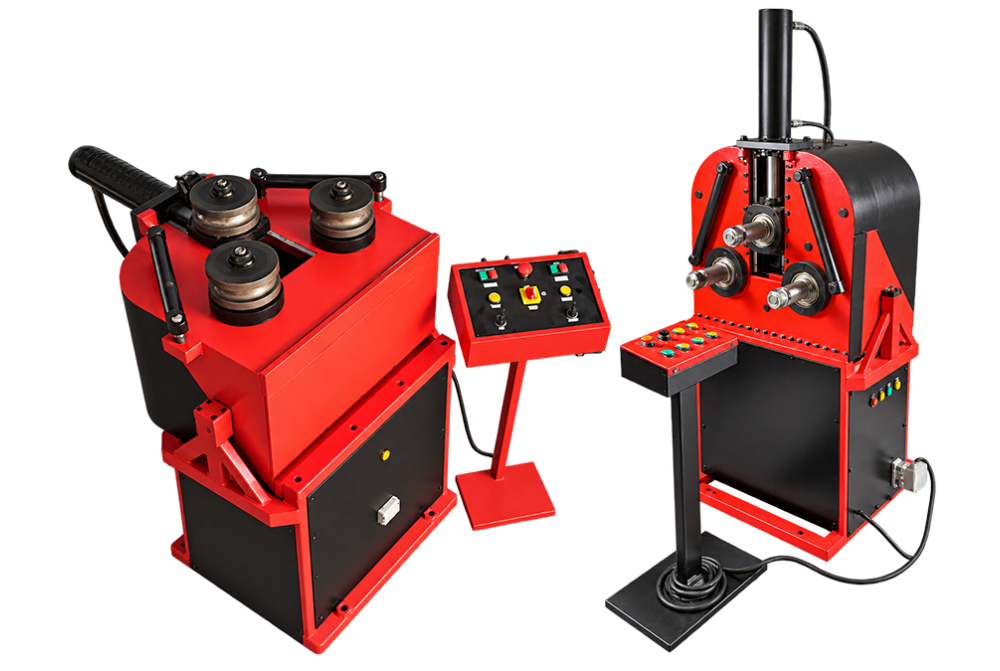
The Section Bending Machine is designed for forming sheet, plate, pipe, bar, or sections into required shapes. Its dedicated tooling that supports material during forming suits structural fabrication, sheet-metal shops, and component production.
Shipping Information Usually dispatched With In business days
Used for forming sheet, plate, pipe, bar, or sections into required shapes, the Section Bending Machine addresses a distinct stage of industrial work. It accommodates the metal stock identified by the machine title and keeps setup, tool engagement, and job handling centred on that task.
The machine is applicable to structural fabrication, sheet-metal shops, and component production. It can support individual jobs, recurring batches, or a dedicated station between earlier preparation and later inspection.
A typical cycle begins with locating the job correctly, after which the machine draws, presses, or rolls supported material around suitable tooling. Its dedicated tooling that supports material during forming supports repeat work without replacing the need for trained operation.
When comparing versions of the Section Bending Machine, buyers should review the work envelope, tooling, control method, loading, and service access. Numerical capacity, speed, accuracy, or power must be confirmed from the selected model’s documented specification.
Pathak is a Manufacturer, Supplier and Exporter offering this machine with application-based product guidance.
| Model no | PRBM-300 | PHRBM-300 | PRBM-400 | PHRBM-400 | PHDRBM-400 | PHRBM-500 | PHRBM-600 | PHRBM-700 |
| Round pipe | OD50*3mm | OD50*3mm | OD75*5mm | OD75*5mm | OD75*5mm | OD90*5mm | OD100*5mm | OD120*5mm |
| Square pipe | 50*50*3mm | 50*50*3mm | 75*75*5mm | 75*75*5mm | 75*75*5mm | 90*90*5mm | 100*100*5mm | 100*100*5mm |
| Rectanguler pipe | 60*40*3mm | 60*40*3mm | 80*60*5mm | 80*60*5mm | 80*60*5mm | 90*70*5mm | 100*70*5mm | 110*80*5mm |
| Angle | 50*5mm | 50*5mm | 50*6mm | 50*6mm | 50*6mm | 75*7mm | 90*8mm | 100*10mm |
| T-Angle | 100*10mm | 100*10mm | 100*12mm | 100*12mm | 100*12mm | 150*14mm | 180*16mm | 200*20mm |
| Flat Bar | 50*10mm | 50*10mm | 60*10mm | 60*10mm | 60*10mm | 90*10mm | 100*20mm | 100*20mm |
| Channel | 100*50*5mm | 100*50*5mm | 100*50*6mm | 100*50*6mm | 100*50*6mm | 150*75*5mm | 180*90*8mm | 200*100*10mm |
| Round bar | 25mm | 25mm | 30mm | 30mm | 30mm | 35mm | 40mm | 45mm |
| Square bar | 25*25mm | 25*25mm | 30*30mm | 30*30mm | 30*30mm | 35*35mm | 40*40mm | 45*45mm |
| Motor | 3 HP | 3 HP & 1 HP | 5 HP | 5 HP & 1 HP | 7.5 HP & 3 HP | 7.5 HP & 2 HP | 10 HP & 3 HP | 10 & 5 HP |
| Mechinal jack | YES | NO | YES | NO | NO | NO | NO | NO |
| Hydrualic Cylinder | NO | YES | NO | YES | YES | YES | YES | YES |
| Hrozintal & Vertical | YES | YES | YES | YES | NO | NO | NO | NO |