
Head Office
117, Grand Trunk Road, Salkia Howrah-700013, Kolkata, India
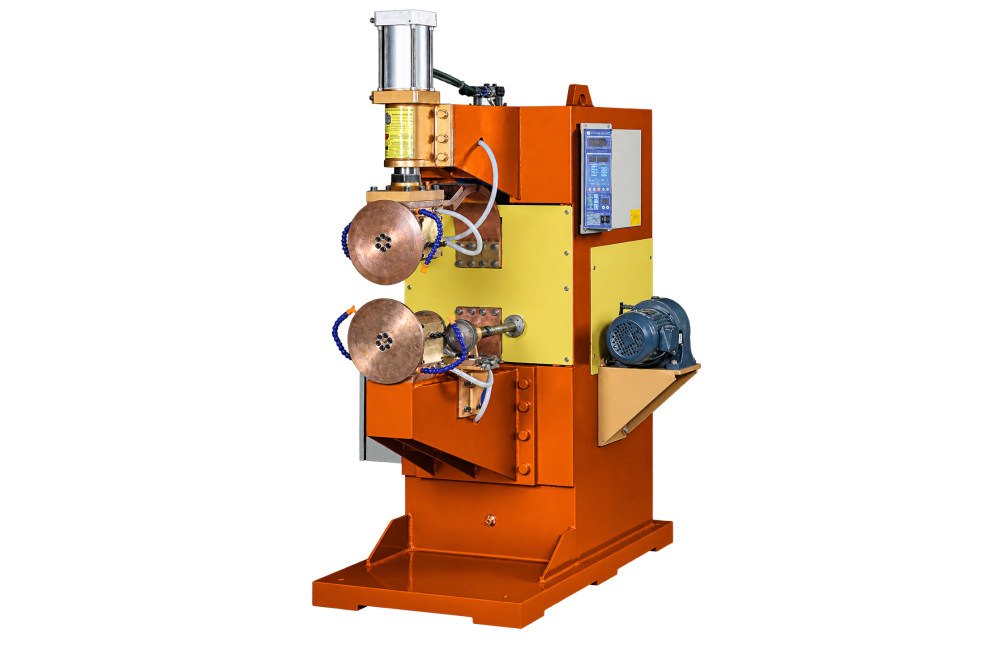
Built around performing the specialised operation identified by its title, the Seam Welder provides a dedicated working arrangement. Typical users include production workshops, maintenance departments, and engineering facilities, where a task-focused layout built around its primary operation is valuable.
Shipping Information Usually dispatched With In business days
For facilities needing performing the specialised operation identified by its title, the Seam Welder offers a process-specific workstation. Its arrangement supports components and materials suitable for the named process while keeping the important operating area accessible.
The machine is applicable to production workshops, maintenance departments, and engineering facilities. It can support individual jobs, recurring batches, or a dedicated station between earlier preparation and later inspection.
A typical cycle begins with locating the job correctly, after which the machine controls the working tool and supports the job through its cycle. Its a task-focused layout built around its primary operation supports repeat work without replacing the need for trained operation.
When comparing versions of the Seam Welder, buyers should review the work envelope, tooling, control method, loading, and service access. Numerical capacity, speed, accuracy, or power must be confirmed from the selected model’s documented specification.
Pathak is a Manufacturer, Supplier and Exporter offering this machine with application-based product guidance.
| Model | TLPSW-50 | TLPSW-75 | TLPSW-100 | TLPSW-150 | TLPSW-200 |
| Input Supply | 415±15% | 415±15% | 415±15% | 415±15% | 415±15% |
| Phase | 2 (2 Lines of 3 Phase) | 2 (2 Lines of 3 Phase) | 2 (2 Lines of 3 Phase) | 2 (2 Lines of 3 Phase) | 2 (2 Lines of 3 Phase) |
| Nominal rating @ 50% duty cycle | 50 KVA | 75 KVA | 100 KVA | 150 KVA | 200 KVA |
| Throat depth standard | 460 mm | 460 mm | 610 mm | 610 mm | 610 mm |
| Throat gap (min) | 300 mm | 300 mm | 300 mm | 350 mm | 350 mm |
| Standard Stroke | 100 mm | 100 mm | 100 mm | 150 mm | 150 mm |
| Switch fuse | 125 amp | 200 amp | 250 amp | 400 amp | 500 amp |
| Air pressure | 3-6 Kg/cm² | 3-6 Kg/cm² | 3-6 Kg/cm² | 4-8 Kg/cm² | 4-8 Kg/cm² |
| Electrode force at 5 kg/cm² | 450 KGF | 450 KGF | 450 KGF | 950 KGF | 950 KGF |
| Water supply at 2.5 kg/cm² | 20 lit/min | 30 lit/min | 40 lit/min | 50 lit/min | 60 lit/min |
| Upper electrode dia/thick | 250/12 mm | 250/12 mm | 250/16 mm | 250/16 mm | 250/16 mm |
| Air consumption/stroke (Max) | 1.6 lit | 1.6 lit | 1.6 lit | 1.6 lit | 3.5 lit |
| Drive Motor DC | 1 HP | 1 HP | 1.5 HP | 1.5 HP | 2 HP |
| Welding Capacity Mild Steel | 1+1 mm | 1.25+1.25 mm | 1.6+1.6 mm | 2+2 mm | 2.5+2.5 mm |
| Welding Capacity Stainless Steel | 0.8+0.8 mm | 1+1 mm | 1.25+1.25 mm | 1.6+1.6 mm | 2.0+2.0 mm |
| Normal working height | 900 mm | 900 mm | 900 mm | 900 mm | 900 mm |
| Dimensions (LxWxH) | 1900x900x1050 mm | 1900x900x1050 mm | 1900x900x1200 | 1900x900x1200 | 1900x900x1200 |
| Weight | 700 kg | 850 kg | 1100 kg | 1250 kg | 1250 kg |