
Head Office
117, Grand Trunk Road, Salkia Howrah-700013, Kolkata, India
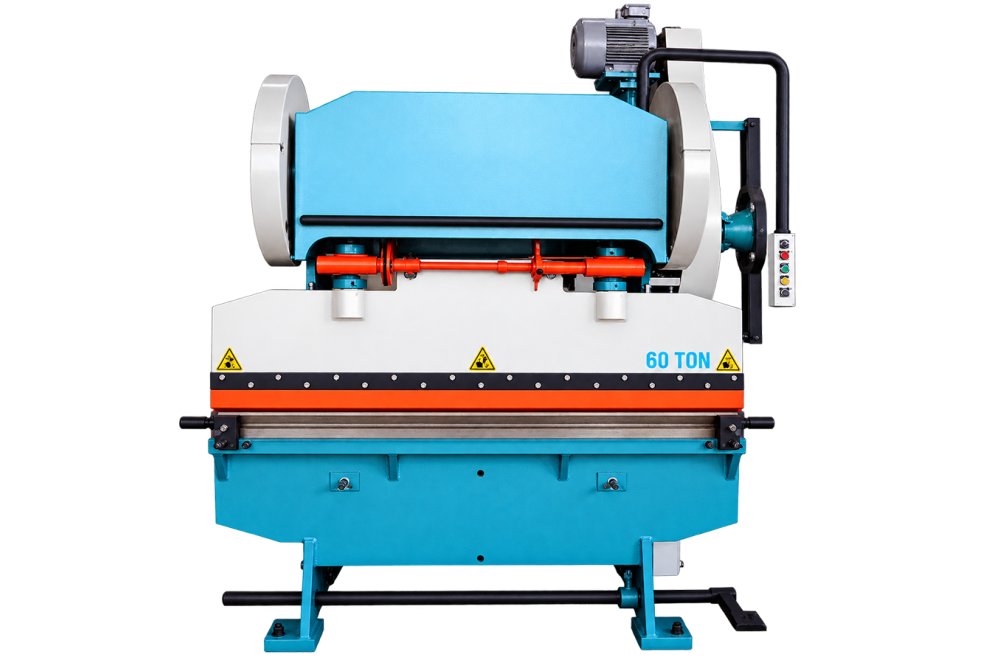
Built around forming straight bends in sheet and plate, the Mechanical Pneumatic Press Brake Machine provides a dedicated working arrangement. It drives a punch into a matched die along the bend line, with guided ram motion with adaptable tooling. Pneumatic actuation supports quick repeatable movement with a suitable air supply.
Shipping Information Usually dispatched With In business days
Used for forming straight bends in sheet and plate, the Mechanical Pneumatic Press Brake Machine addresses a distinct stage of industrial work. It accommodates sheet blanks, panels, brackets, and profiles and keeps setup, tool engagement, and job handling centred on that task.
Likely users are found in enclosure production, ducting, and fabrication shops. They may use it to organise the named operation, reduce repeated handling, and establish a consistent workstation for suitable jobs.
Its cycle is based on the way it drives a punch into a matched die along the bend line. The design therefore prioritises guided ram motion with adaptable tooling; actual output still depends on the chosen model, tool, workpiece, and operating method. Pneumatic actuation supports quick repeatable movement with a suitable air supply.
When comparing versions of the Mechanical Pneumatic Press Brake Machine, buyers should review the work envelope, tooling, control method, loading, and service access. Numerical capacity, speed, accuracy, or power must be confirmed from the selected model’s documented specification.
Pathak is a Manufacturer, Supplier and Exporter offering this machine with application-based product guidance.
| Model | Tone | Bending Cap. in MS Length x Thickness | Clearance Between Housings | Stroke Per Minute | Stroke Of Ram M.M | Ram Adj. M.M | Height Shut Ram Stroke | Depth Of Throat M.M | Main Motor HP/KW | Ram Adj. Ele. Motor HP/KW | Length | Width | Height |
|---|---|---|---|---|---|---|---|---|---|---|---|---|---|
| PPB-1 | 20 | 1525x1.6 | 1000 | 35 | 50 | 40 | 175 | 200 | 3/2.2 | 0.5/0.37 | 2000 | 1125 | 2300 |
| PPB-2 | 25 | 2000x1.6 | 1220 | 35 | 50 | 40 | 200 | 200 | 5/3.7 | 0.5/0.37 | 2300 | 1200 | 2500 |
| PPB-3 | 40 | 2500x2 | 1550 | 35 | 60 | 50 | 215 | 250 | 7.5/5.6 | 1/0.75 | 2800 | 1500 | 2650 |
| PPB-4 | 65 | 3125x2.5 | 1900 | 30 | 76 | 50 | 275 | 300 | 10/7.6 | 1.5/1.1 | 3400 | 1575 | 2750 |
| PPB-5 | 65 | 2000x4 | 1370 | 30 | 76 | 63 | 275 | 300 | 10/7.6 | 1.5/1.1 | 2400 | 1575 | 2750 |
| PPB-6 | 80 | 2500x4 | 1550 | 25 | 76 | 63 | 300 | 300 | 12.5/9.7 | 2/1.5 | 2900 | 1650 | 3025 |
| PPB-7 | 100 | 3125x4 | 1900 | 25 | 76 | 80 | 300 | 300 | 15/11.2 | 2/1.5 | 3450 | 1875 | 3525 |
| PPB-8 | 120 | 2500x6 | 1700 | 25 | 76 | 80 | 300 | 300 | 20/15 | 2/1.5 | 2900 | 1900 | 3550 |
| PPB-9 | 150 | 2500x8 | 1700 | 20 | 80 | 100 | 300 | 300 | 25/18.7 | 2/1.5 | 3400 | 1900 | 3550 |
| PPB-10 | 150 | 3125x6 | 1900 | 20 | 80 | 100 | 300 | 300 | 25/18.7 | 2/1.5 | 3400 | 1950 | 3650 |