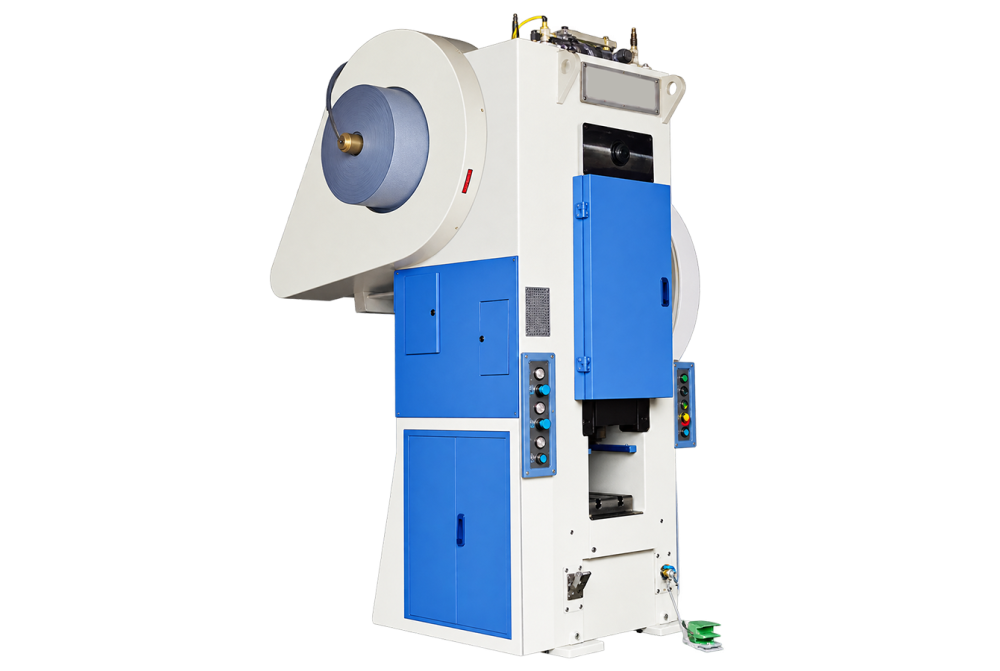
Knukle Joint Press Machine
Sheet Metal Machines

Knukle Joint Press Machine

The primary role of the Knukle Joint Press Machine is applying controlled force for forming, fitting, punching, or compaction. Typical users include fabrication, assembly, maintenance, and production workshops, where rigid reaction support around the working zone is valuable.

Order By Phone

Shipping Information Usually dispatched With In business days

Overview

Product Overview

Knukle Joint Press Machine

Machine Purpose

The Knukle Joint Press Machine is a purpose-built unit for applying controlled force for forming, fitting, punching, or compaction. Its layout is organised around components and materials named by the product title, making it relevant when this operation must be completed in a controlled sequence.

How It Works

Its cycle is based on the way it advances a guided working member against supported material. The design therefore prioritises rigid reaction support around the working zone; actual output still depends on the chosen model, tool, workpiece, and operating method.

Industrial Applications

The machine is applicable to fabrication, assembly, maintenance, and production workshops. It can support individual jobs, recurring batches, or a dedicated station between earlier preparation and later inspection.

Selection Considerations

When comparing versions of the Knukle Joint Press Machine, buyers should review the work envelope, tooling, control method, loading, and service access. Numerical capacity, speed, accuracy, or power must be confirmed from the selected model’s documented specification.

Pathak is a Manufacturer, Supplier and Exporter offering this machine with application-based product guidance.

Specifications

Technical Specifications

Model   PKJ - 250 PKJ - 400
CAPACITY TON 250 400
RATED TONNAGE POINT MM 4 6
STROKE LENGTH MM 120 160
STROKE PER MINUTE   50 40
DIE HEIGHT (S.D.A.U) MM 370 400
BOLSTER AREA (L.RXF.B) MM 500x600 500x600
SLIDE AREA (L.RXF.B) MM 400x200 400x500
SLIDE ADJUSTMENT MM 15 15
BOLSTER THICKNESS MM 100 120
KEEP THE AIR PRESSURE KG/CM2 5 5
UPPER EJECTOR CAPACITY TON 5 7.5
STROKE MM 25 30
PIN DIA MM 40 50
TYPE - Mechanical Mechanical
  CAPACITY TON 10 15
FAQs

Frequently Asked Questions

Which operation is the Knukle Joint Press Machine designed to perform?
The Knukle Joint Press Machine is intended for applying controlled force for forming, fitting, punching, or compaction. It is arranged around components and materials named by the product title, giving operators a dedicated method for this specific stage of production, preparation, assembly, finishing, testing, or repair.
How does a Knukle Joint Press Machine work?
The machine advances a guided working member against supported material. Its rigid reaction support around the working zone supports a controlled sequence, although the exact setup, tooling, feed, and operating parameters must follow the selected model and the job being processed.
What type of work is suitable for a Knukle Joint Press Machine?
It is primarily associated with components and materials named by the product title. Suitability depends on the material, shape, size, required operation, tooling, and rated capacity, so the actual workpiece should be checked against the product specification before use.
What are the common applications of a Knukle Joint Press Machine?
Typical users include fabrication, assembly, maintenance, and production workshops. In these settings, the Knukle Joint Press Machine may operate as a standalone workstation or as one stage within a broader manufacturing, fabrication, maintenance, or quality-control process.
How can a buyer compare different Knukle Joint Press Machine models?
Start with the real workpiece and required operation. Compare working range, compatible tooling, control method, production frequency, loading arrangement, available space, utilities, guarding, and service access. Confirm every numerical requirement from the selected model’s technical data rather than relying on the general machine name.
What routine maintenance does a Knukle Joint Press Machine require?
Keep the working area clean and inspect the tool, work supports, guards, fasteners, transmission elements, lubrication points, and relevant electrical, hydraulic, or pneumatic systems. Follow the maintenance schedule supplied for the machine, isolate all energy before servicing, and replace guards before returning it to operation.
Why can the cost of a Knukle Joint Press Machine vary between models?
Price depends on the required working range, construction, drive and control arrangement, tooling, automation, accessories, guarding, inspection requirements, freight, and installation support. A meaningful quotation therefore needs the intended application and workpiece details, not only the title Knukle Joint Press Machine.