
Head Office
117, Grand Trunk Road, Salkia Howrah-700013, Kolkata, India
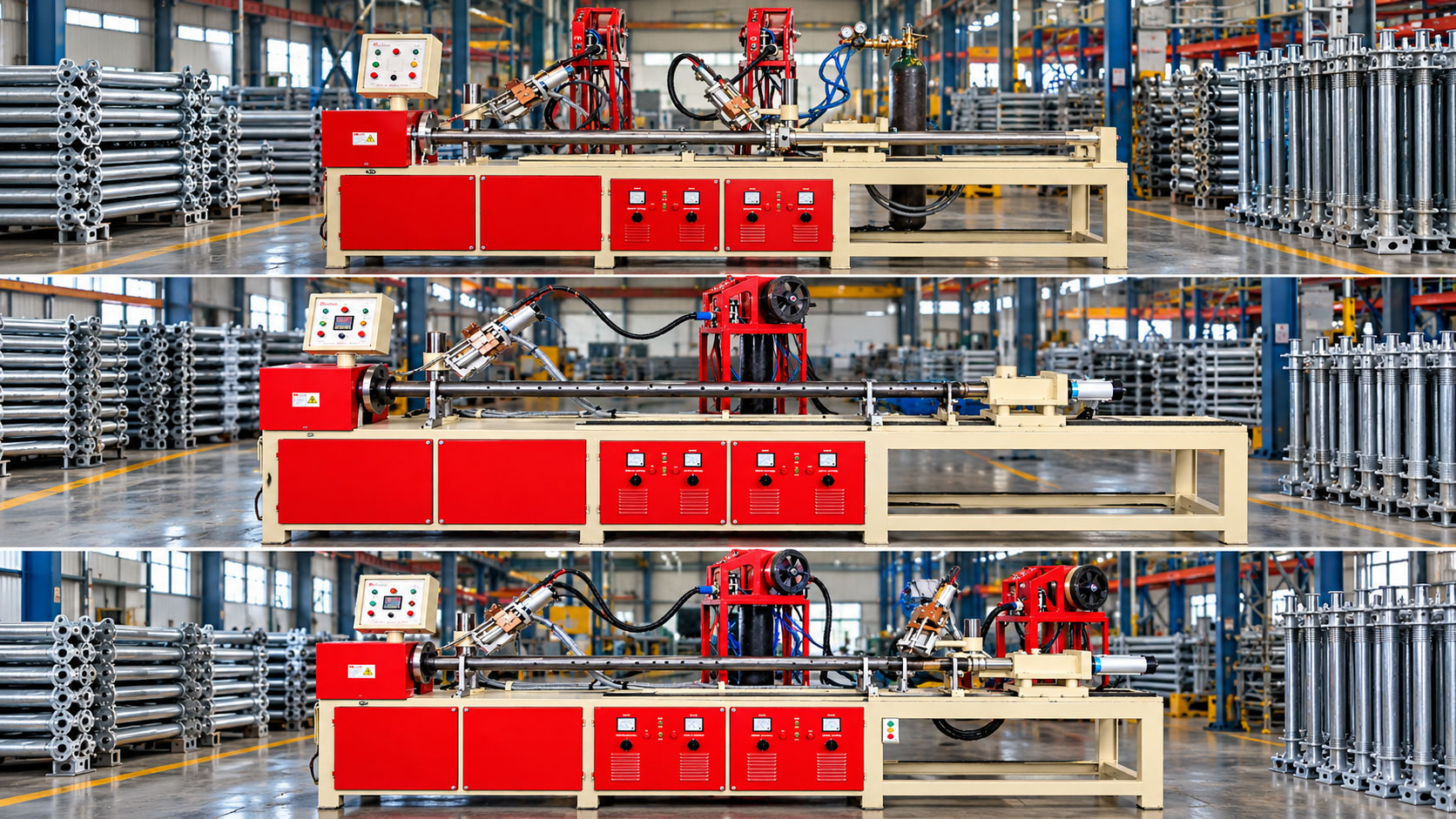
Modern construction projects depend heavily on reliable scaffolding systems for temporary access, working platforms, structural support, and safe movement around buildings and industrial structures. Behind these systems is a specialized category of manufacturing equipment known as industrial scaffolding machines.
Modern construction projects depend heavily on reliable scaffolding systems for temporary access, working platforms, structural support, and safe movement around buildings and industrial structures. Behind these systems is a specialized category of manufacturing equipment known as industrial scaffolding machines.
Modern construction projects depend heavily on reliable scaffolding systems for temporary access, working platforms, structural support, and safe movement around buildings and industrial structures. Behind these systems is a specialized category of manufacturing equipment known as industrial scaffolding machines.
Scaffolding machines are automated or semi-automated industrial systems designed to manufacture components such as cuplocks, ringlocks, adjustable props, base jacks, U-head jacks, standards, ledgers, braces, tubes, and other scaffolding accessories.
Instead of relying extensively on manual cutting, forming, punching, threading, and welding, manufacturers can use dedicated machinery to standardize production, improve repeatability, increase output, and reduce unnecessary material and labor costs.
For companies manufacturing scaffolding equipment at commercial scale, the correct combination of machines can transform individual steel tubes, sheets, bars, and plates into accurately manufactured scaffolding components ready for finishing, inspection, assembly, and supply.
The term scaffolding machine does not necessarily refer to one single machine. It generally describes a production system or collection of machines used for manufacturing different scaffolding components.
Depending on the product being manufactured, a scaffolding production line may incorporate machinery for:
The configuration depends heavily on whether the factory manufactures cuplock scaffolding, ringlock scaffolding, adjustable props, screw jacks, base jacks, U-head jacks, frames, ledgers, standards, or other accessories.
Scaffolding components may appear mechanically simple, but they are part of load-bearing temporary structures. Dimensional inconsistency, poor alignment, defective welds, inaccurate hole positions, or badly manufactured threads can create assembly problems and potentially compromise performance.
Industrial scaffolding machinery helps manufacturers establish a controlled and repeatable production process.
Automated and semi-automated equipment can perform repetitive manufacturing operations significantly faster than predominantly manual processes.
This is particularly important when thousands of similar standards, ledgers, cups, rosettes, props, or jack components must be produced.
Controlled cutting, punching, forming, threading, and welding processes help maintain consistent component dimensions from one production batch to another.
Automation can reduce repetitive manual handling and operator-dependent variation, although trained personnel remain essential for setup, supervision, inspection, maintenance, and quality control.
Accurate cutting and controlled forming can help minimize unnecessary material wastage.
Once machine settings, fixtures, dies, and production parameters have been established correctly, manufacturers can repeatedly produce components according to specified dimensions and tolerances.
Cuplock is a modular scaffolding system in which horizontal members connect to vertical standards through specially designed upper and lower cups.
Manufacturing can involve:
Specialized fixtures and automated welding systems can improve the consistency of cup positioning.
Ringlock scaffolding uses rosette-type connection points positioned along vertical standards.
Typical manufacturing operations include:
Accurate spacing between rosettes is particularly important because the connection geometry determines how standards, ledgers, and braces fit together.
Adjustable steel props are widely used as temporary vertical supports in construction and formwork applications.
Production may require:
The exact manufacturing sequence depends on the prop design and required adjustment mechanism.
Base jacks provide an adjustable supporting point at the bottom of a scaffolding structure.
Manufacturing generally involves:
A reliable threading process is important because the nut must travel smoothly while maintaining the required fit.
U-head jacks are commonly installed at the top of scaffolding or shoring arrangements to support beams and related structural members.
Production can involve:
Standards are vertical members, while ledgers provide horizontal connections.
Their production typically requires accurate tube cutting and the attachment of connection components at predetermined locations.
Consistency is important because even relatively small dimensional variations can accumulate across a large scaffolding assembly.
A complete scaffolding manufacturing facility may use several categories of machinery.
Tube cutting equipment prepares pipes and tubes to predetermined lengths for standards, ledgers, props, braces, and other components.
Accurate cutting helps ensure consistent final dimensions.
Hydraulic punching equipment can produce holes in tubes, plates, and other components.
These machines are particularly useful for adjustable props and components requiring repeated hole patterns.
Mechanical or hydraulic presses may be used to manufacture cups, rosettes, brackets, plates, and other formed scaffolding parts.
Appropriate dies determine the final component geometry.
Thread rolling equipment is commonly used in the manufacture of adjustable jack components and other threaded scaffolding products.
Unlike conventional material-removal threading processes, thread rolling forms threads through controlled deformation of the workpiece.
The appropriate threading method depends on the component design, material, thread specification, and production requirements.
Welding is one of the most important operations in many scaffolding production lines.
It can be required for attaching:
Depending on production volume, manufacturers may use manual, semi-automatic, or automated welding arrangements.
Steel tubes can develop bends or dimensional deviations during manufacturing, transportation, or processing.
Straightening equipment helps correct these deviations before subsequent manufacturing operations.
Scaffolding accessories frequently require plates for bases, heads, brackets, and other connections.
Plate processing can involve cutting, punching, bending, pressing, and forming.
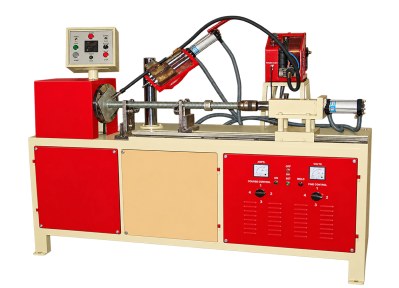
Built around joining prepared components for fabrication or repetitive production, the Base U-Head Jack Welding Machine provi...
View Product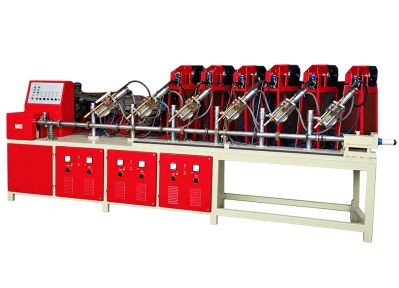
The primary role of the Cup lock Vertical Welding System is joining prepared components for fabrication or repetitive product...
View Product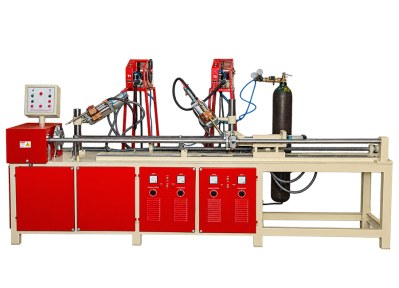
The primary role of the Horizontal Standard Ledger Blades Welding System is joining prepared components for fabrication or re...
View Product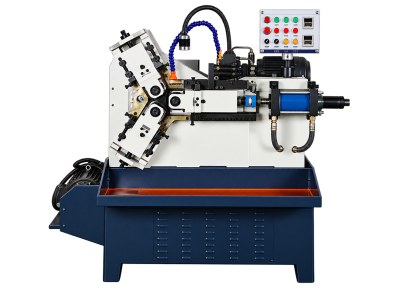
Built around performing the specialised operation identified by its title, the Hydraulic 3 Roll Thread Rolling Machine provid...
View Product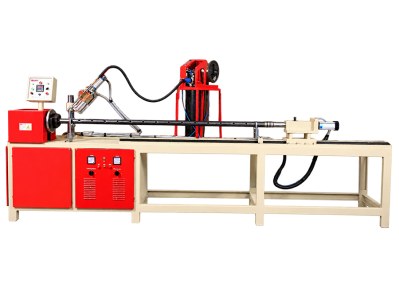
For work involving metal frames, assemblies, and title-specific components, the Inner Prop Welding System offers a process-sp...
View Product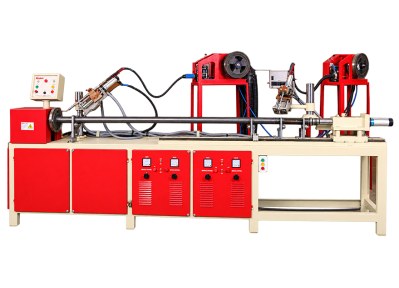
For work involving metal frames, assemblies, and title-specific components, the Prop Jack Welding Machines offers a process-s...
View Product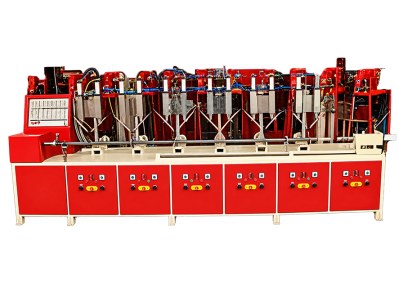
The Standard Ringlock Welding Machine handles metal frames, assemblies, and title-specific components through a layout intend...
View ProductAlthough every factory has its own production process, a simplified workflow can look like this:
Raw Material → Cutting → Punching/Forming → Threading → Component Positioning → Welding → Straightening → Inspection → Surface Treatment → Final Assembly → Packing
Steel tubes, bars, sheets, and plates are selected according to the component specification.
Incoming material should be verified against the manufacturer's engineering and quality requirements before production begins.
Tubes, bars, and plates are cut according to the required dimensions.
Accurate cutting at this stage reduces problems during subsequent assembly.
Holes, slots, cups, rosettes, brackets, and other features are produced using suitable presses, punching equipment, dies, and tooling.
Products such as base jacks and adjustable props may require threaded sections.
The thread dimensions and fit should correspond to the component design.
Connection components are positioned using fixtures or jigs before welding.
Fixtures are particularly valuable in repetitive production because they help maintain positioning and alignment.
Components are checked for:
Depending on product requirements and applicable specifications, scaffolding components may receive treatments such as painting, powder coating, electroplating, pre-galvanized finishes, or hot-dip galvanizing.
The correct process depends on the product, material, service environment, and customer specification.
Finished components should undergo appropriate inspection before dispatch.
Products can then be sorted, counted, bundled, labeled, and prepared for transportation.
Scaffolding manufacturing machinery serves companies supplying products to many sectors.
Scaffolding is extensively used during construction, finishing, façade work, plastering, painting, installation, and maintenance of residential and commercial buildings.
Bridges, flyovers, metro systems, highways, tunnels, stations, and large public infrastructure projects frequently require temporary access and support systems.
Factories, warehouses, processing plants, and other industrial facilities use scaffolding during construction, expansion, repair, and maintenance.
Refineries, petrochemical facilities, storage installations, and processing plants often require temporary access structures during scheduled maintenance and construction.
Scaffolding systems provide access to boilers, piping, structural areas, and equipment during installation and maintenance activities.
Shipyards use temporary access structures during fabrication, painting, inspection, repair, and maintenance operations.
Adjustable props, jacks, and compatible scaffolding components are used in temporary support systems for slabs, beams, and formwork structures.
Automation can shorten repetitive production cycles and increase the number of components manufactured per shift.
Fixtures, controlled tooling, and repeatable machine settings help manufacturers maintain standardized dimensions.
Machines can reduce variability associated with purely manual production methods.
A manufacturer can configure production around expected volumes and add dedicated machines as demand increases.
Although machinery requires capital investment, higher throughput and reduced repetitive labor can lower unit manufacturing costs when production volumes justify automation.
Predictable machine cycle times make it easier to estimate daily or monthly manufacturing capacity.
Selecting equipment should begin with the scaffolding product—not the machine.
Determine exactly what you intend to manufacture:
A factory manufacturing ringlock systems can require a different machine configuration from one primarily producing props and jacks.
Calculate your target:
High-volume manufacturing may justify greater automation, while lower-volume production may be better suited to flexible semi-automatic machinery.
Provide the machinery manufacturer with relevant specifications such as:
Machine capacity should always be matched to the actual workpiece specification.
Identify whether production requires:
This helps determine whether individual machines or an integrated production line is more suitable.
Scaffolding machinery may be:
Manual/Semi-Automatic: Suitable for flexible production, lower volumes, or operations where frequent product changes are required.
Automatic: Suitable for repetitive, higher-volume manufacturing where cycle time and production consistency are priorities.
The best solution is not necessarily the machine with the highest automation level. It is the system that matches production volume, product variety, available labor, budget, and required flexibility.
Ask how dies, fixtures, clamps, punches, rollers, and other tooling are changed when switching products.
Fast and repeatable changeovers are particularly valuable for factories producing multiple scaffolding sizes.
Before purchasing, evaluate:
Long-term machine availability is often more valuable than choosing equipment based solely on initial purchase price.
Only trained personnel should operate industrial scaffolding machinery, and the manufacturer's operating manual and applicable workplace safety procedures should always take precedence.
Inspect the machine, tooling, guards, fixtures, electrical connections, hydraulic systems where applicable, lubrication points, and emergency-stop functions.
Confirm that the material specification matches the machine setup.
Install the correct dies, punches, rollers, fixtures, or welding jigs.
Enter or adjust operating parameters according to the approved manufacturing process.
Produce initial sample components before starting full production.
Check the first manufactured component carefully for dimensions, hole locations, forming accuracy, thread quality, alignment, and other specified characteristics.
Production should continue only after the component meets the approved specification.
Operators should monitor machine condition and finished-component quality.
Periodic inspections can identify tool wear or process drift before a large quantity of non-conforming components is produced.
Clean the machine and work area, perform prescribed lubrication and maintenance, inspect wear components, and record any abnormal machine behavior.
Scaffolding manufacturing equipment may involve significant mechanical force, rotating components, hot welding processes, hydraulic pressure, sharp material, and electrical systems.
Essential safeguards can include:
Operators should never bypass machine guards or safety interlocks to increase production speed.
Quality control should be integrated throughout production rather than performed only after components are finished.
Depending on the product and applicable specification, inspection may cover:
Applicable national, international, customer, and project-specific standards should determine the actual inspection and testing regime.
Industrial scaffolding machines are central to efficient, repeatable production of modern scaffolding systems. From cutting steel tubes and punching holes to producing threads, forming connection components, welding assemblies, and preparing finished products, specialized machinery allows manufacturers to organize scaffolding production as a controlled industrial process.
Whether a company manufactures cuplock scaffolding, ringlock scaffolding, adjustable props, base jacks, U-head jacks, standards, ledgers, or related accessories, the correct production equipment should be selected according to the component design, material specification, required capacity, quality requirements, and desired level of automation.
A well-planned scaffolding manufacturing line does more than increase output. It helps establish consistent dimensions, repeatable production, efficient material utilization, controlled quality, and scalable manufacturing capacity—all of which are essential for serving the demanding construction and infrastructure industries.
I can also adapt this specifically for a Pathak Industries “Scaffolding Machines” industry/application page, including SEO-focused Meta Title, Meta Description, main heading, subheading, short description, and recommended machine categories.